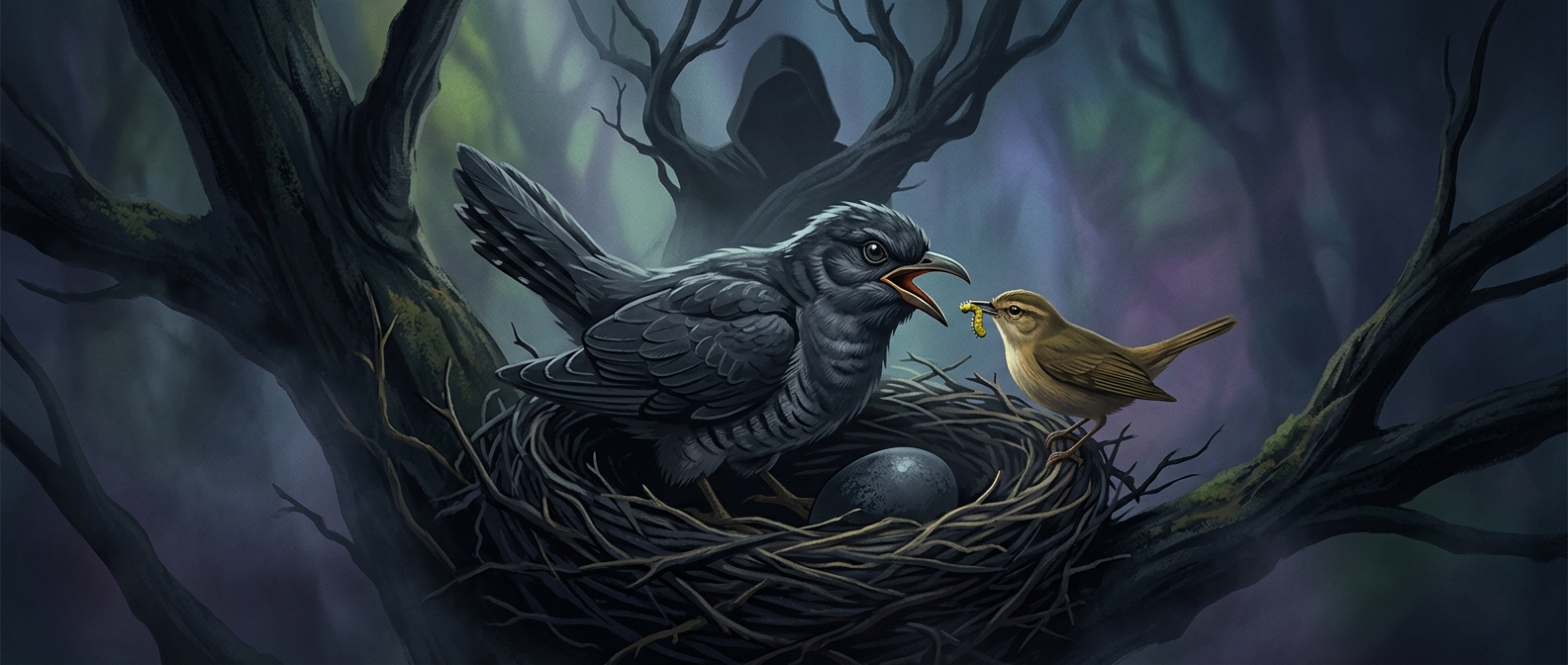
How a hatchling clears the nest
In the common cuckoo, the eviction begins almost as soon as the chick hatches. Its foster parents may have laid several eggs, but the young cuckoo instinctively works each one toward the rim of the nest and tips it over. If other chicks hatch, they can be pushed out too. A shallow hollow in the cuckoo chick’s back helps it balance an egg or nestmate while it backs toward the edge; the hollow disappears as the chick grows.
This is not a calculated choice by the hatchling. The behavior is an inborn action that gives it a simple route to an otherwise impossible advantage: with the nest emptied, it does not have to compete for food.
Why the foster parents keep feeding it
The adults respond to the chick’s signals, not to a count of who hatched from which egg. A cuckoo chick begs persistently and opens a conspicuous mouth for food. Those cues prompt the foster parents to bring meals, even though the chick is much larger than the young they would normally raise.
That mismatch is the payoff of brood parasitism: the cuckoo leaves the work of incubation and feeding to another species, while its chick monopolizes the foster parents’ care. The striking part is that the takeover does not require the adults to be fooled by a clever performance. They follow feeding cues that usually serve them well—but in this nest, only one hungry chick remains to answer.