How an albatross turns wind shear into forward motion
The wind over the ocean is not equally fast at every height. Waves and the sea surface slow the air close to them, while air a little higher up can move faster. This difference in speed is called wind shear—a change in wind across distance or height.
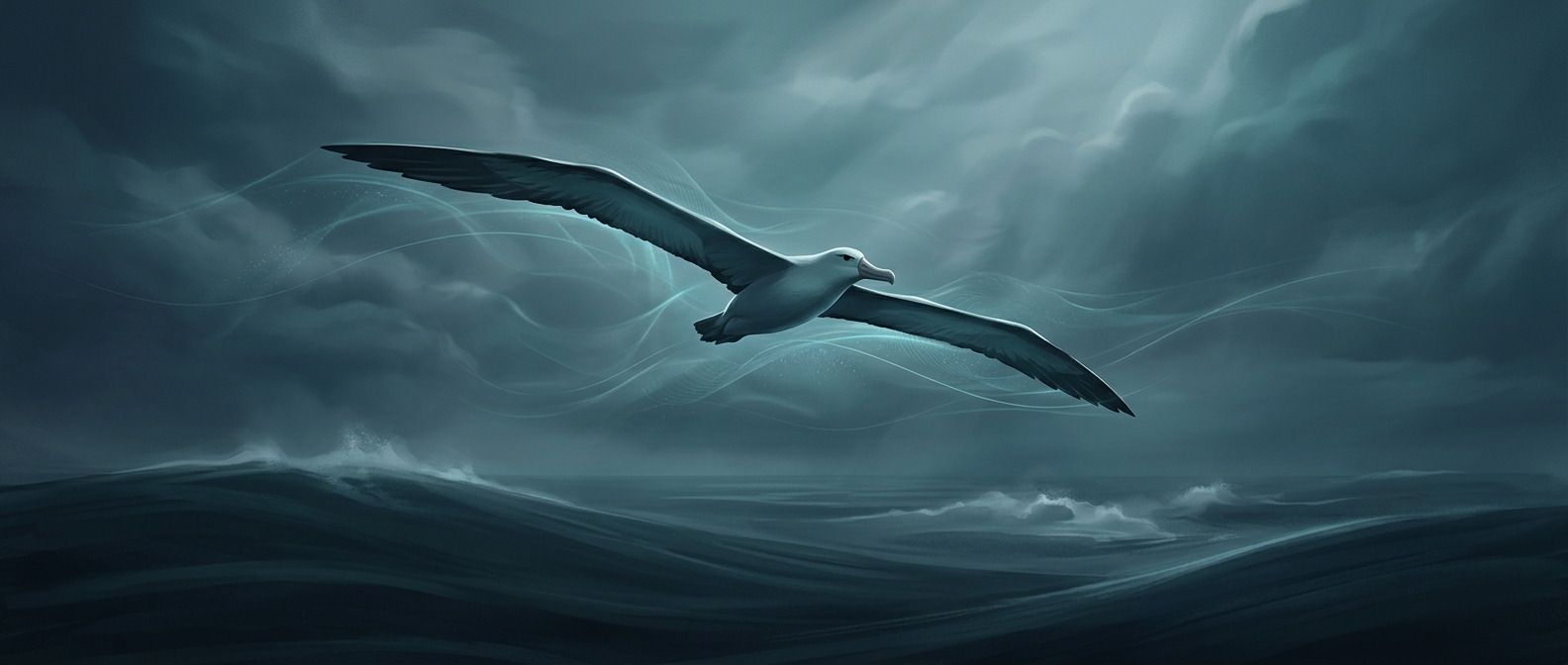
An albatross can exploit that difference with a repeating maneuver called dynamic soaring. It climbs into the faster-moving air, turns, and descends toward the slower layer near the waves. As it crosses between layers, the wind’s motion changes the bird’s speed relative to the air around it. The bird can convert that change into forward motion, much as a sailor gains speed by tacking across a breeze rather than pointing straight into it.
Why the maneuver saves so much effort
The bird is not simply being carried along by the wind. Its carefully timed turns let it take energy from the difference between the faster and slower air. Each crossing helps replenish speed lost to drag—the resistance that gradually slows anything moving through air. The albatross can then glide through another part of the cycle without continuous wingbeats.
The technique depends on the wind being strong and structured enough to provide a useful speed difference. In calm conditions, that energy source dwindles, and the bird may need to flap more. Over windy seas, however, a sequence of smooth arcs can keep it moving for long stretches while spending relatively little muscular effort. The striking part is that the ocean’s uneven wind is not merely something the bird endures; it is the engine its flight is built to use.