Why Hoatzin Chicks Need Claws
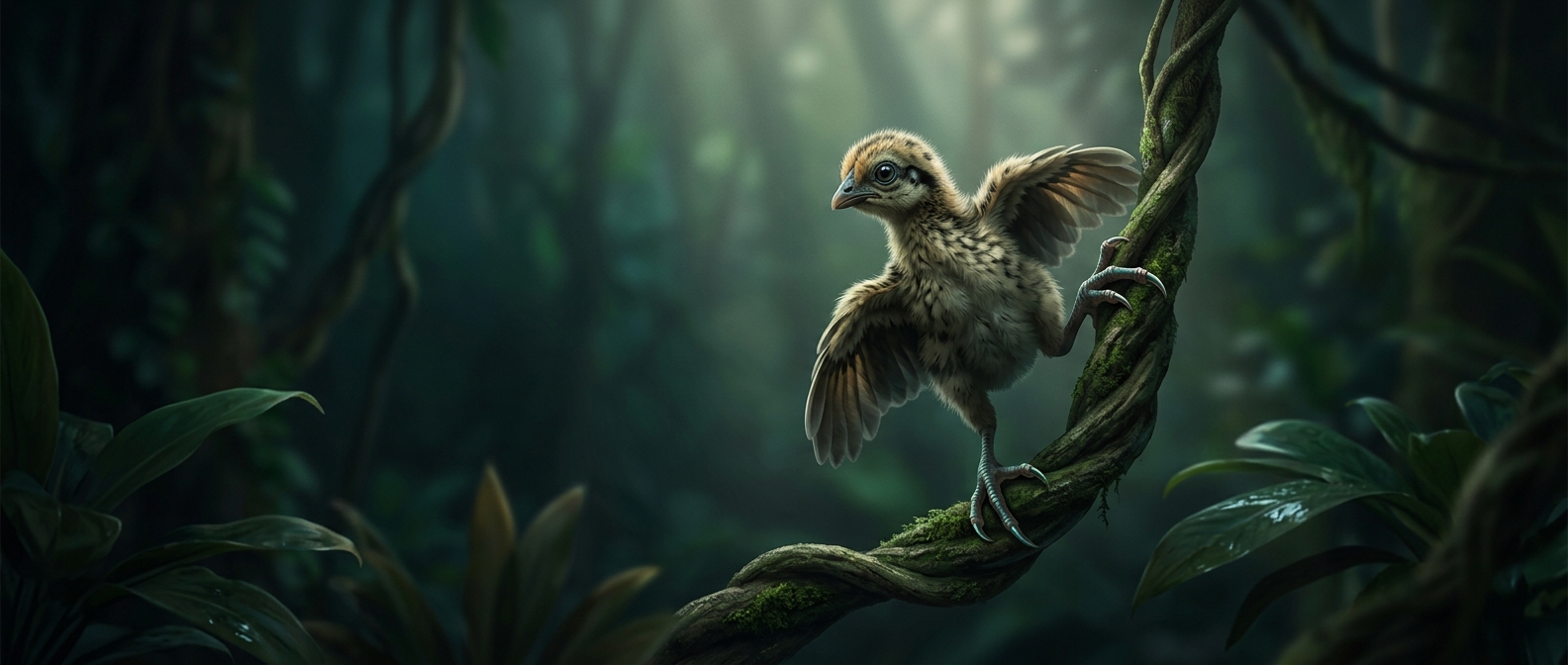
A young hoatzin spends its early life in branches over water, where a fall can be an escape route. If a predator approaches the nest, a chick may drop into the water, swim clear, and then climb back into the tangled vegetation. Its wing claws give it a way to grip branches before its wings are strong enough for flight.
A Temporary Grip, Not Extra Fingers
The claws sit at the ends of the chick’s wing digits. As the bird grows, its wing structure changes and the claws are lost. They are a juvenile adaptation: useful during the period when a hoatzin is small, vulnerable, and still developing its flight ability.
That makes the claws less like a miniature version of an adult bird’s hands and more like built-in climbing gear. The chick can hook onto stems and pull itself upward, turning the surrounding branches into a route back toward shelter.
The Nest’s Escape Route
The strategy depends on the habitat as much as on the bird. A nest above water gives a chick a place to retreat when danger reaches the branches; swimming helps it get away from the immediate threat, and climbing lets it return to cover. The claws bridge the gap between leaving the nest and being able to fly. By adulthood, that early climbing job is over, so the extra grip disappears.