A Stage Built for Courtship
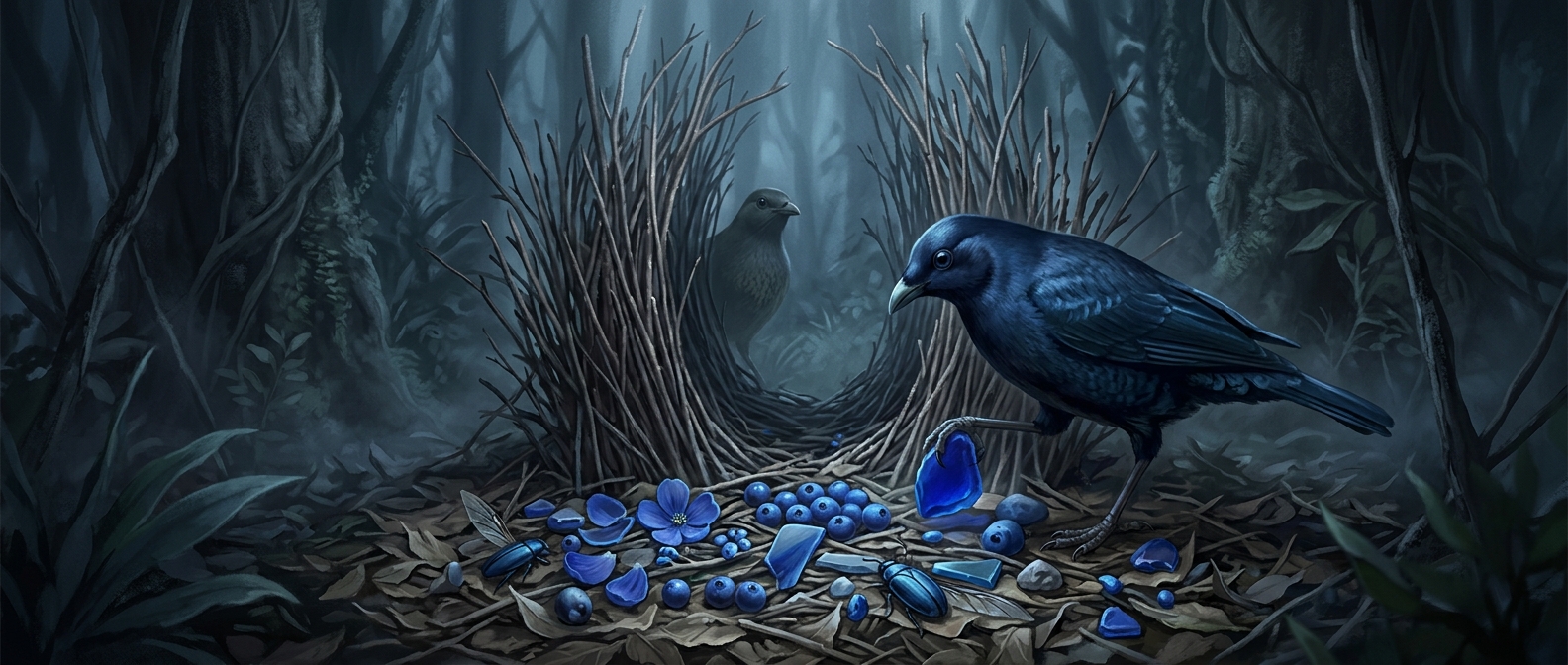
A male bowerbird’s bower is not where he raises chicks. It is a display structure built on the ground: depending on the species, the male arranges sticks into walls or avenues, then places colorful objects nearby. The bower creates a setting for a performance, giving a visiting female a clear view of both his display and his movements.
How the Display Works
The male’s decorations can include berries, flowers, shells, stones, or human-made objects such as bottle caps. Their colors and arrangement help make the display conspicuous. In some species, males sort objects by color or place them in a particular pattern; the details vary across the bowerbirds, so there is no single design that every male follows.
When a female visits, the male courts her beside the structure, often with movements and calls. The bower is part of the courtship, not a guarantee of success: she can inspect the setup and leave without mating. A male may repair or rearrange his display, and other males may damage or steal decorations, making upkeep part of the contest.
What the Bower Reveals
Because the bower is not a nest, its ornamentation serves a different purpose from materials used to protect eggs or feed young. It is a visible signal in a competition among males for a female’s attention. The courtship display is both a construction project and a performance—and the female’s choice determines whether either succeeds.