How Players Turn a Match Into Hide-and-Seek
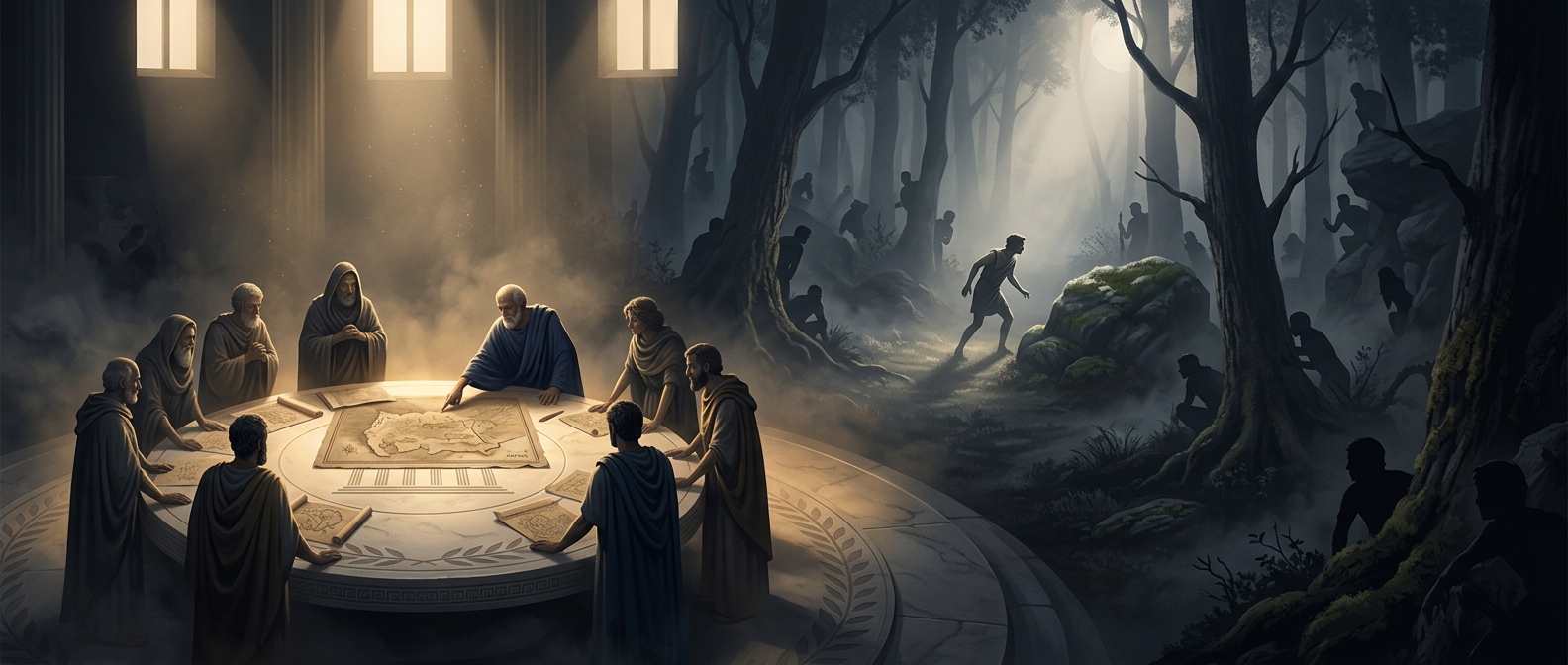
A multiplayer game supplies a world, movement rules, and tools for interacting with other players. It does not have to supply a hide-and-seek button. Players can make a new activity by agreeing to use those existing pieces differently: one side hides, another searches, and the usual combat or scoring objectives are temporarily ignored.
That agreement is the game’s rulebook. Players might choose a hiding area, set a countdown, or decide what happens when someone is found. The rules may be enforced socially rather than by the software, so everyone has to cooperate for the match to work.
The Map Becomes a Set of Possibilities
A corner that offers cover, a route with several hiding spots, or an ability that helps someone move unseen can take on new importance. These features were built for the intended game, but players reinterpret them as tools for concealment and pursuit. The original objectives recede; the same map now supports a different kind of tension.
This is different from a developer-built mode, where the game itself can track roles, timers, and wins. An improvised version depends on players to assign those roles and honor the agreed rules. That makes it flexible, but also fragile: one person attacking or leaving the search area can break the shared premise.
A New Activity From Old Parts
The appeal is partly the change in pace. A space designed for direct competition can become a place for careful movement, bluffing, and anticipation. Players do not need a new map or a new set of mechanics; they need only a shared idea about what counts as playing.
In effect, the match becomes a tiny game designed by its participants. Its boundaries are not coded into the software—they exist because everyone chooses to follow them.