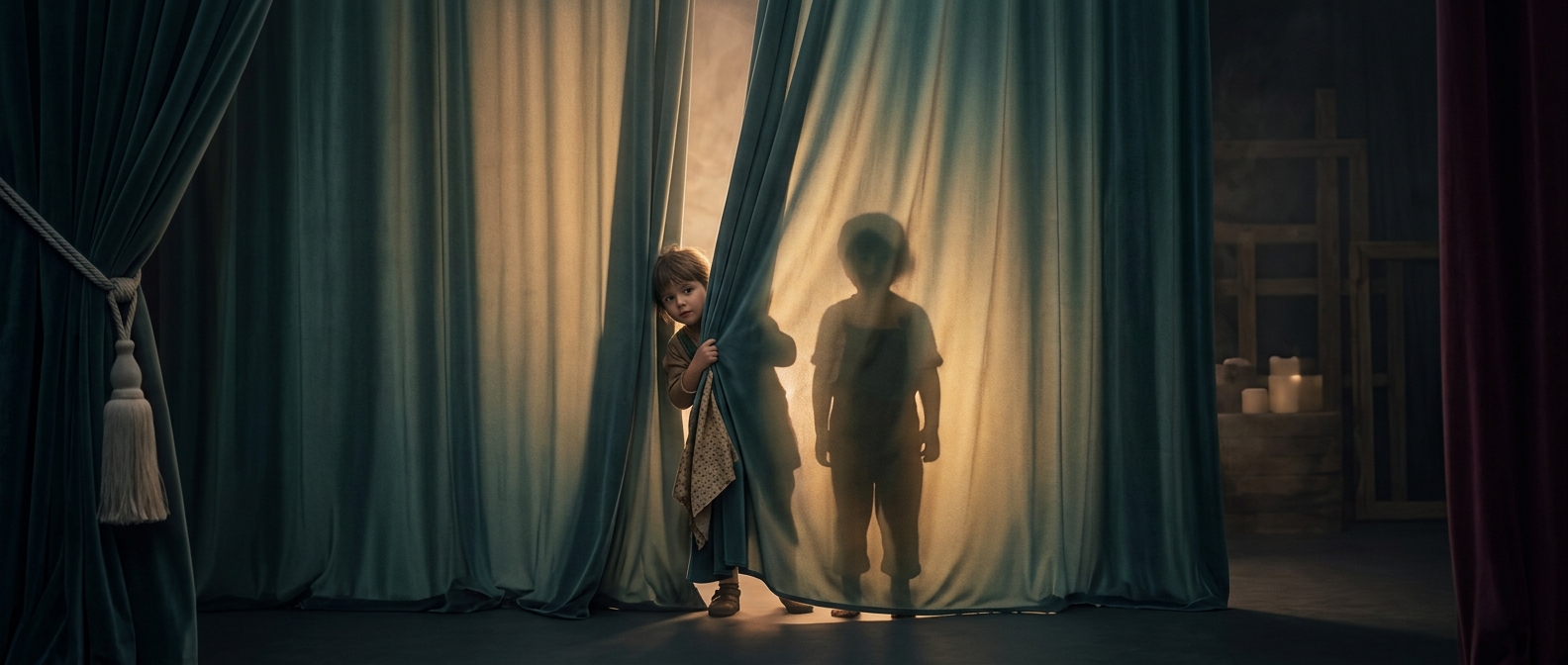
The curtain hides a view, not a body
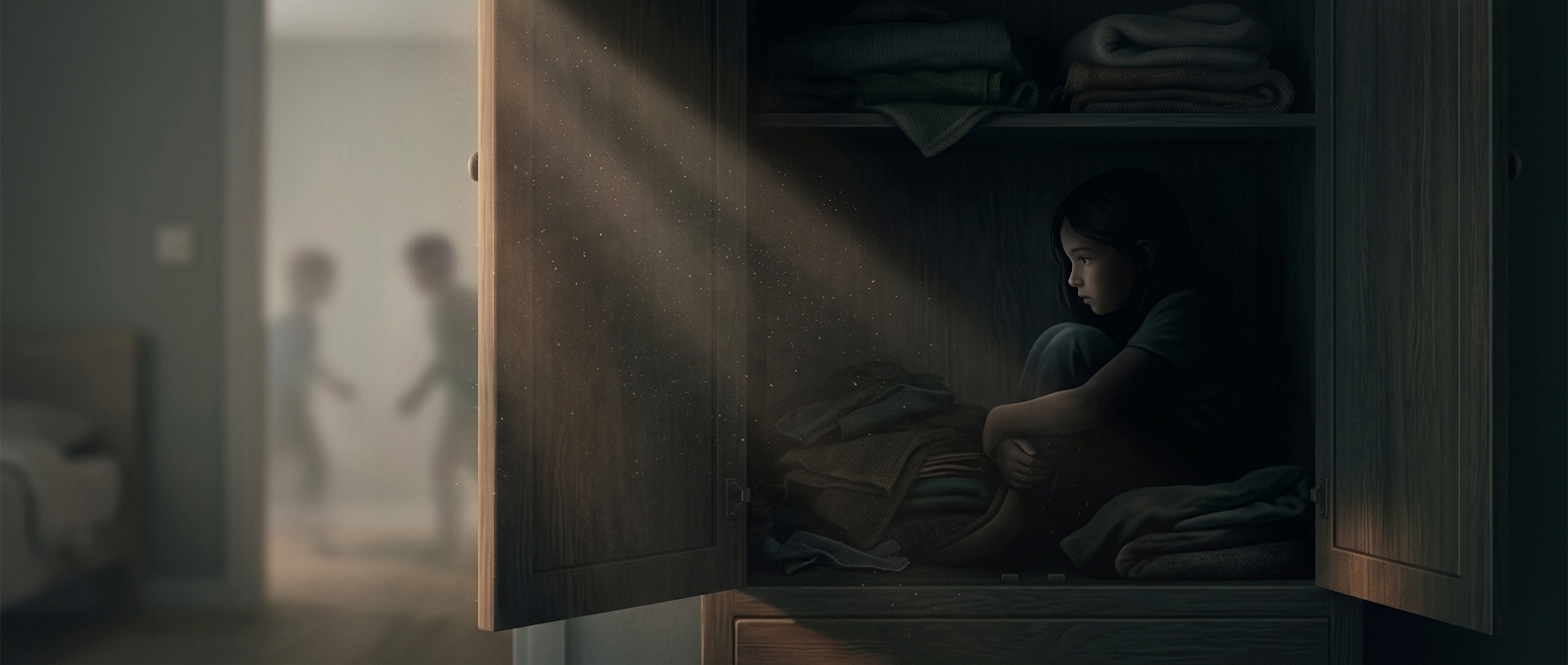
For a young child, hiding can feel like a simple change in what is visible: cover the face, and the person disappears. The child may use their own point of view as a guide to everyone else’s. Because they can no longer see the room, it is easy to treat the room as if it can no longer see them.
That is different from deliberately ignoring the obvious. Understanding that another person has a separate viewpoint—and can see what the child cannot—is a skill that develops through experience. A curtain offers a useful test: it blocks the child’s view, but its thin fabric or open edges may leave the child plainly visible.
A hiding game teaches the other side of sight
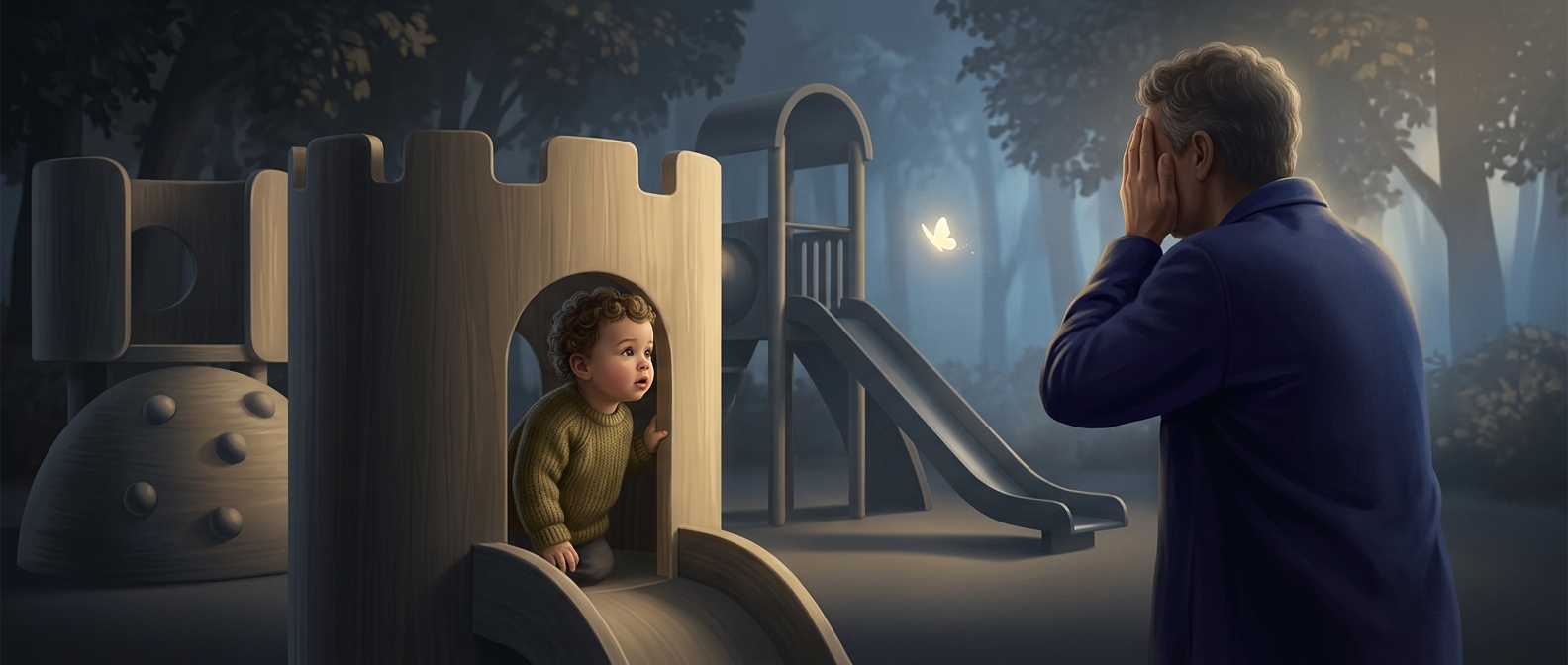
Games such as peekaboo turn that mismatch into a repeated discovery. The adult disappears from view, then returns; the child hides, and the adult finds them anyway. Each round gives the child a chance to connect two perspectives: I can’t see you does not necessarily mean you can’t see me.
That is why a child may proudly hide with their face covered while their feet stick out beneath the curtain. The hiding works from inside the child’s viewpoint—and the game becomes fun when everyone else can see why it doesn’t work from theirs.