The hidden skill behind peekaboo
A baby’s view of the world is closely tied to what is happening right now. When a face disappears, keeping that person in mind without seeing them takes a developing ability: representing something mentally even while it is out of sight. That ability grows gradually, so a baby may react to a familiar person’s disappearance very differently from an older child who expects them to remain nearby.
A game built around a tiny prediction
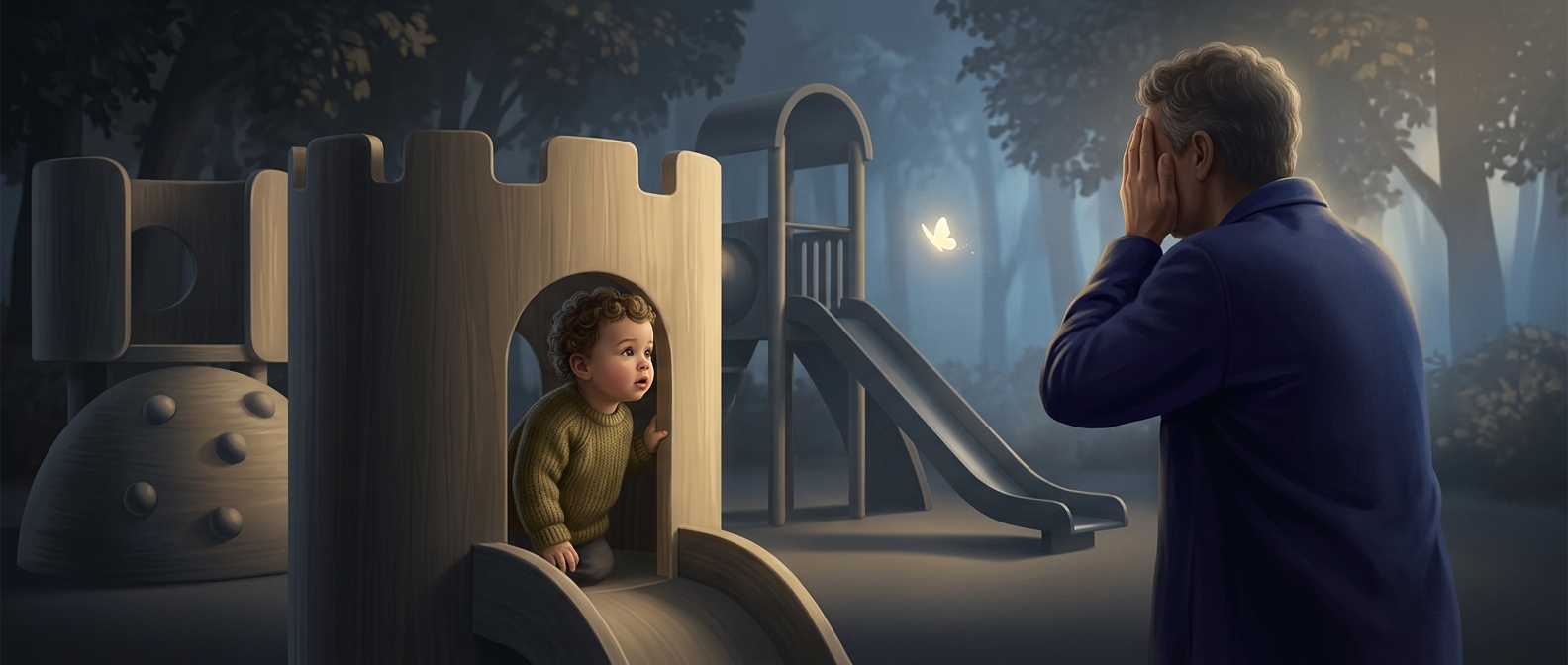
Peekaboo gives babies a simple sequence to follow: a face is present, it vanishes, then it returns. The pause behind the hands or furniture creates a small gap between what the baby sees and what the baby expects. When the face reappears, the surprise is resolved—and the familiar pattern invites another round.
The adult is not just hiding. A change in voice, a rustle, or a brief pause can signal that something is about to happen. Babies can use those cues to anticipate the reveal, even before they can explain what they expect. Repetition makes the sequence easier to recognize, while slight changes keep it lively.
Why the reveal matters
For the adult, the person never went anywhere. For a baby still learning how to track people and objects beyond immediate view, the return can be the most striking part of the game. Each round pairs a moment of uncertainty with a comforting, familiar reunion. That is why a few seconds behind a couch or a pair of hands can turn an ordinary face into the star of a repeat performance.