Creation as a rupture in the divine
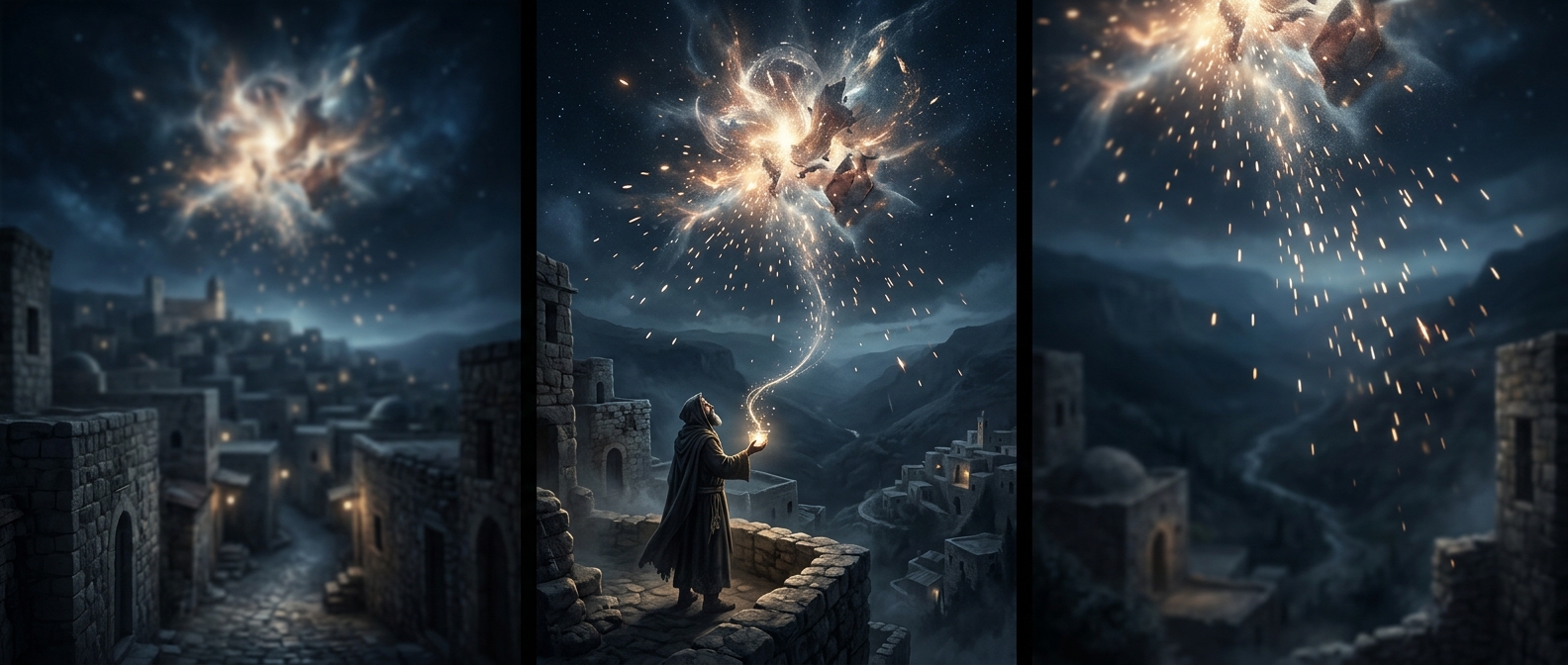
In the sixteenth century, the Jewish mystic Isaac Luria taught in Safed, a town in Ottoman-era Galilee, a creation story that began not with the world being made whole but with a break. In Luria’s account, God first withdrew or contracted divine presence to make room for creation. This idea is called tzimtzum, Hebrew for “contraction.” Divine light then flowed into the newly opened space, but the vessels meant to contain it could not bear its intensity and shattered.
The broken vessels left sparks of holiness scattered among the ordinary things of the world. The image gave suffering and disorder a place within a cosmic story: creation was unfinished, carrying fragments of its original holiness rather than standing wholly apart from God.
How ordinary actions became part of repair
Luria called the work of restoring what had been broken tikkun, or “repair.” In this teaching, people help gather the scattered sparks through righteous deeds and religious observance. The task is not simply to escape material life; it is to act within it in ways that release holiness caught in the world.
That made everyday choices spiritually consequential. A ritual act or ethical deed could be understood as more than personal virtue: it contributed, however modestly, to repairing creation. The human role was therefore active, not merely contemplative. People could participate in a cosmic process whose completion remained beyond any one person’s reach.
Why the idea endured
Luria’s teachings were passed on by disciples and became influential in later Jewish mysticism. Their vivid mechanism—contraction, shattered vessels, hidden sparks, repair—offered a way to connect cosmic upheaval with practical religious life. A meal, a prayer, or an act of kindness could be imagined as touching a damaged universe at its smallest scale.