Why Yaldabaoth Has a Lion’s Face and a Serpent’s Body
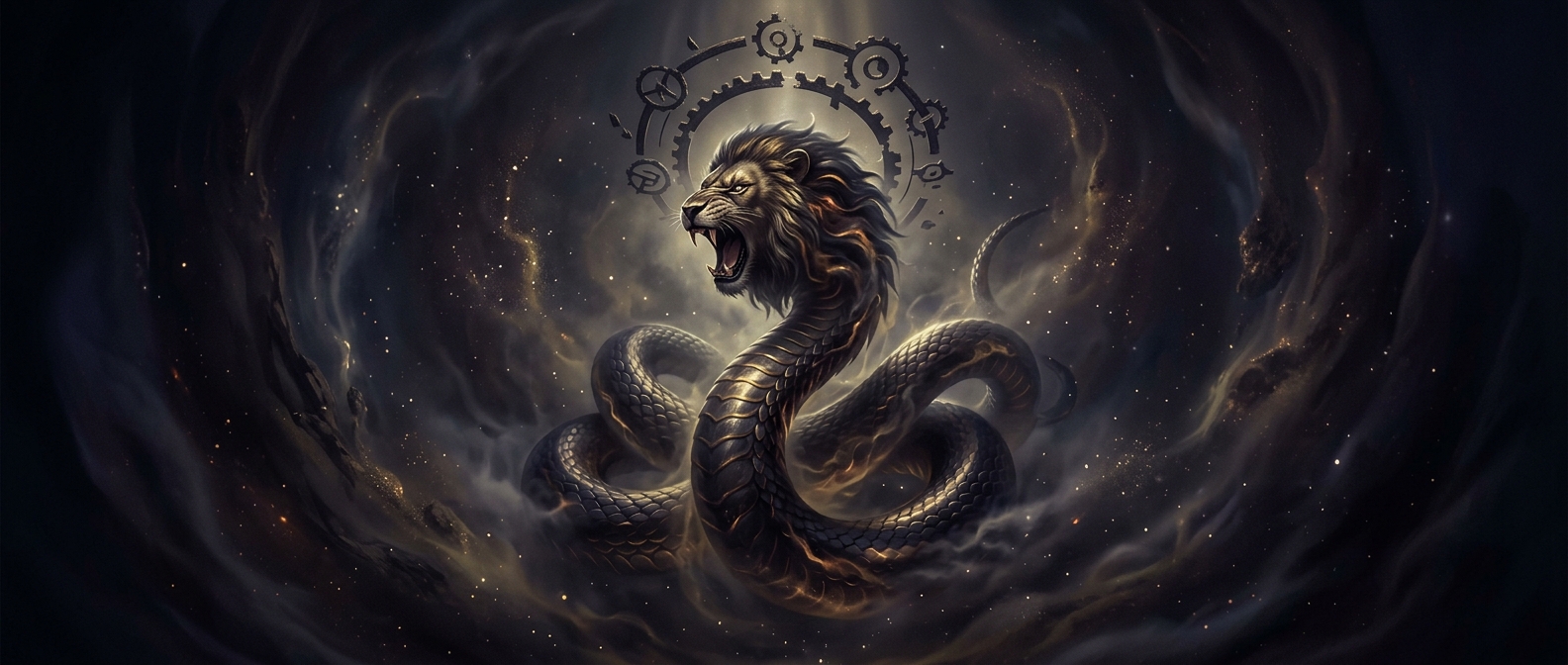
Yaldabaoth is a figure in some ancient Gnostic writings, where the visible world is portrayed as the work of a flawed, lower creator rather than the highest divine reality. The striking hybrid image—lion’s head, serpent’s body—makes that status visible: he appears imposing, but he is not the ultimate God.
A Creator Who Mistakes His Limits
In these stories, Yaldabaoth makes the material cosmos and rules it, yet lacks awareness of the higher spiritual realm. He declares himself supreme because he cannot perceive anything beyond his own domain. His error is not simply anger or ambition; it is ignorance mistaken for authority.
That idea gives the image its force. A lion can suggest command and ferocity, while a serpent can evoke cunning and danger. Together they make Yaldabaoth a formidable ruler, but also an unsettling, incomplete one. The creature’s strange form signals that the power shaping the world is not necessarily wise or truly supreme.
What the Image Meant to Believers
Gnostic groups were diverse, so their accounts and interpretations varied. In some, the story offered an explanation for why earthly life could feel constraining or imperfect: the world belonged to a creator who did not understand the greater reality above him. Human beings, however, could possess a spiritual element connected to that higher realm.
The image therefore does more than make a monster memorable. It turns a theological argument into a scene: a ruler can command a world and still be blind to what lies beyond it. Yaldabaoth’s confidence is precisely what reveals his limitation.