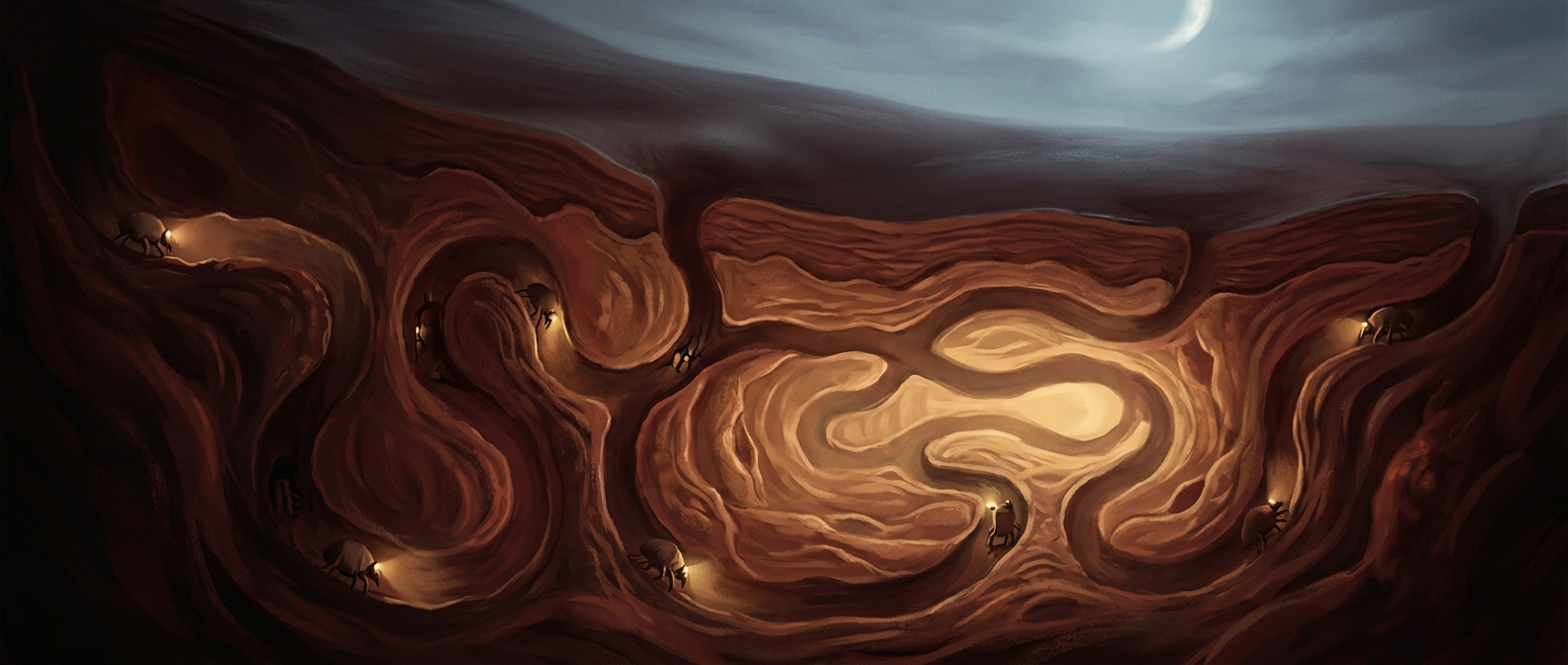
How a scabies tunnel forms
The scabies mite is a tiny parasite that spends most of its life in the outermost layer of human skin, the stratum corneum—a thin sheet of dead cells that normally flakes away. A fertilized female works her way through this layer, making a narrow, winding burrow as she goes. She lays eggs along it; after they hatch, the young mites emerge toward the surface and develop there.
The burrow is shallow, not a tunnel through living tissue. It may look like a faint, short, crooked line, though scratching and inflammation can make it hard to see. Mites are usually too small to spot with the naked eye.
Why the itch can outlast the crawl
The sensation is not a mite moving beneath the skin. It is an immune response: the body reacts to mites, eggs, and their waste in the skin. That reaction can cause intense itching and a rash, often worse at night. Because the immune system remains activated for a while, itching may continue after treatment has killed the mites; the sensation alone does not show that they are still present.
Why close contact matters
Scabies spreads mainly through prolonged, direct skin-to-skin contact, which gives mites time to transfer from one person to another. Brief contact is less likely to do so. Since symptoms can take weeks to appear after a first infestation, someone can pass scabies on before realizing they have it. That delay helps explain why treatment often needs to include close household or intimate contacts, not just the person whose rash is easiest to see.