Electricity does the separating work
Bauxite is not fed straight into the smelter. It is first refined into alumina, a powder made of aluminum and oxygen. At the smelter, alumina is dissolved in a hot bath of molten cryolite, a salt that helps the mixture conduct electricity and lets it operate at a lower temperature than alumina would require on its own.
The bath sits in a large carbon-lined tank. A powerful direct current flows from carbon blocks above the bath, through the liquid, and into the tank’s lining. That current drives electrolysis: electrical energy forces aluminum and oxygen, which are chemically bound together in alumina, to separate.
The current keeps the metal flowing
At the tank’s lining, aluminum ions gain electrons and become liquid aluminum. The heavier metal sinks and gathers at the bottom, where it can be tapped off. Oxygen forms at the carbon blocks and reacts with them, gradually consuming the blocks and producing carbon dioxide.
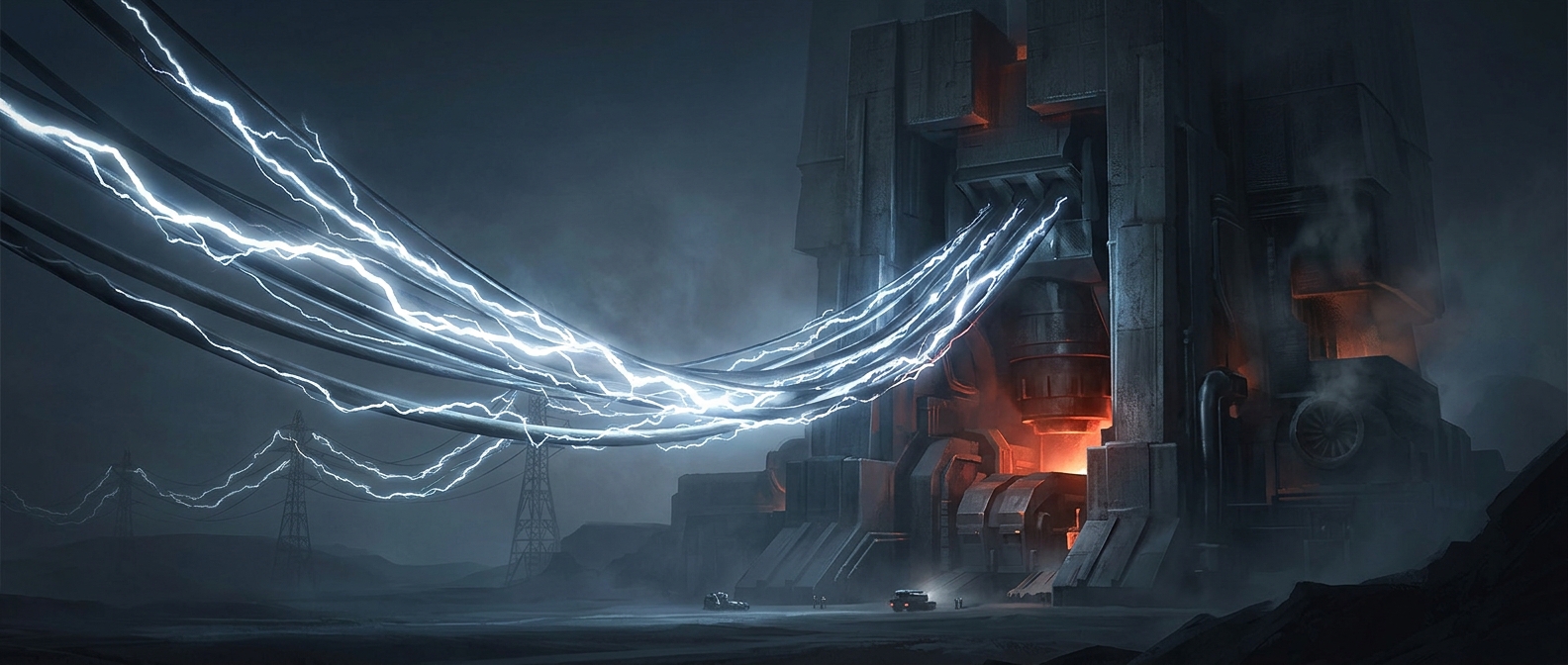
This is not a case of simply heating ore until metal melts out. Heat keeps the bath liquid, but it cannot by itself break alumina’s strong chemical bonds efficiently. The current supplies the electrons and drives the reaction. If the electrical supply stops, the process stalls—and the bath can cool and solidify, making a restart difficult.
That combination of an electrically driven reaction and a continuously hot bath explains the smelter’s large, steady power demand. A smelter is effectively a row of enormous chemical cells, each needing current without interruption to keep turning refined alumina into metal.