How Abrasive Blasting Removes Rust Without Dissolving It
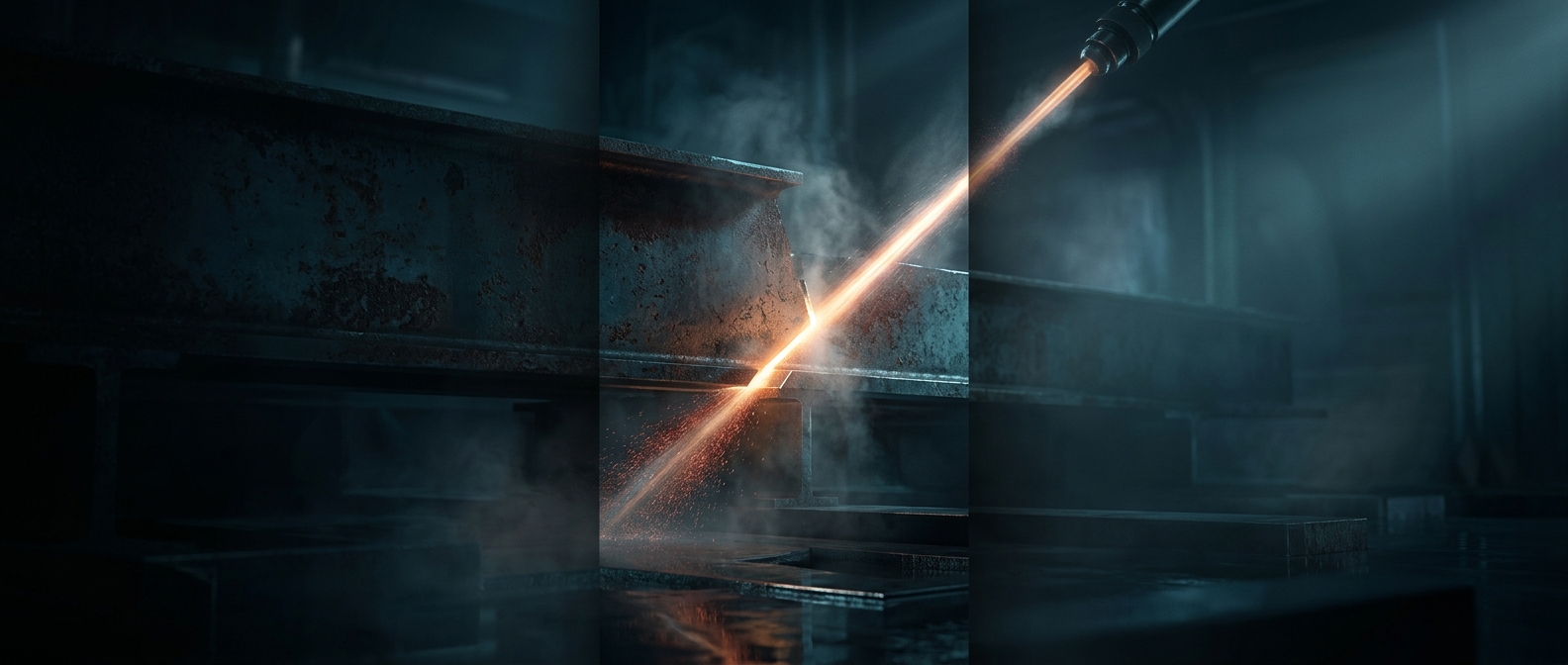
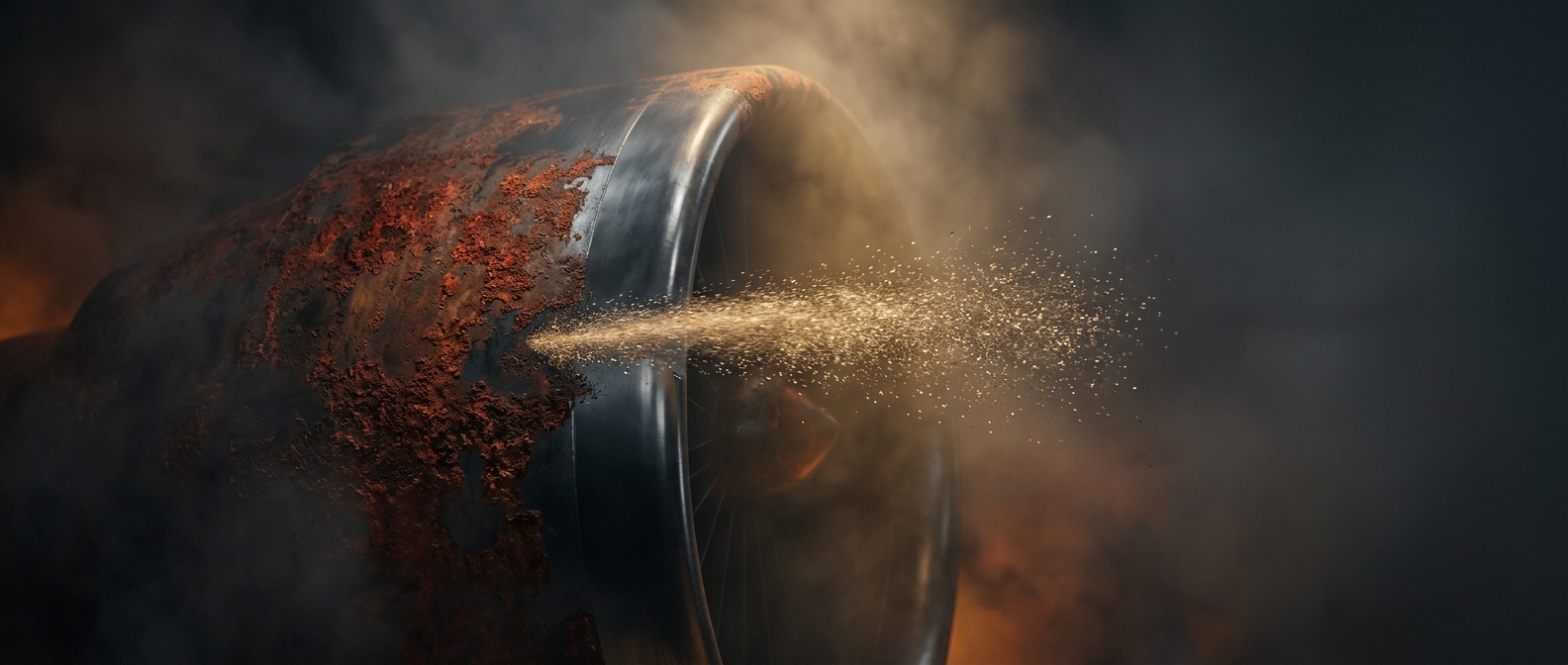
The process works by impact. Compressed air drives small, hard particles toward a metal surface; each particle strikes like a tiny chisel, cracking and loosening rust, paint, and other coatings. Repeated impacts clear the layer away and reveal the metal beneath. The grit does not chemically dissolve the rust—it removes it mechanically.
The particles also change the surface. Their impacts leave microscopic peaks and valleys, called a surface profile. That texture gives many primers and protective coatings more area to grip, so blasting can prepare metal for its next finish as well as clean it.
The Abrasive Is a Tool, Not a One-Size-Fits-All Choice
“Sandblasting” is often used as a general name, but operators may use other abrasive materials. Particle hardness, shape, and size affect how quickly a coating comes off and how rough the exposed metal becomes. A forceful abrasive can be useful on a heavy steel part, while a delicate or thin surface may be damaged or distorted by the same treatment.
That makes the job a balance: remove the unwanted layer thoroughly without taking away too much underlying material or creating a profile unsuited to the next coating. The visible cleanliness is only part of the result; the condition of the surface left behind matters too.
What Happens to the Removed Material
Blasting turns coatings and corrosion into debris mixed with spent abrasive. That material has to be contained and cleared rather than allowed to spread, and the choice of abrasive affects what ends up in the waste. The practical payoff is a newly exposed, textured surface—but it is ready for protection only after residue is removed and the metal is coated before it can rust again.