A water jet becomes a cutting tool
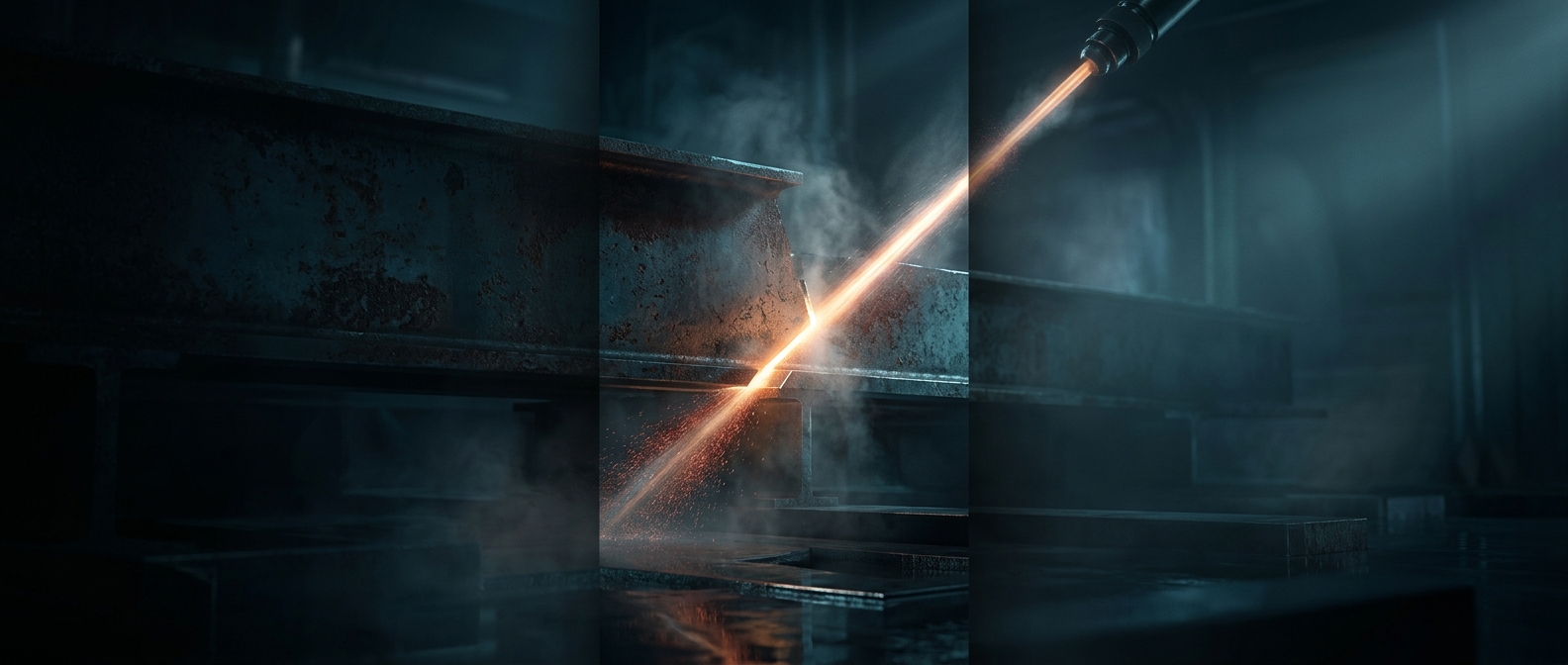
At pressures above 60,000 pounds per square inch, water forced through a tiny opening emerges as a fast, narrow jet. For cutting titanium, the jet is combined with crushed garnet—a hard mineral that acts as the actual abrasive. The water accelerates and carries the grains; their repeated impacts scrape and chip away minute pieces of metal.
That distinction matters: the jet does not slice titanium like a blade, and it does not need to melt the metal. It removes material bit by bit, tracing a narrow path through the solid workpiece. The cut is called abrasive waterjet cutting because the suspended grit does the grinding while the water delivers it.
Why cut without melting?
Titanium is strong and difficult to machine, but a waterjet can sever it without relying on a hot cutting edge. Because the process removes material mechanically rather than melting it, it avoids the broad heat-affected zone associated with many thermal cutting methods—a region where heat can alter a metal’s properties. The result is a way to cut a tough metal while limiting heat-driven changes around the cut.
The surprising part is that the water alone is not the whole tool: a thin stream becomes capable of cutting titanium when it carries thousands of tiny, hard impacts into the metal.