How molten glass becomes a load-bearing thread
In fiberglass production, molten glass is drawn through tiny openings in a heated plate called a bushing. As each stream cools, it becomes a fine, continuous filament. Drawing the glass into a thin strand makes it flexible enough to handle, even though the glass itself remains brittle: it can bend slightly as a filament but may snap under a sharp flaw or blow.
Filaments are gathered into bundles, then woven into cloth. The weave holds the fibers in place and lets manufacturers arrange them in useful directions. A layer can resist pulling along its threads, while additional layers turned at different angles help a finished part withstand forces from more directions.
The resin turns cloth into a composite
The woven glass is the reinforcement, not the finished armor. Liquid resin flows around the fibers and, when it cures, becomes a solid matrix that binds them together. The fibers carry much of the pulling load; the resin keeps them aligned, transfers force between them, and helps the layers act as one piece. Together, they form a glass-fiber composite—a material whose properties come from combining distinct ingredients.
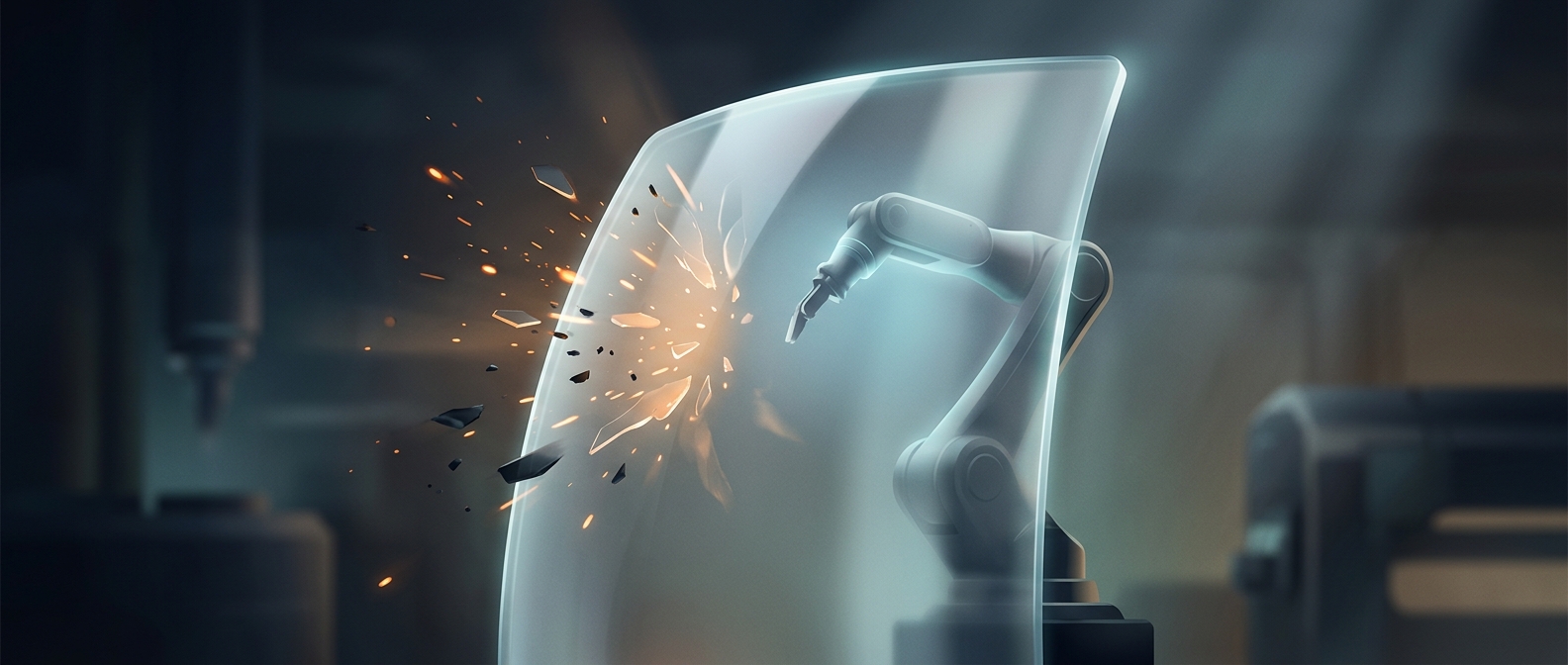
That division of labor explains why the combination can be both light and structurally useful. A fabric alone can shift and fray; cured resin alone may crack. In a composite, a strike or other load can be spread across many fibers and layers rather than concentrated at one point. The exact performance depends on the fiber layout, resin, thickness, and what the structure must withstand.
Why the weave matters
Changing the direction and number of layers lets designers tune a panel for its job without making every part from a solid block of material. The result can serve as lightweight structural protection, but “armor” describes a designed composite component—not ordinary glass cloth. Its protective value comes from how the fibers, resin, and layered construction work together.