The Ground Worked Like a Natural Cellar
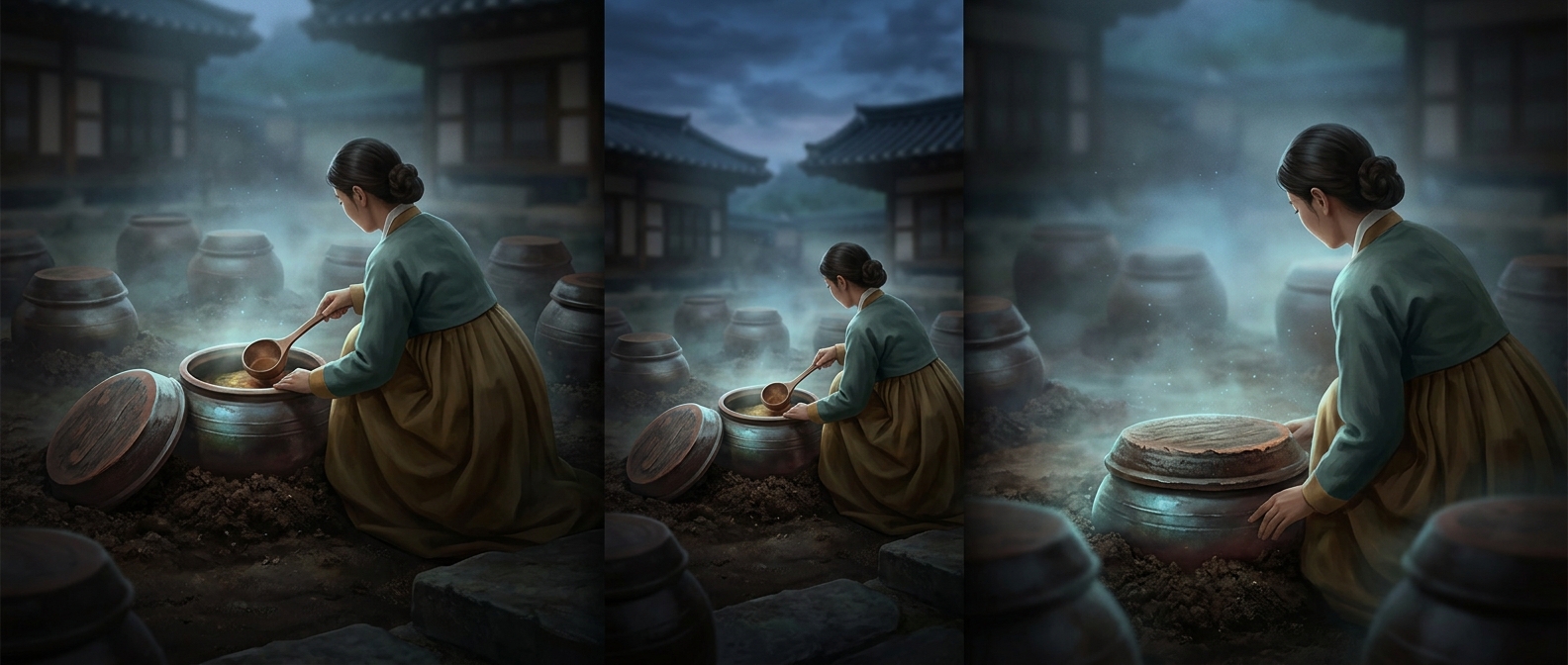
In many Korean households, winter kimchi was stored in large earthenware jars called onggi, often set into the ground near the home. Soil changes temperature more slowly than air does, so burying a jar softened the sharp swings between daytime warmth and nighttime cold. That steadier environment helped keep the contents from freezing solid while fermentation continued at a gradual pace.
The jar’s position also made storage practical: families could reach it from the yard without bringing a large container indoors. In some places, rows of storage jars stood together in a courtyard, forming a familiar part of the household landscape.
Salt and Time Did the Preserving
Before storage, cabbage was salted. Salt drew water from the leaves and helped favor lactic-acid bacteria—the microbes that turn sugars in the vegetables into acid. As acidity rose, the kimchi developed its tangy flavor and became less hospitable to many spoilage organisms. Cool conditions slowed this process, giving the vegetables time to ferment without rushing toward sourness.
Making and storing winter kimchi was part of kimjang, the seasonal work of preparing enough kimchi for the colder months. The buried jar was therefore more than a container: it connected a household’s winter food supply to the temperature of its own yard. A family could open the ground and retrieve a portion when needed, while the rest stayed cool and continued to mature.