How a leftover cake became an Australian classic
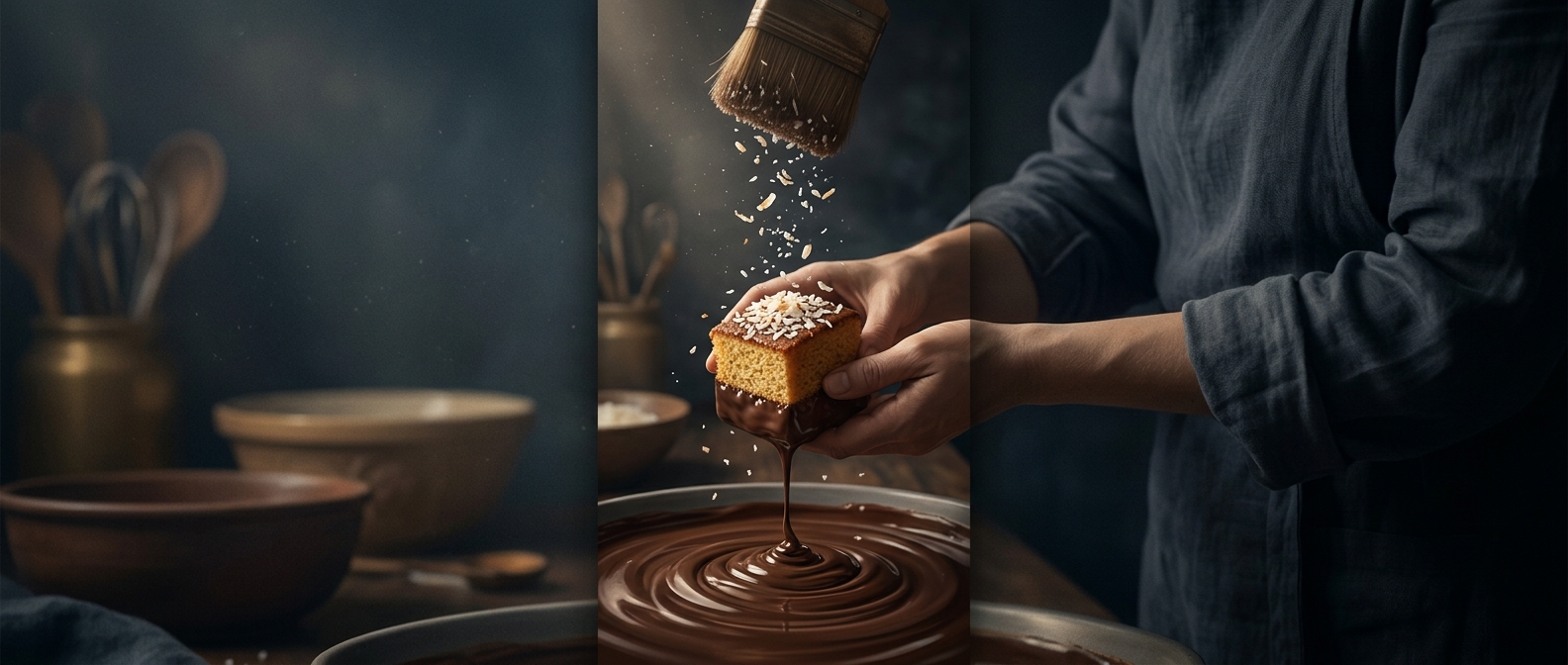
The lamington’s appeal lies in a useful kitchen trick: a coating turns plain sponge into a sturdier, more flavorful sweet. Chocolate icing adds moisture and a bittersweet layer, while desiccated coconut—the finely grated, dried kind—sticks to the outside and keeps the pieces from feeling tacky in the hand. Cut into squares, the cakes are easy to serve at gatherings or pack for a bake sale.
The familiar origin story says the recipe was devised to use stale sponge. That makes practical sense: a slightly dry cake can absorb some icing without collapsing, and the coating gives it renewed flavor. But the story is usually told as a reported origin, not a firmly documented account of one inventor’s moment of discovery.
A small cake with a strong local identity
In Australia, lamingtons are more than a way to use up cake. They are a recognizable part of the country’s baking tradition, often encountered in cafés, community events, and fundraising stalls. Their simple construction also makes them adaptable: some are split and filled with jam or cream, though the basic chocolate-and-coconut exterior remains the defining feature.
That portability is part of the design’s quiet success. The coconut-covered surface contains the icing, and the square shape makes a batch easy to portion and share—turning an economical kitchen solution into a treat people seek out on its own.