Why the blend is toasted before it is ground
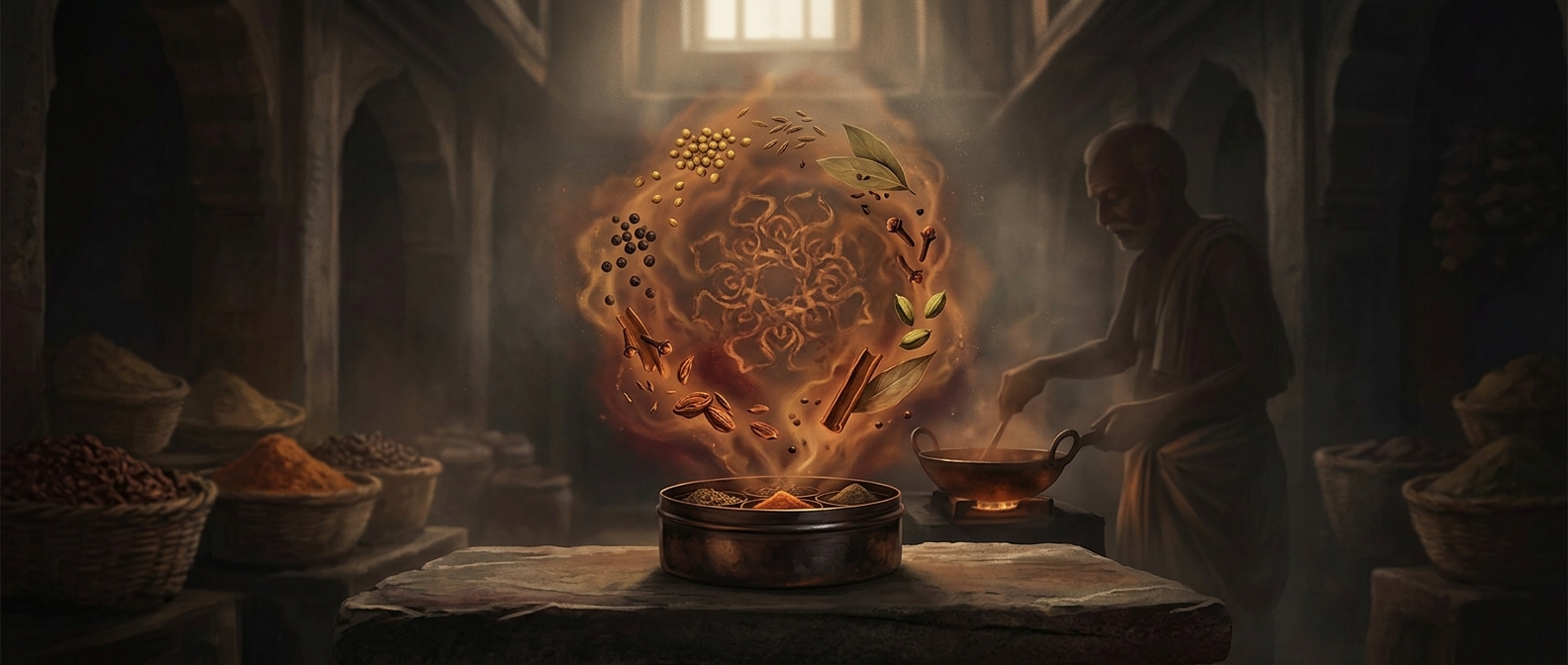
Toasting changes what the spices contribute. Gentle heat drives off some moisture and releases aromatic oils, making whole spices smell more pronounced. Grinding them afterward exposes even more surface area, so their fragrance spreads quickly through a dish. The aim is a brief, controlled toast: too much heat can scorch the spices and make the finished blend taste harsh.
That concentrated aroma is why cooks often stir garam masala into a dish near the end, or sprinkle it over the food just before serving. Added late, it can remain vivid rather than fading during a long simmer. Some recipes use it earlier, though, letting the flavor meld into the sauce or stew.
One name, many kitchen traditions
There is no single fixed recipe. A household or local cook chooses a balance to suit the food: warm, sweet-smelling spices such as cinnamon and cardamom can sit alongside earthier cumin or sharper pepper and cloves. The proportions—and whether the ingredients are toasted together or separately—change the blend’s character.
That flexibility makes the spice mix a small expression of place and habit. A jar bought in one town may taste noticeably different from one made in another kitchen, even when both carry the same name. The practical lesson is to treat garam masala as a finishing flavor, not a standardized seasoning: add a little, taste, and let its aroma guide the final adjustment.