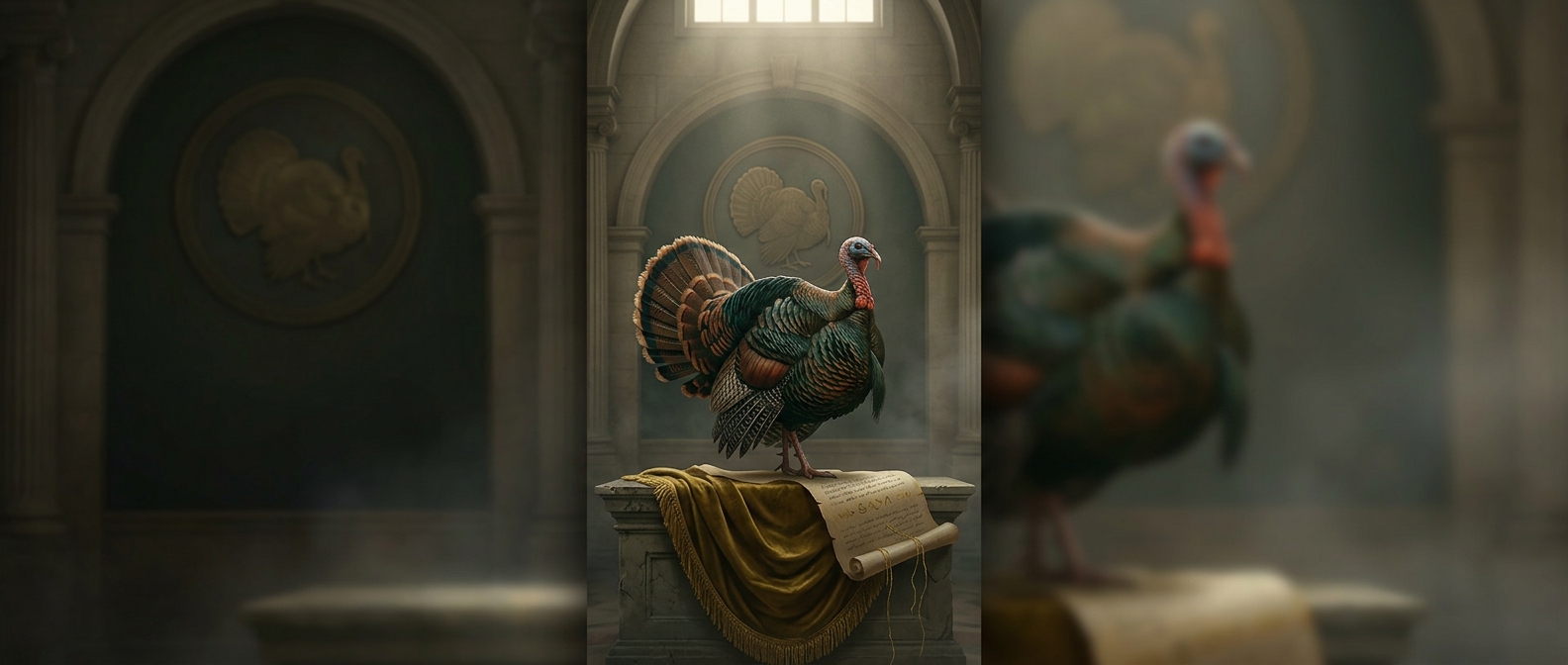
How the eagle won a place on the Great Seal
The turkey’s near-miss was less a formal contest than a disagreement over what an American emblem should represent. In a 1784 letter, Benjamin Franklin objected to the eagle used by the Society of the Cincinnati, an organization of Revolutionary War officers. He praised the turkey instead as a more respectable American bird. The letter made his preference memorable, but it did not amount to an official campaign to replace the eagle on the national seal.
A symbol built for a new republic
Congress had been working on a national seal since 1776. The design it approved in 1782 showed a bald eagle holding an olive branch and a bundle of arrows. Together, those objects made the image legible as a political statement: the new country could seek peace, but it could also defend itself.
An eagle offered a forceful, familiar image for that purpose. The turkey, though native to North America and unmistakably American, carried different associations. Franklin’s preference exposed a real choice about national identity—whether to favor a bird rooted in the continent or one that conveyed power in a widely recognized heraldic style.
The seal settled the choice, but not the joke. The eagle became an enduring national emblem; the turkey remained linked to American life in another way, on the holiday table.