A rule that kept the puck moving one way
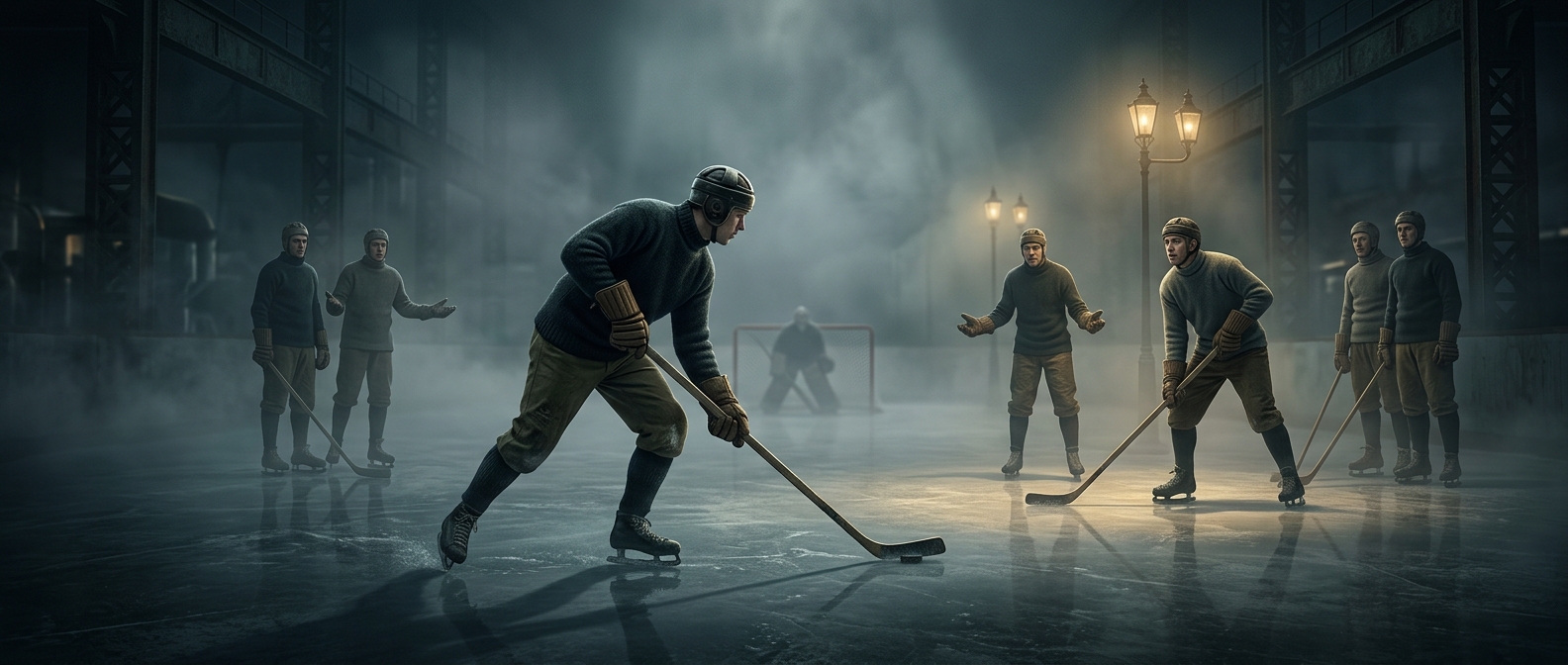
In early organized hockey, a player could not simply send the puck ahead to a teammate. To advance, the puck carrier had to skate it through opposing players, while teammates stayed behind the play. A pass that crossed ahead of the puck was illegal, so a promising opening could not be used in the way modern players use a long outlet pass.
That restriction made possession unusually personal. The carrier needed to protect the puck, change direction, and find a route through defenders; teammates could help by positioning themselves for a pass backward or sideways, but not by racing ahead to receive the puck. Moving the attack therefore depended on one player’s skating and stickhandling rather than on quick combinations across the ice.
Why changing the rule changed the game
Forward passing made it possible to move the puck faster than a player could skate with it. A defender who had been able to focus on the carrier now had to watch for a pass and cover its intended receiver. That opened more space for coordinated attacks—and made teamwork, timing, and defensive positioning more important.
The shift was not simply a matter of allowing every pass everywhere at once: hockey’s passing and offside restrictions changed over time. But the basic change had a lasting effect. Once teammates could help carry the puck forward without carrying it themselves, an advance no longer had to be a solo journey through the defense.