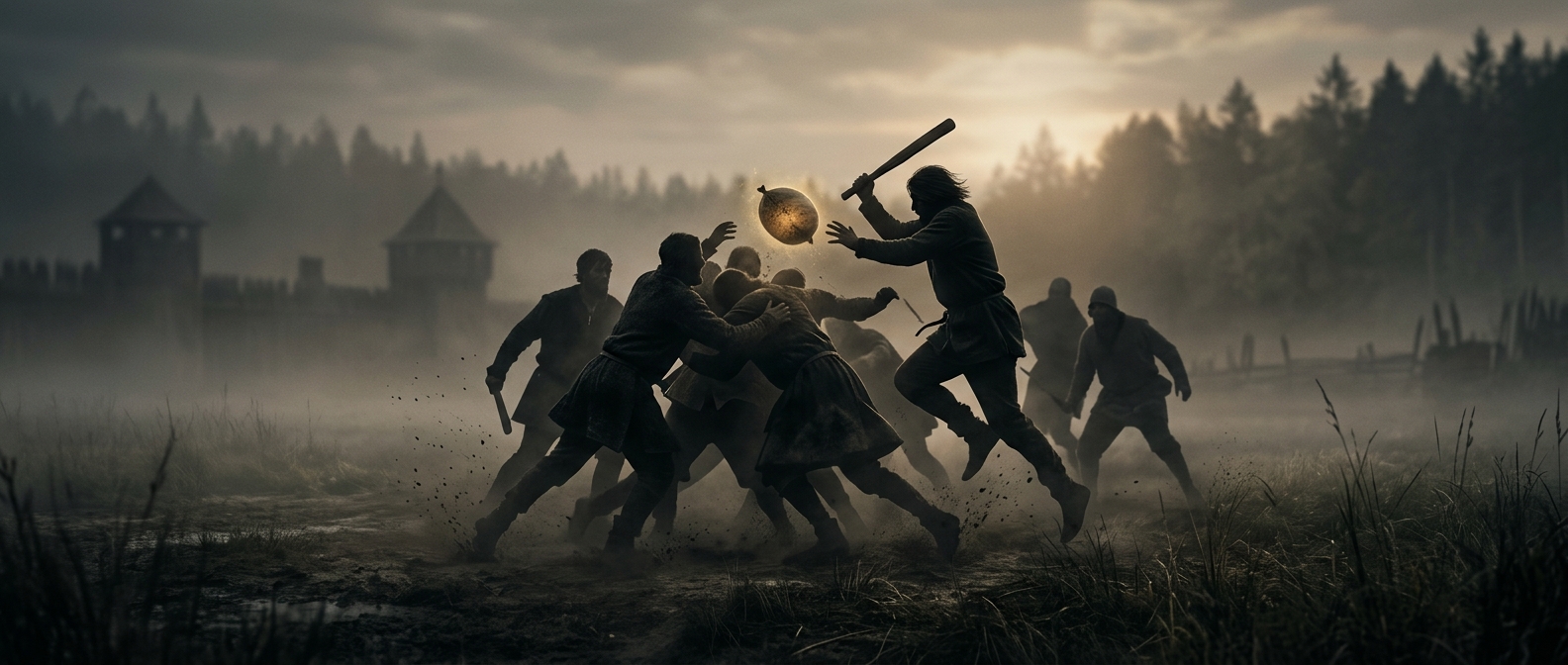
Why mob football could turn into a village-wide brawl
Medieval mob football was less a match on a marked pitch than a contest involving crowds of people. With whole communities pressing toward one shared object, there was little separation between players and spectators—and few ways to keep a collision from becoming a fight. The inflated pig’s bladder was the game’s focus, but controlling it meant struggling through other bodies.
A game without the safeguards of modern soccer
Modern soccer depends on boundaries, defined teams, an official, and rules that limit physical contact. In mob football, the lack of comparable restrictions meant that punching and kicking were not violations that could bring play to a halt. The basic contest itself encouraged close contact: participants had to compete physically for the bladder, while a mass of moving people made falls and trampling possible.
The danger was not simply that individual players might choose to be violent. When a crowd is pushing in the same direction, one person’s shove can knock another off balance, and people behind may not see someone fall. Broken bones and deaths were among the reported consequences of this kind of play.
A communal contest with a high cost
Mob football brought entire villages into a shared, public competition, but collective participation also made the action difficult to contain. Without a clear playing area or an official empowered to stop dangerous play, the contest could spill across the community and keep going amid disorder. The same feature that made the game a village-wide event—the crowd—also made its risks hard to control.