A game called “the palm”
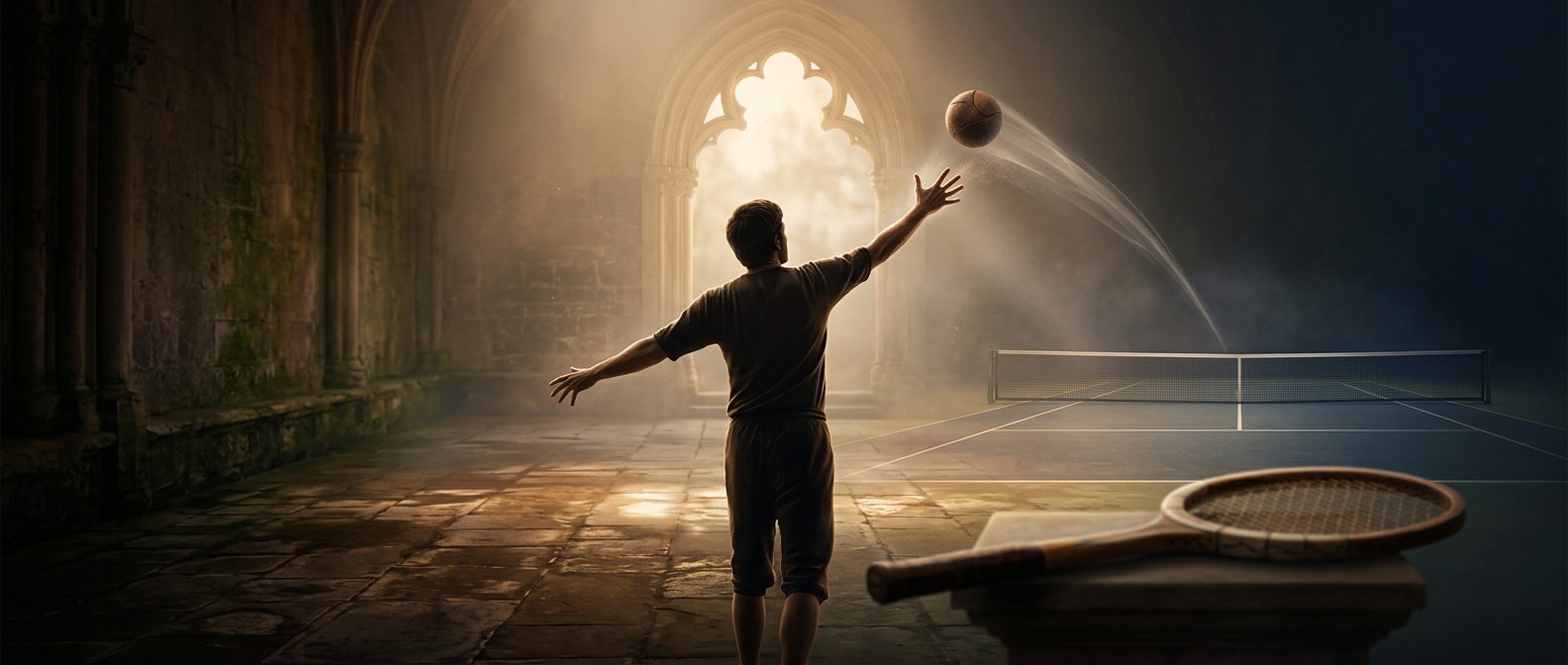
Tennis grew out of jeu de paume, French for “game of the palm.” In its early form, players struck the ball with their hands rather than with rackets. The name captured the central piece of equipment: the player’s own palm.
The ball was firm enough to make repeated bare-handed hitting punishing. Unlike a modern tennis ball, it was not a standardized, pressurized sphere; early balls could be made from tightly packed materials. Their weight and feel depended on how they were made, but striking one still sent the impact straight into a player’s hand.
From protection to a better tool
Players had reason to protect their palms. Gloves offered a buffer, and wooden striking tools provided another way to meet the ball without taking every blow on bare skin. Over time, the racket—with a frame and a net of strings—offered a larger surface for hitting and spread the force of contact across more than one point on the hand.
That changed more than comfort. A racket let players put distance between their skin and the ball while giving them a more adaptable way to direct it. The tool made longer, more forceful exchanges easier to sustain, helping the game move beyond the limits of what unprotected hands could comfortably absorb.
A small change with a lasting effect
The racket did not create the whole game from scratch; it transformed an existing one. The old name, jeu de paume, preserves the memory of a sport in which the hand itself was the equipment. What now seems essential to tennis began as an upgrade to protect the players who were taking the ball on their palms.