Why a parrot’s words were difficult evidence
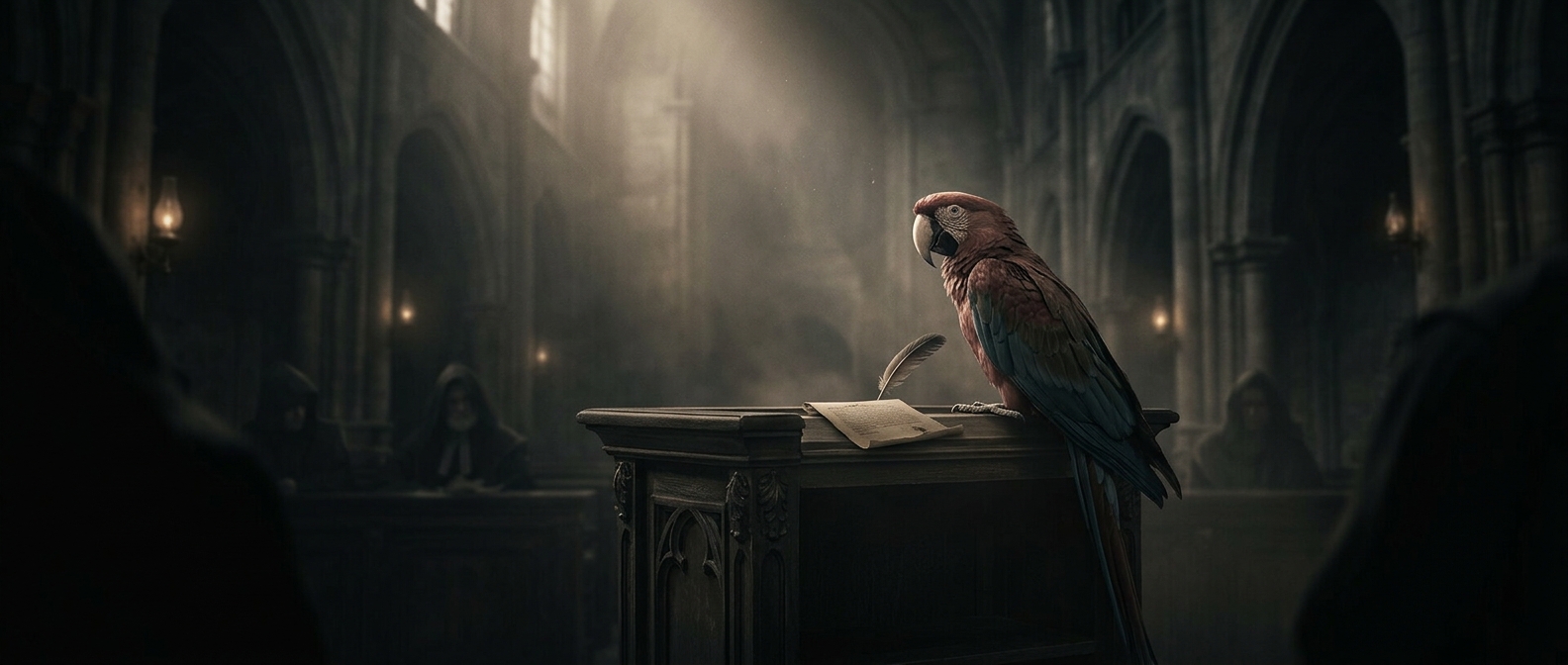
A parrot can reproduce speech with startling clarity, but mimicry is not the same as testimony. A bird may repeat a phrase it heard once, a sound it encountered often, or a fragment learned in a different setting. The words alone cannot establish when they were heard, who said them, or what was happening at the time.
That gap matters in a criminal case. Investigators would need to connect a repeated phrase to a particular event, then show that the bird’s imitation was not learned earlier or prompted by familiar people and routines. A human witness can be questioned about what they saw and when; a parrot cannot explain its memory or distinguish one occasion from another.
From striking clue to courtroom proof
A bird’s repeated words can still attract investigators’ attention. They may suggest a line of inquiry, especially if a phrase appears to resemble something connected to a crime. But resemblance is only a starting point: people listening to ambiguous sounds can hear the words they expect, and a parrot may alter a phrase as it repeats it.
For a court, the issue is not simply whether the bird can say the words. It is whether the words reliably establish a fact at issue. Without a dependable way to identify the original speaker, timing, and context, the phrase cannot carry the weight of a conventional eyewitness account. The parrot may preserve a sound; it cannot supply the circumstances that give the sound meaning.