A Cape That Changes Shape on Demand
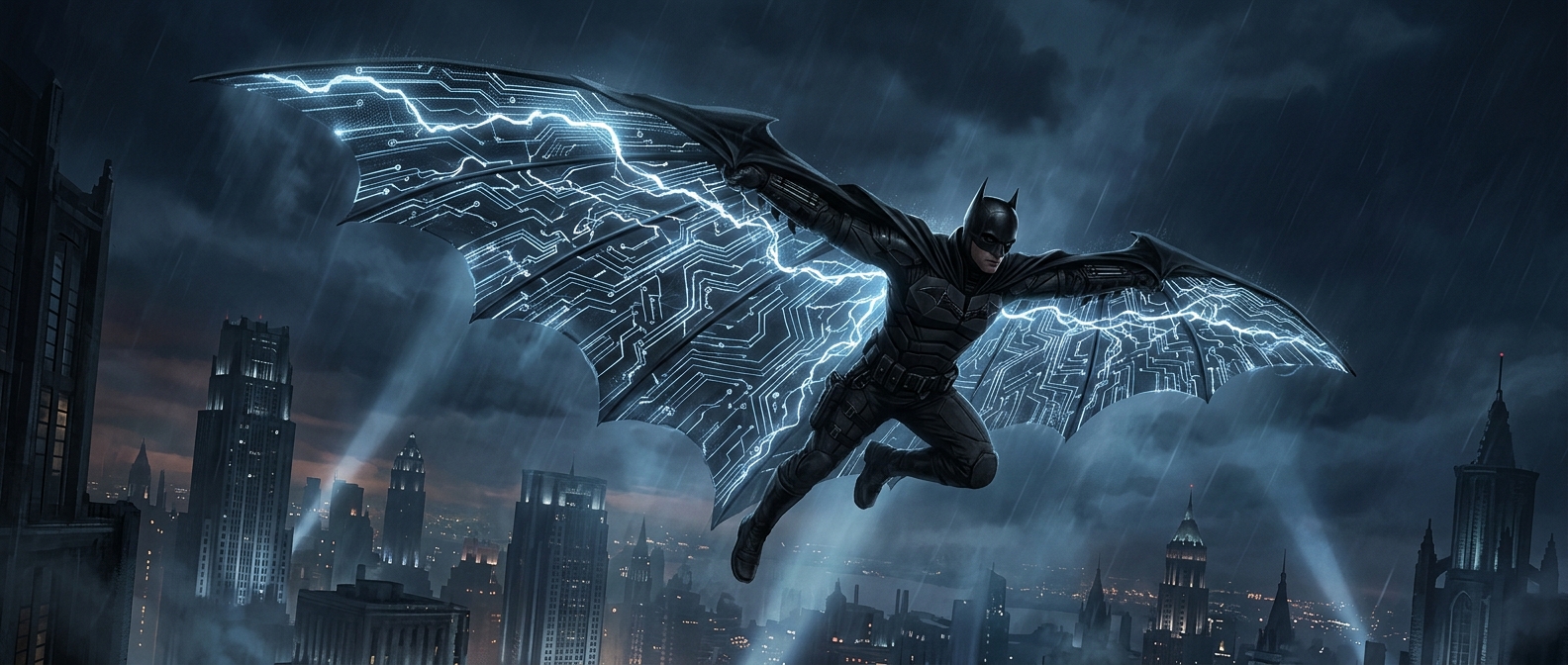
The clever design choice is not simply that Batman can fly; it is that the glider is hidden in something he already wears. A conventional set of wings would add bulk, snag on obstacles, and make a stealthy silhouette harder to maintain. A cape that lies flat until needed keeps the equipment close to his body and ready for a sudden escape.
The high-voltage shock serves as the switch. In the story’s logic, an electrical pulse makes the cape stiff enough to hold a broad shape in the air. That matters because a limp sheet would flap and collapse rather than act as a useful gliding surface. The mechanism turns a piece of clothing into temporary structure without requiring hinged wings to unfold.
Gliding Is a Tradeoff, Not Flight
Once spread, the cape can catch air and slow Batman’s descent, letting him travel forward while losing height. It does not provide its own thrust, so he still needs a launch point and has limited control compared with a powered aircraft. The cape’s shape must also balance two competing needs: stay firm enough to support a glide, yet remain flexible enough to fold back around him afterward.
That constraint makes the device especially suited to Batman’s urban setting. Rooftops provide launch points, and a brief glide can carry him across a street or toward a lower building without the conspicuous machinery of a small aircraft. The cape is therefore more than a dramatic costume feature: it is a compact escape tool whose advantage comes from disappearing when it is not in use.