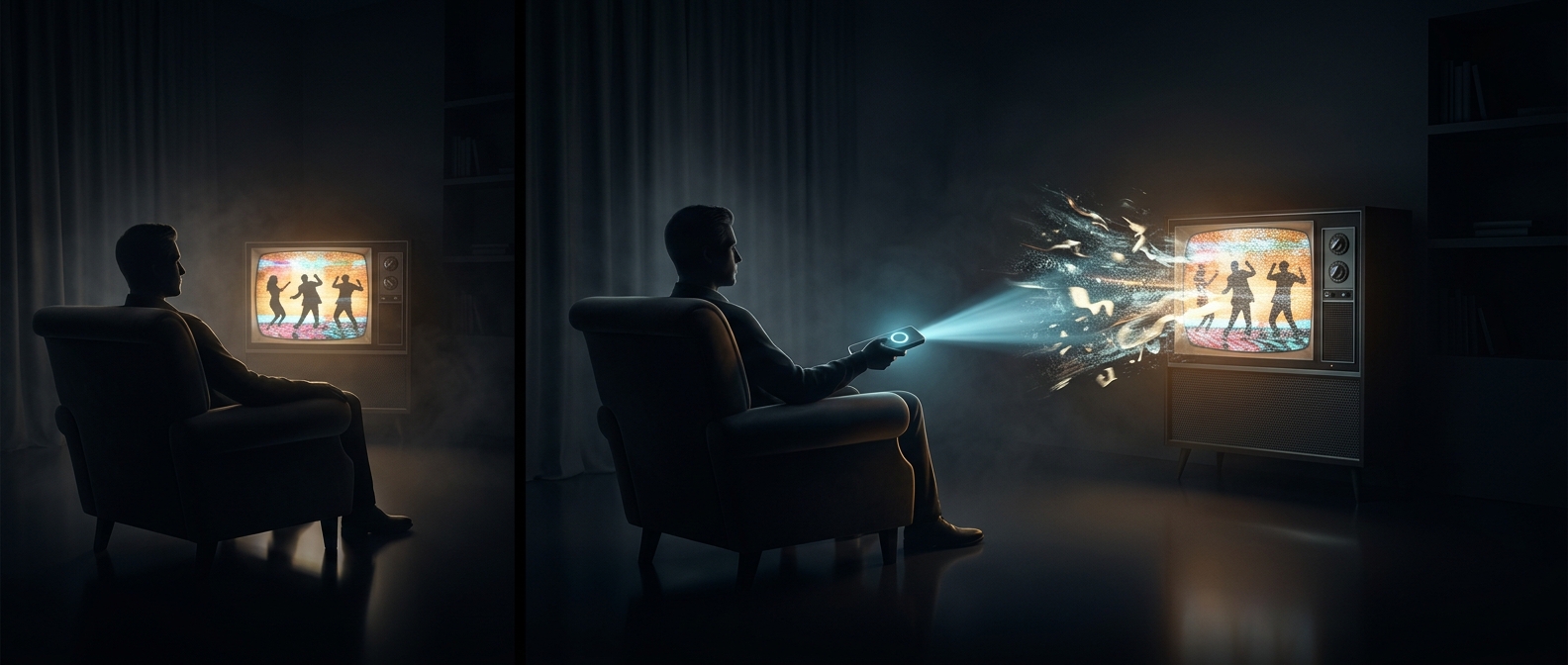
A mute button aimed at the commercial break
The familiar remote control did not begin as a way to silence television ads. But the irritation behind one early wireless TV device was strikingly specific: commercials seemed louder than the programs around them. The inventor wanted viewers to be able to cut that noise without getting up to adjust the set.
How the flashlight-like device worked
Early televisions were controlled at the set itself, so changing a channel or sound level meant crossing the room. The wireless device used light as a signal: pointed at the television, it could trigger a command remotely. That made an immediate response to a sudden volume change possible—aim, press, and silence the sound.
It was an important step in making control feel effortless, though early light-based remotes had a practical limitation: the signal had to reach the television’s receiver. Later remotes generally used invisible infrared light, which still needs a reasonably clear path to the set.
A small convenience changed viewing habits
The device’s deeper legacy was not just muting ads. Once viewers could control the television from their seats, changing channels became easy too. That helped make channel-surfing—the rapid search for something more appealing—part of watching TV. A tool conceived for one recurring annoyance thus helped shift control of the viewing experience from the broadcaster and the person at the set to the person holding the remote.