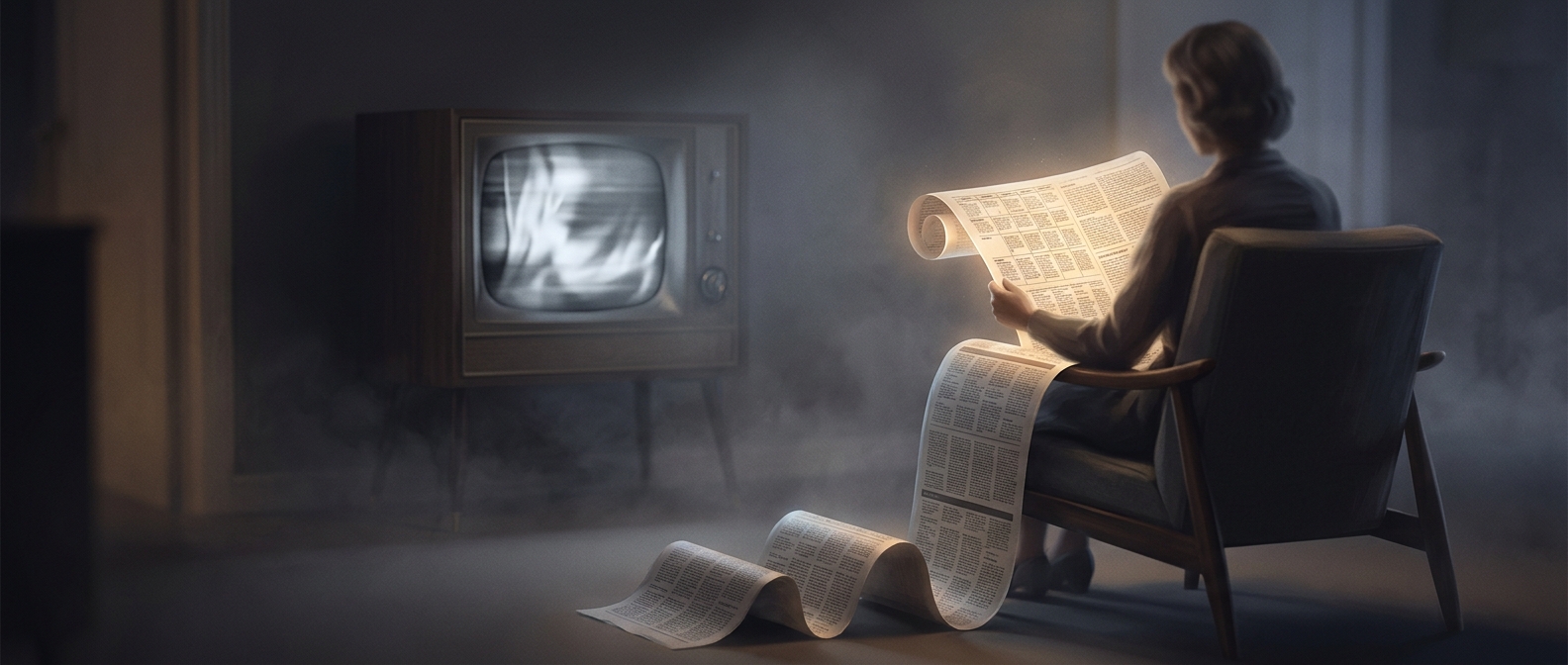
When the Listings Became the Main Attraction
Before viewers could search a screen for what was on, choosing a program meant consulting a printed schedule. Television was largely an appointment medium: a show aired at a set time, and missing it often meant waiting for a rerun—or missing it altogether. The practical question was not just what to watch, but whether a favorite program was on tonight and when to be in front of the set.
A guide that gathered those answers in one place turned scattered station schedules into something people could use to plan an evening. Its value was especially clear in a household with several people negotiating one television: the listings made the night’s choices visible before anyone switched on the set.
A Reference That Could Become a Habit
The format also gave readers a reason to return regularly. A schedule was useful only if it was current, so each new issue offered a fresh map of the week’s viewing. Listings sat alongside material about programs and performers, but the timetable supplied the recurring need: readers could check it before a show, discuss what was coming up, or settle a disagreement about airtime.
That everyday usefulness helped make a publication about television itself a major part of television culture. The guide did not merely describe the medium; it helped organize how audiences used it. Its central promise was modest and concrete: turn a crowded set of broadcast choices into a plan for the night.