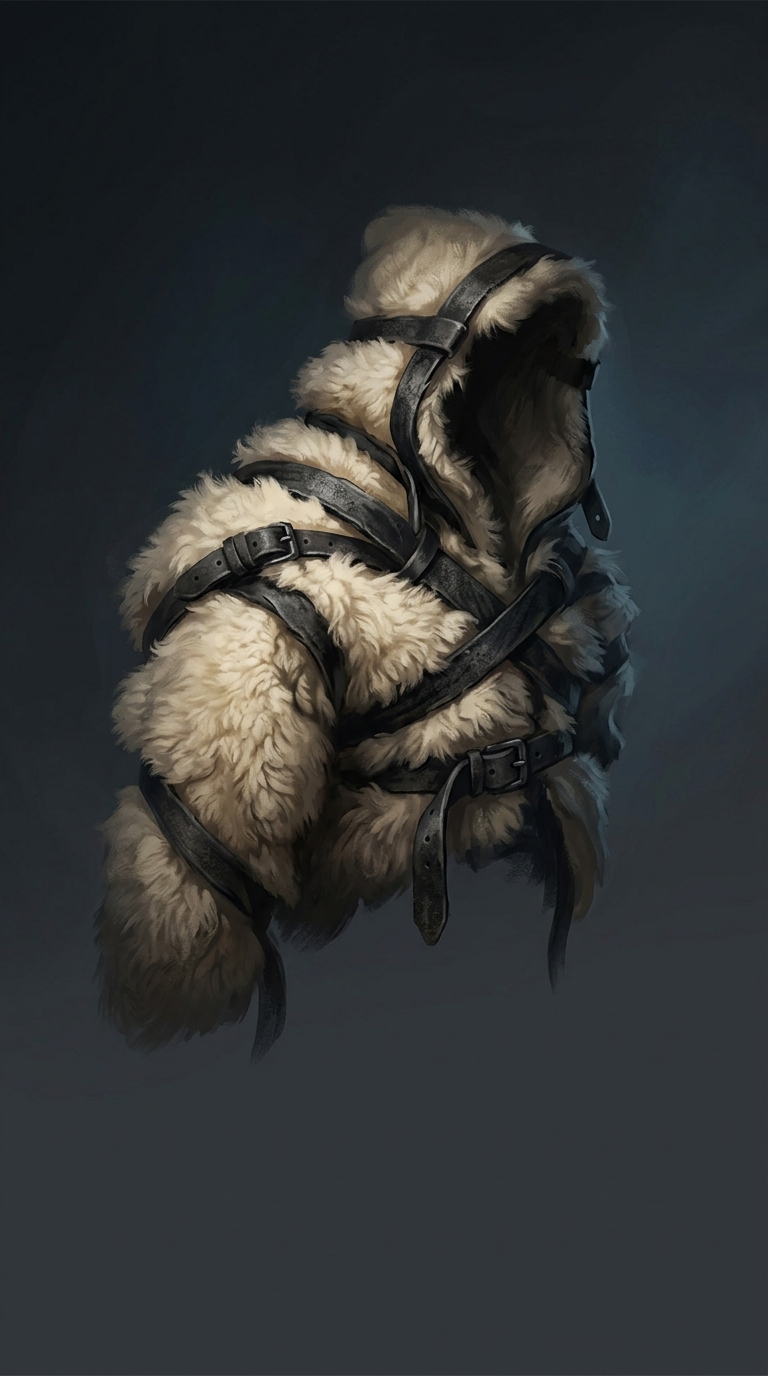
Turning a Rug Into a Costume Material
A mass-produced rug starts as a flat, regular rectangle. To read as a weather-beaten cloak on screen, it had to lose that tidy appearance. Costume makers shaved down parts of the pile—the raised fibers on its surface—and distressed the material so its texture looked rougher and less uniform. Cutting the rug changed its shape; altering the surface changed what viewers thought it was made of.
That transformation matters because a cloak is seen in motion. A flat rug draped over someone might still look like household fabric. A roughened surface, uneven edges, and visible leather straps help it register as a rugged garment rather than an intact floor covering.
Why the Construction Helps the Illusion
The approach combines two kinds of work: changing the material's appearance and making it wearable. The shaving and distressing create a coarse, aged look, while the straps give the cut pieces a way to sit on a body as clothing. Together, those choices turn an ordinary object into a costume element that can be recognized quickly and read as belonging to a harsh winter setting.
The useful production trick is not simply that the source material was inexpensive. It is that a familiar, readily available textile could be altered until its original purpose disappeared—leaving behind the weighty, rough silhouette the scene needed.