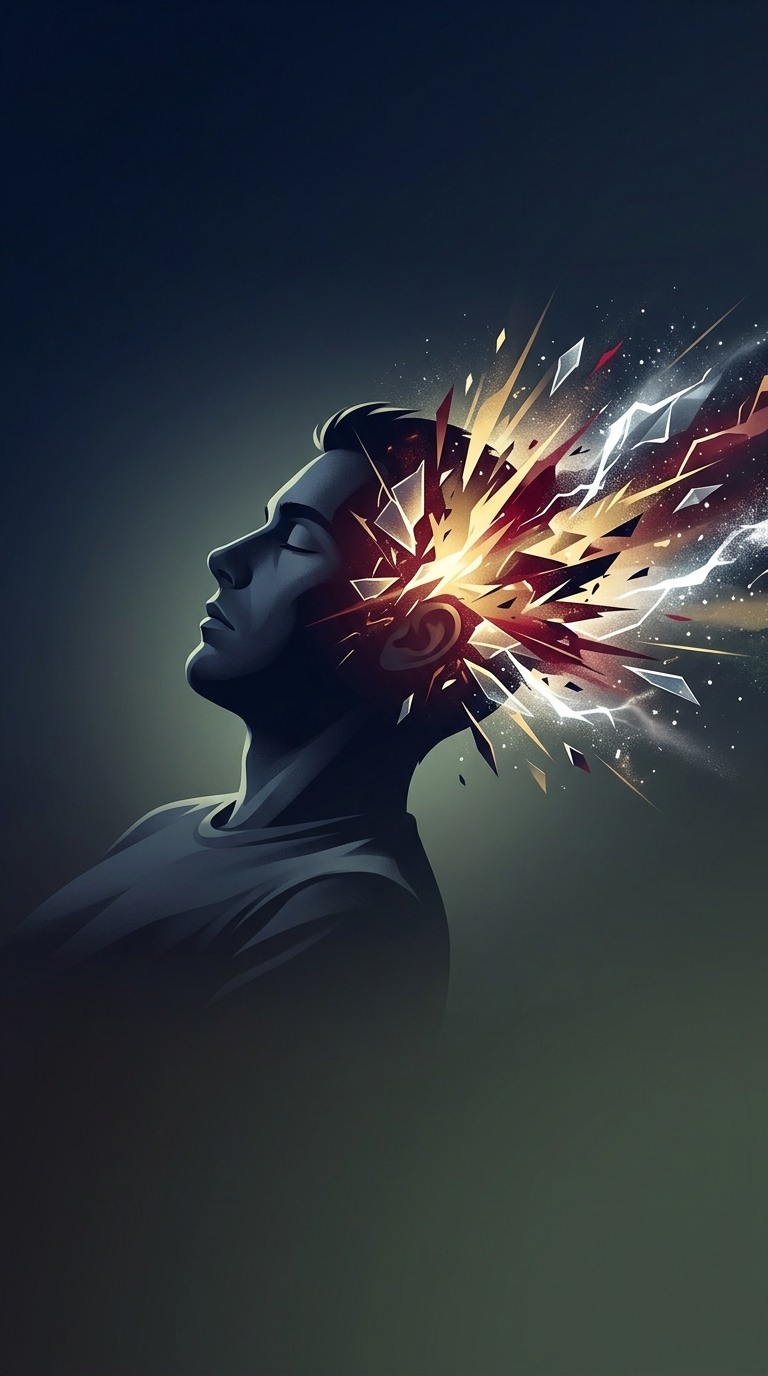
Why the Brain Can Seem to Make a Bang at Bedtime
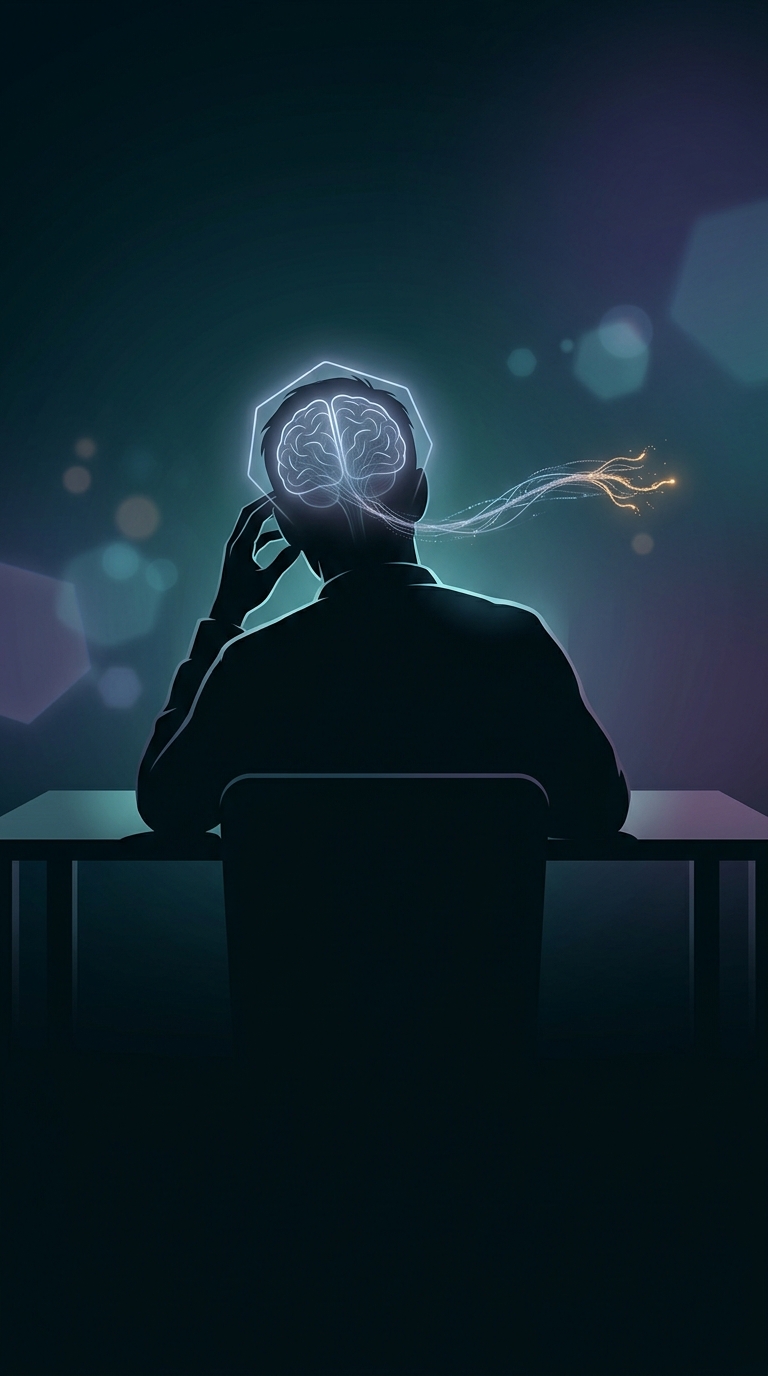
Exploding head syndrome is a sleep-related experience in which someone briefly hears a sudden noise—often described as a bang, crash, or burst of static—while falling asleep or, less often, waking up. The sound feels real because the brain is generating a sound perception, even though no matching noise is coming from outside.
The Uneven Handoff Into Sleep
Falling asleep is not an instant switch. The brain shifts gradually from wakefulness into sleep, and different processes wind down at different rates. During that transition, a brief misfiring in the brain’s sound-processing system may create a vivid noise sensation. Researchers do not yet know the precise cause, so this is a plausible way to understand the timing, not a confirmed explanation for every episode.
The suddenness helps make the experience frightening: a person can be relaxed and nearly asleep, then abruptly perceive a sound associated with danger. Some people also notice a flash of light or a jolt, but the central feature is the startling noise.
What the Experience Does—and Does Not—Mean
Despite its name, the syndrome does not mean a person’s head is exploding. The perceived bang is not evidence of an explosion, and the experience itself is considered harmless. It can still be deeply unsettling, especially when someone has never heard of it and wakes convinced that a real sound must have occurred.
Knowing that the sensation can arise during the shift into sleep offers a practical point of reference: the brain can produce a convincing sound without an external source. The room may be quiet, even when the noise seems unmistakable.