Why the clock seems to pause
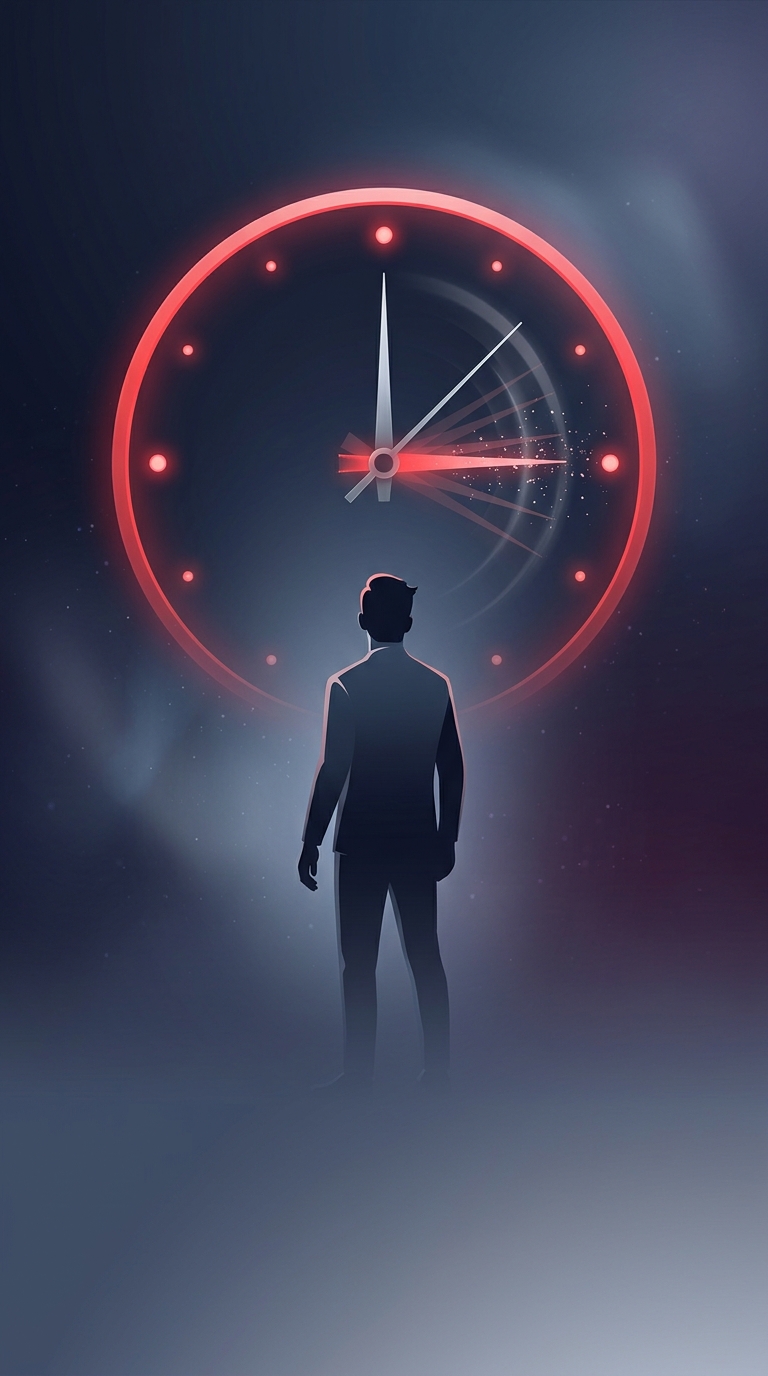
The effect has a name: chronostasis, or the “stopped-clock illusion.” It often happens when you shift your gaze quickly toward a clock. The second hand appears to stay still for a beat, then resumes moving normally.
The hand has not actually paused. Your eyes make rapid jumps called saccades to aim at the clock. During each jump, the visual system briefly reduces the detail of what you see; otherwise, the world would seem to smear across your vision. That brief gap can leave your brain with less information about the instant your eyes arrive.
How the brain fills the gap
Once your gaze lands, the clock’s face and hand are clear. Your brain uses that newly available view to make a continuous account of what just happened, effectively stretching the first moment after the eye movement backward across the gap. Because the second hand has not yet visibly advanced, that first position seems to last longer than it did.
The result is a small mismatch between clock time and perceived time. You are not watching the hand freeze in real time; your brain is constructing the moment after your eyes have moved, and the construction makes the hand’s first position seem unusually long-lived.
The illusion is easiest to notice with a clock because its regular, one-second steps provide a clear marker. Look away and glance back, and the hand may seem to linger—then the next tick makes the apparent pause obvious.