Why a Newborn’s World Looks Less Colorful
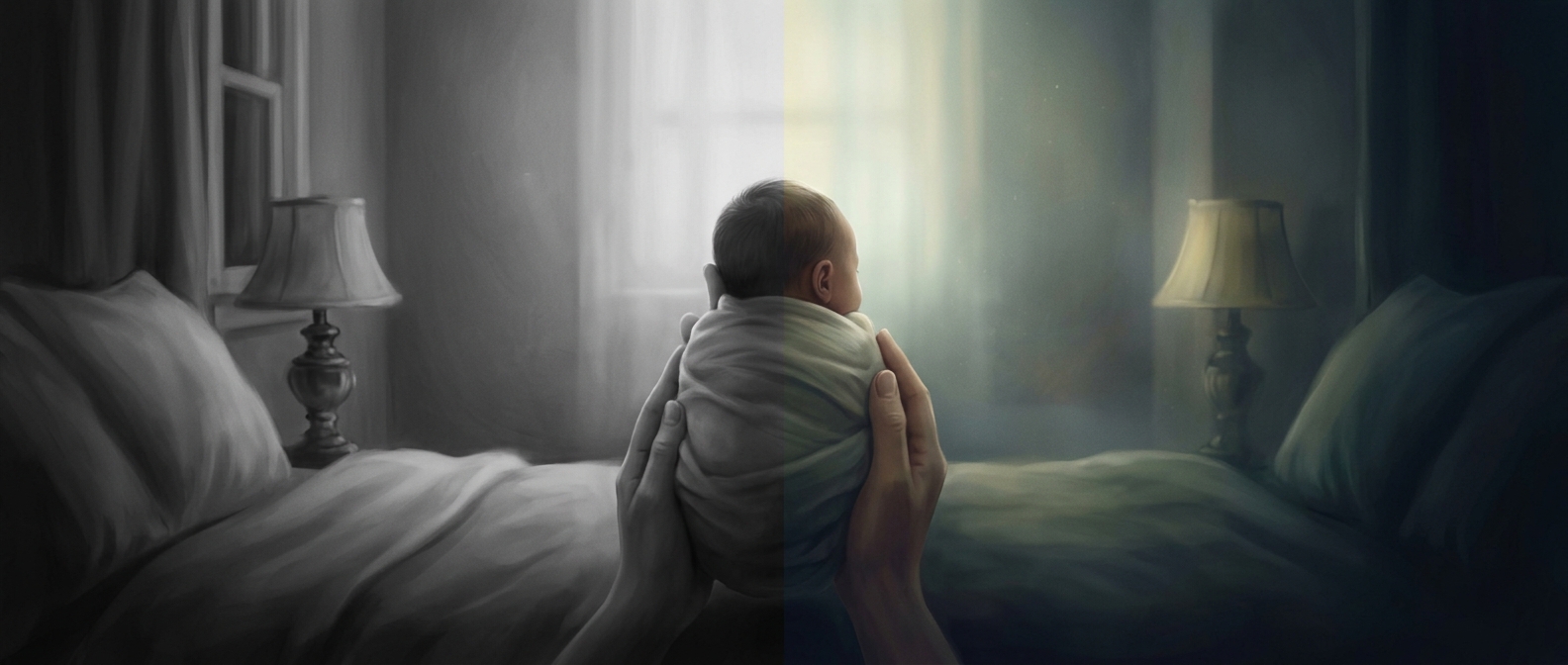
Color vision depends on cone cells in the retina, the light-sensitive layer at the back of the eye. Different cones respond best to different ranges of light, and the brain compares their signals to perceive color. In a newborn, this system is working but still developing: the cones and the connections that carry their signals are less effective than they will be later.
That makes subtle color differences harder to distinguish. Strong contrasts—such as a dark shape against a pale background—are easier to pick out than nearby shades, so early vision can seem muted rather than richly colored.
Vision Develops Alongside the Brain
The change is not simply a switch from black and white to color. As the eyes and visual pathways mature over the first weeks and months, infants become better at detecting differences in color, detail, and brightness. The brain also has to learn to organize the signals it receives; seeing a color depends on more than the eye detecting light.
This is one reason high-contrast patterns are especially noticeable to very young babies. A bold edge gives their developing visual system a clearer signal than a delicate shift in hue. As that system improves, the same scene offers more distinctions to notice—not because the world changes, but because the baby can read more of it.