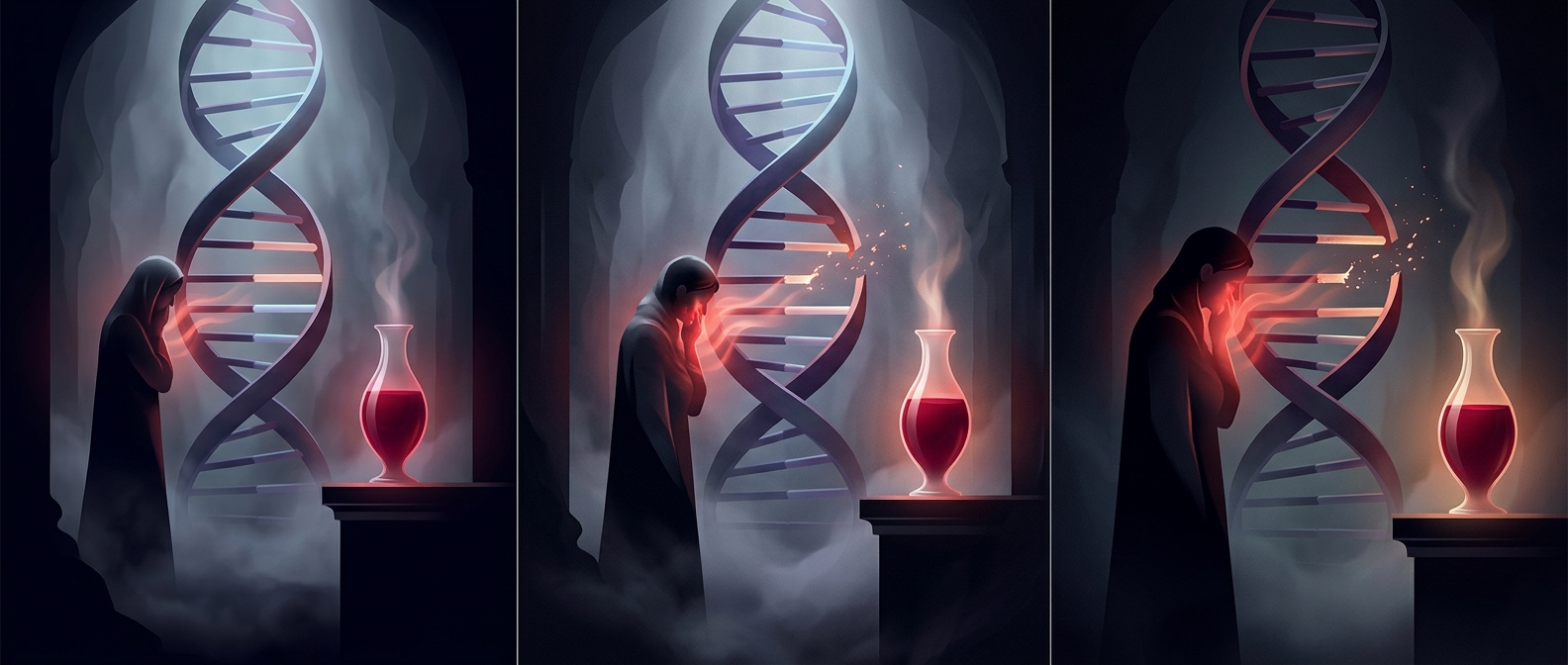
The bottleneck comes after alcohol enters the body
The redness is linked to acetaldehyde, a chemical the body makes while processing alcohol. First, an enzyme converts alcohol into acetaldehyde; another enzyme, called ALDH2, then breaks acetaldehyde down into acetate, a less harmful substance the body can use or remove.
In some people, an inherited version of ALDH2 works poorly. Alcohol can still be turned into acetaldehyde, but the next step cannot keep pace. As acetaldehyde accumulates, it can widen blood vessels and trigger flushing. A racing heartbeat, headache, or nausea may accompany the redness.
A visible warning, not a measure of tolerance
The flush is not simply a sign that someone is “bad at holding their liquor,” nor is it an alcohol allergy. It reflects a specific slowdown in processing alcohol’s byproduct. Someone may become accustomed to the sensation, but that does not mean the body has become better at clearing acetaldehyde.
That distinction matters because acetaldehyde can damage cells. People with this enzyme variant who continue to drink have a higher risk of cancers of the esophagus and other parts of the upper digestive tract. The redness itself is not the harm; it is a visible clue to the exposure happening inside the body. One drink can be enough to make that bottleneck noticeable.