A Treasury official on an unusually large bill
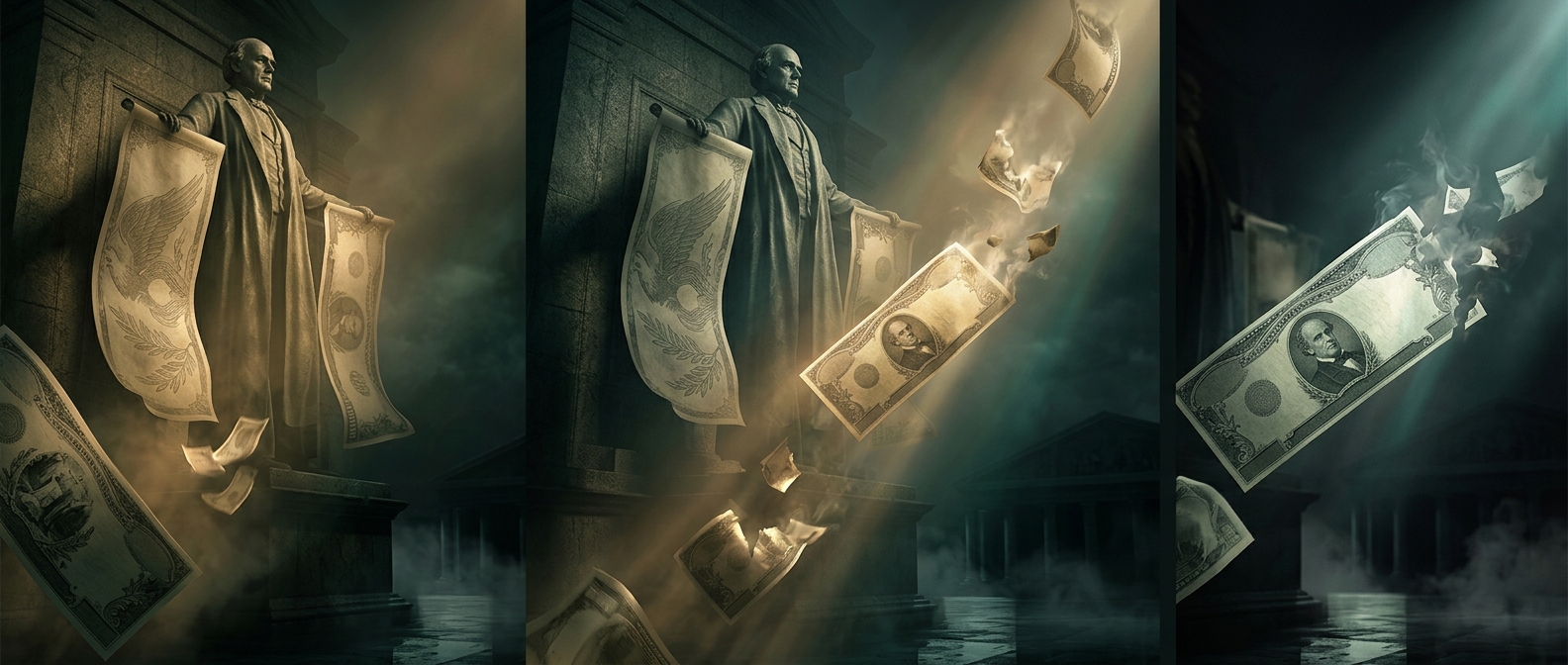
Salmon P. Chase’s portrait connected the note to the government’s effort to build a national paper-money system during the Civil War era. As Treasury secretary, Chase oversaw the issuance of federal paper currency. His face later appeared on the $10,000 bill, a denomination that served a very different purpose from the cash people carried in their wallets.
Money meant to move between banks
A $10,000 note was cumbersome and risky for ordinary purchases, but useful when banks needed to transfer large sums. Before electronic systems could move money quickly, a single high-value note could represent a substantial balance in a compact form. Such bills were mainly tools for financial institutions and other large-scale transactions, not a routine way to pay for goods.
That role helps explain why the note disappeared from new production without becoming a forgotten curiosity overnight. As banking and payment systems changed, paper bills of such high value became less necessary for moving money. The $10,000 bill belonged to an era when a large transfer might still travel as a physical piece of currency.