How a handful of stones becomes a reading
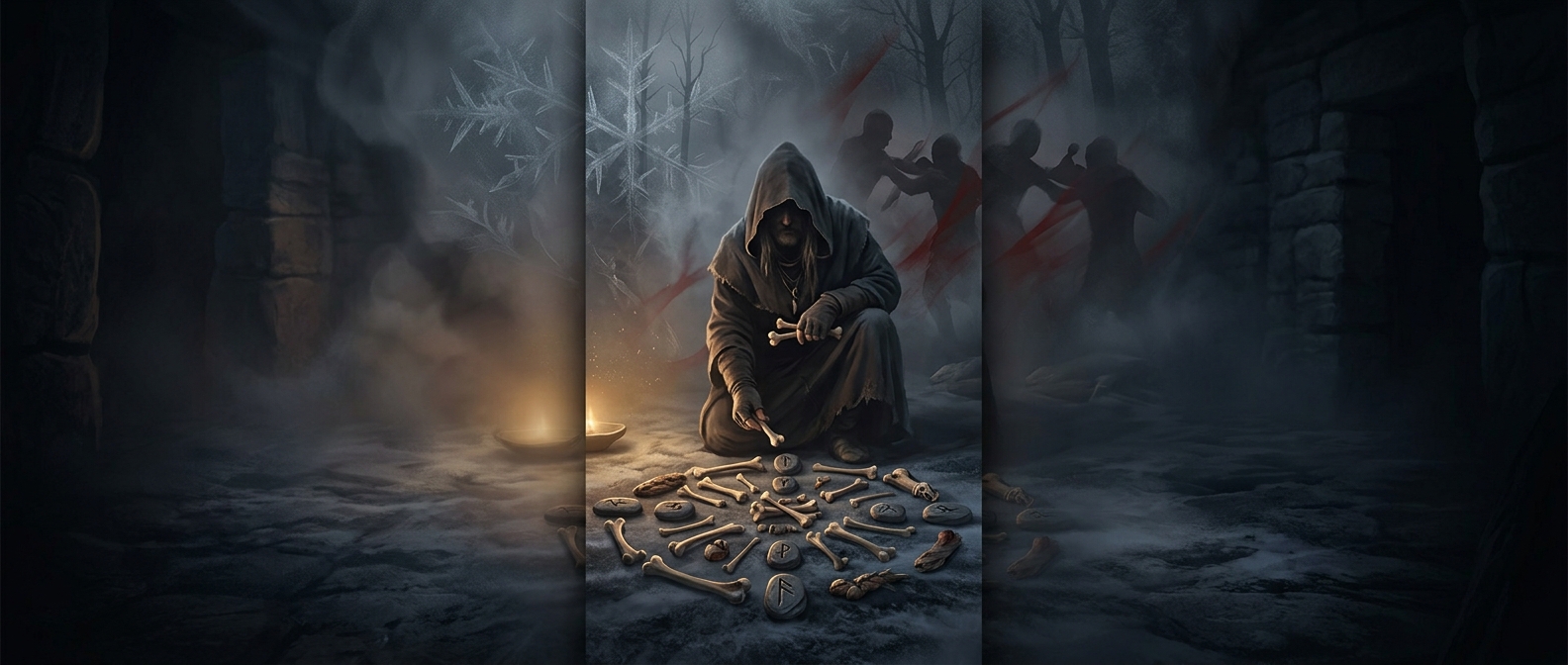
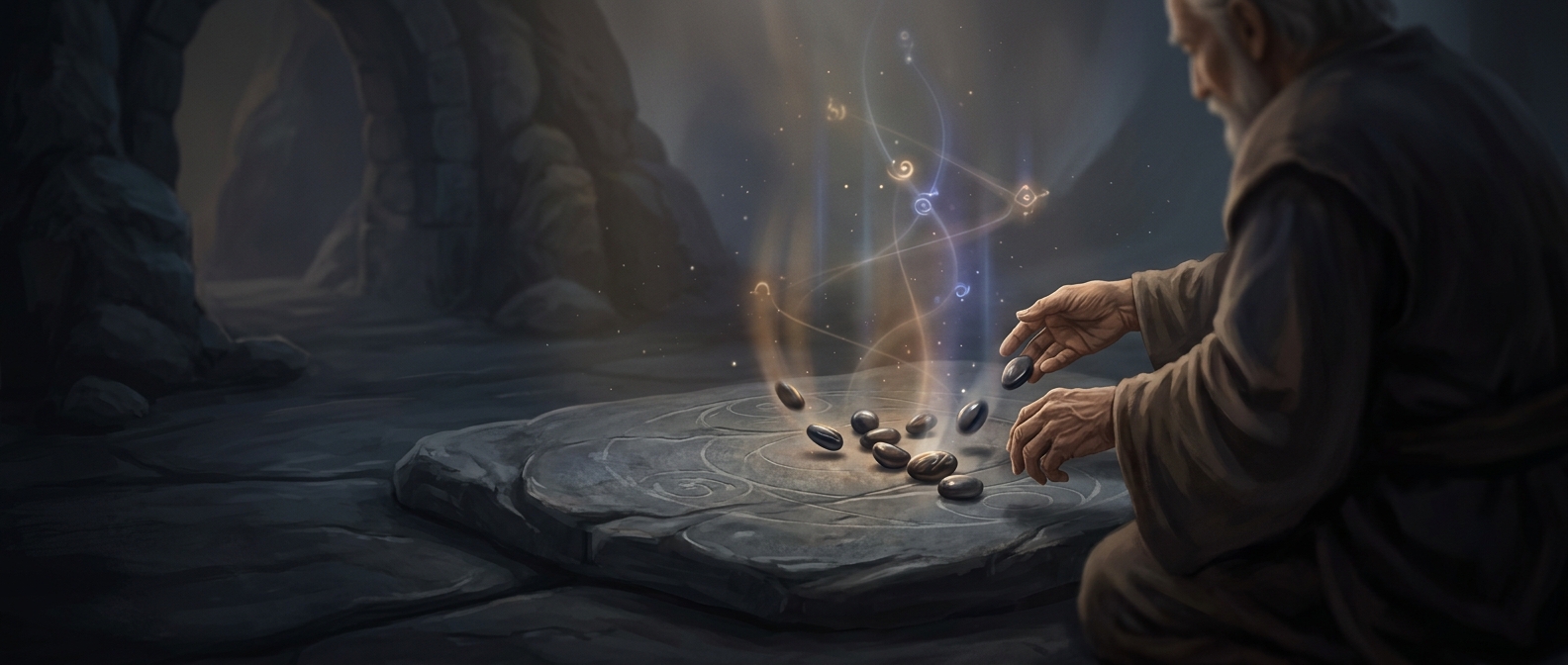
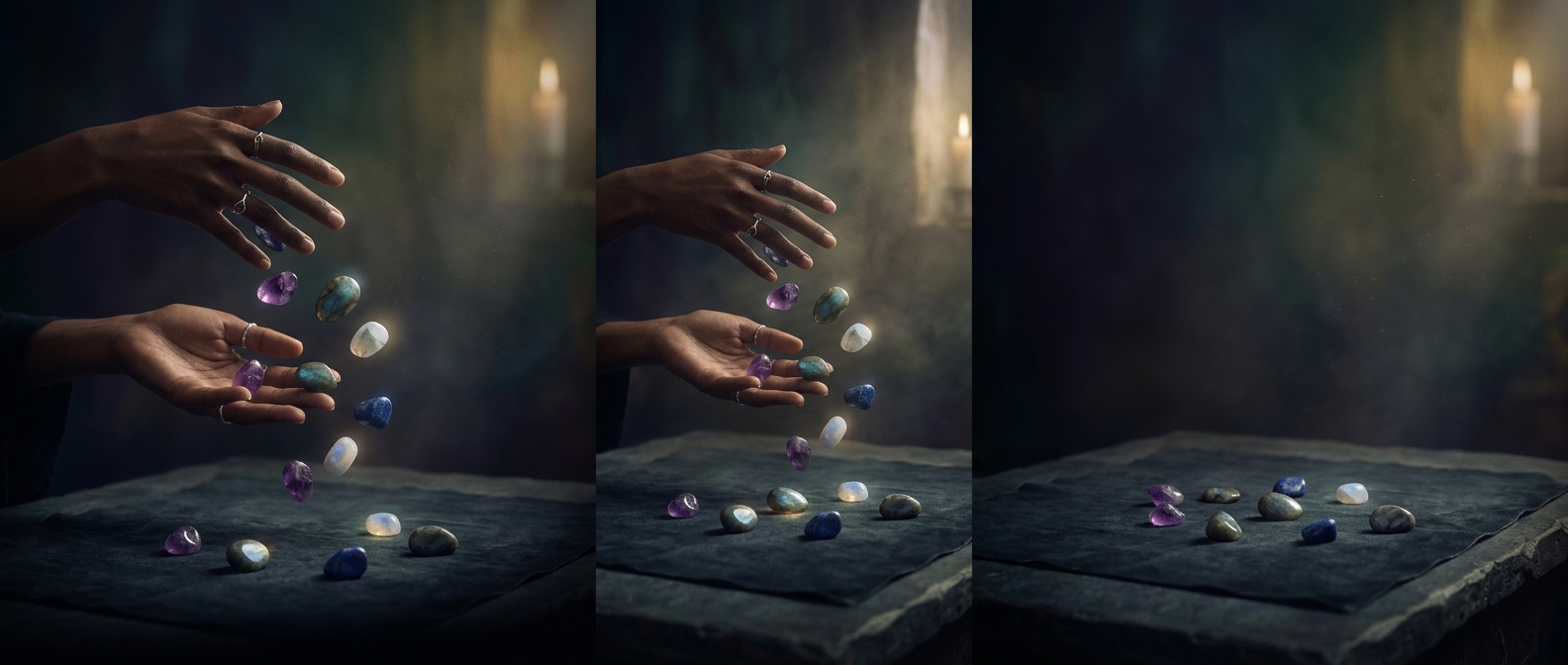
Lithomancy is a form of divination: a practice that uses signs or symbols to explore a question or seek guidance. In a reading, a practitioner casts stones onto a surface and considers where they land. The toss creates a pattern; the interpretation turns that pattern into a response.
The stones are not simply random objects once the reading begins. A practitioner may give particular stones symbolic meanings, then consider their positions and relationships—for example, whether stones lie close together or apart. The question helps shape what those relationships might suggest. Different practitioners can use different stones and interpretive systems, so there is no single universal key that makes every arrangement mean the same thing.
Why the layout matters
A cast gives the reader something visible to organize around an uncertain question. Instead of receiving advice as a direct answer, the person can reflect on how the arrangement is interpreted and what parts feel relevant to their situation. The reading’s meaning comes from that symbolic framework and the people using it, not from a demonstrated ability of stones to predict events.
That is also what makes the practice adaptable: the same scattered stones can prompt different readings when the question, symbolic meanings, or interpretive approach changes. The memorable part is not just the toss, but how a small, temporary pattern becomes a way to think through a choice.