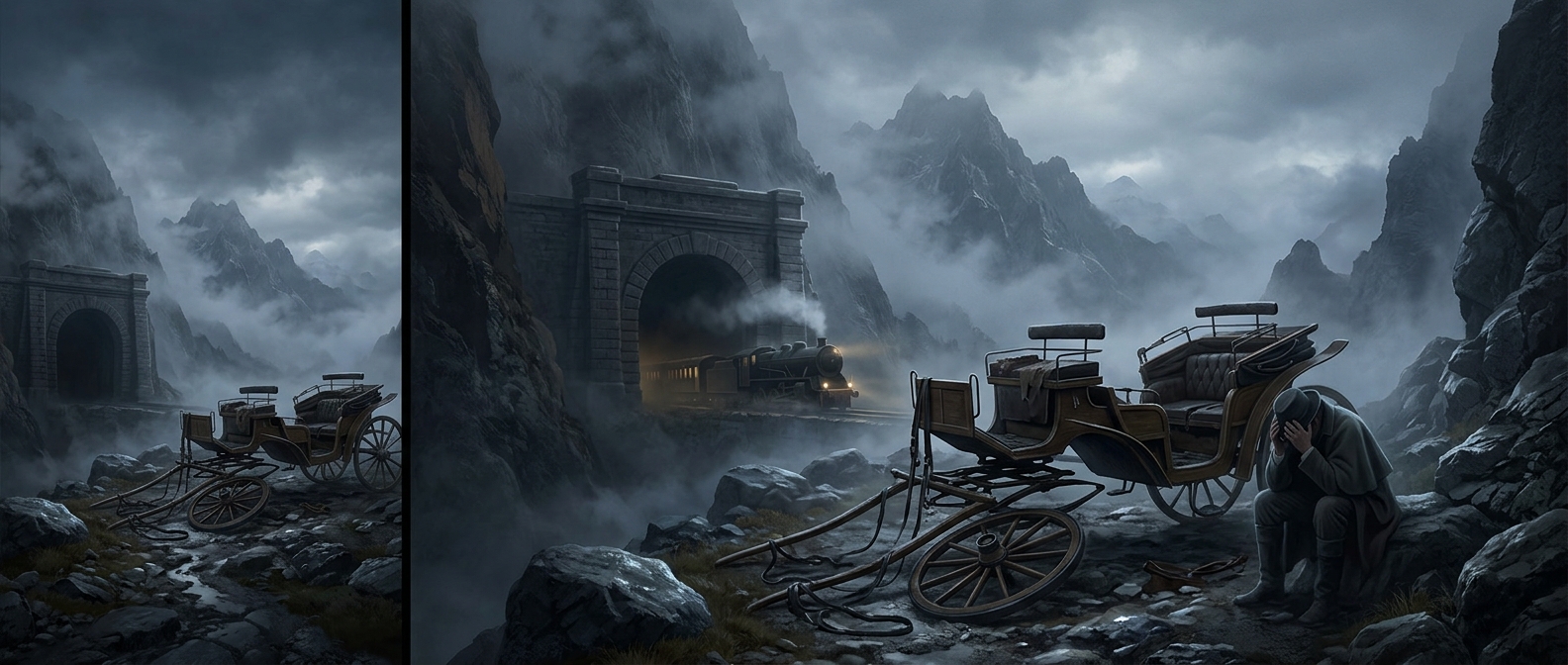
The railway took the travelers off the mountain road
Before the Simplon Tunnel opened in 1906, crossing this stretch of the Alps meant dealing with high passes, difficult weather, and slower overland travel. The new rail link carried trains beneath the mountains instead. By letting the Orient Express take a more direct route, it made the crossing faster and less dependent on pass conditions.
That change mattered to towns whose businesses served people in transit. A traveler moving by carriage might need a meal, a bed, fresh horses, or help carrying luggage. Those stops supported innkeepers, coach operators, drivers, and suppliers. A train could carry many passengers through the region without bringing them into those towns at all.
Faster passage meant fewer local customers
The tunnel did not make mountain travel disappear; it changed where the journey happened. Instead of spending time and money on the road, passengers stayed aboard and emerged on the other side. Carriage services lost the through-traffic that had helped sustain them, while businesses built around railway stations stood to benefit from the new route.
For a town dependent on travelers, the loss was more than a shorter timetable. The railway bypassed the everyday exchanges—food, lodging, transport, and paid labor—that turned passing traffic into local income. The tunnel’s decisive effect was to make the Alps easier to cross while making some Alpine towns easier to pass by.