Why a Boulder Can Become a Road-Planning Issue
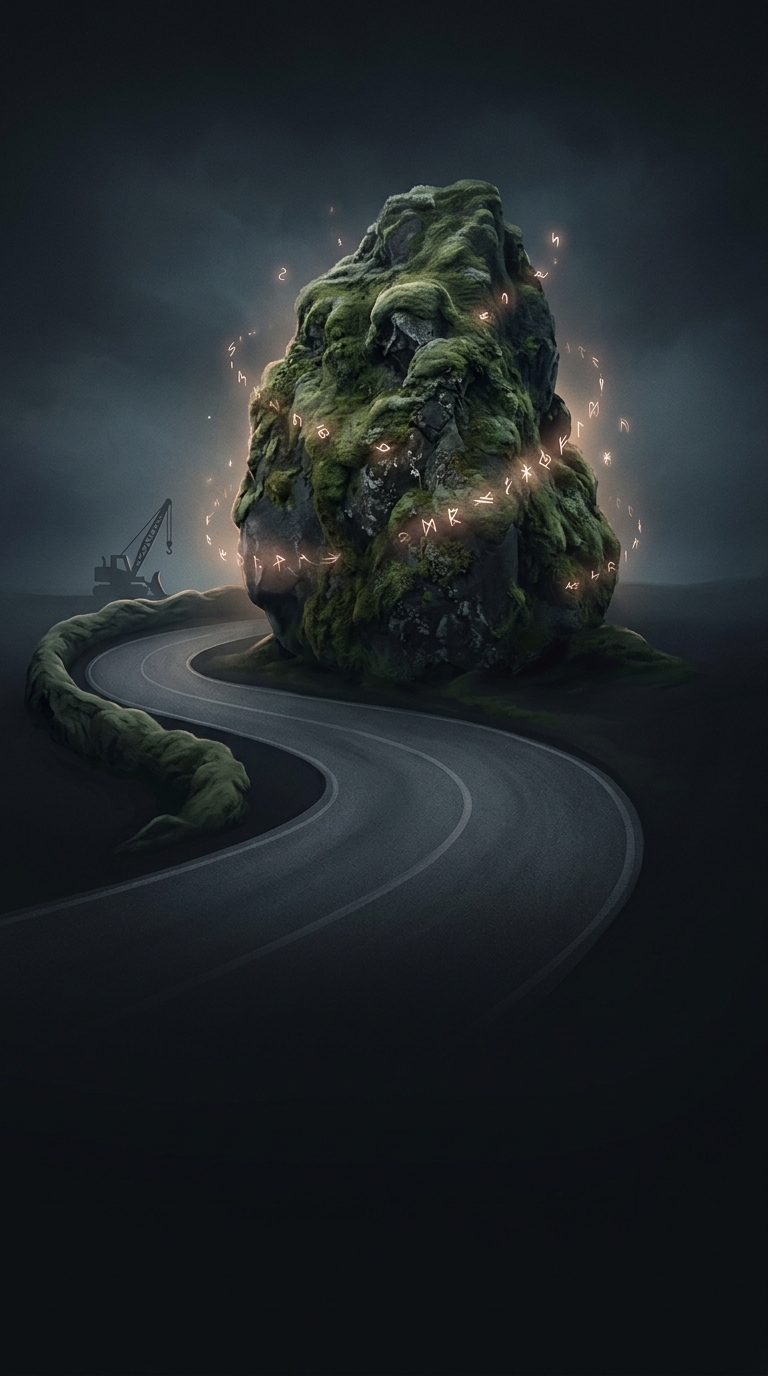
In Icelandic folklore, Huldufólk—“hidden people”—are beings thought to live alongside humans, often in places such as rocks and hills. A boulder regarded as their home is not just an obstacle in the landscape: moving it can be understood as disturbing a place with cultural and spiritual significance.
That belief can enter road planning through local advocates who ask builders to protect a particular stone or alter a route. In some disputes, people described as elf whisperers or folklore experts are brought in to interpret the site and help negotiate a solution. Their role is not an engineering one; they provide a way for project teams and residents to address what the place means to the community.
Folklore Meets Infrastructure
A road has to fit the physical landscape, but its route also affects the places people recognize as part of local identity. When a proposed cut or excavation threatens a storied rock, moving the road, adjusting the work, or postponing construction can resolve a conflict that technical plans alone cannot settle. The practical cost depends on the project, so a reroute is not automatic—and such consultations should not be mistaken for a standard step on every Icelandic road job.
The striking detail is how small the disputed feature can be. A boulder that looks ordinary to a passing driver may carry a story that makes it a landmark to nearby residents. In Iceland, road building can therefore involve not only measuring slopes and surfaces, but deciding whether a familiar piece of the landscape should remain exactly where it is.