A nursery with a built-in deadline
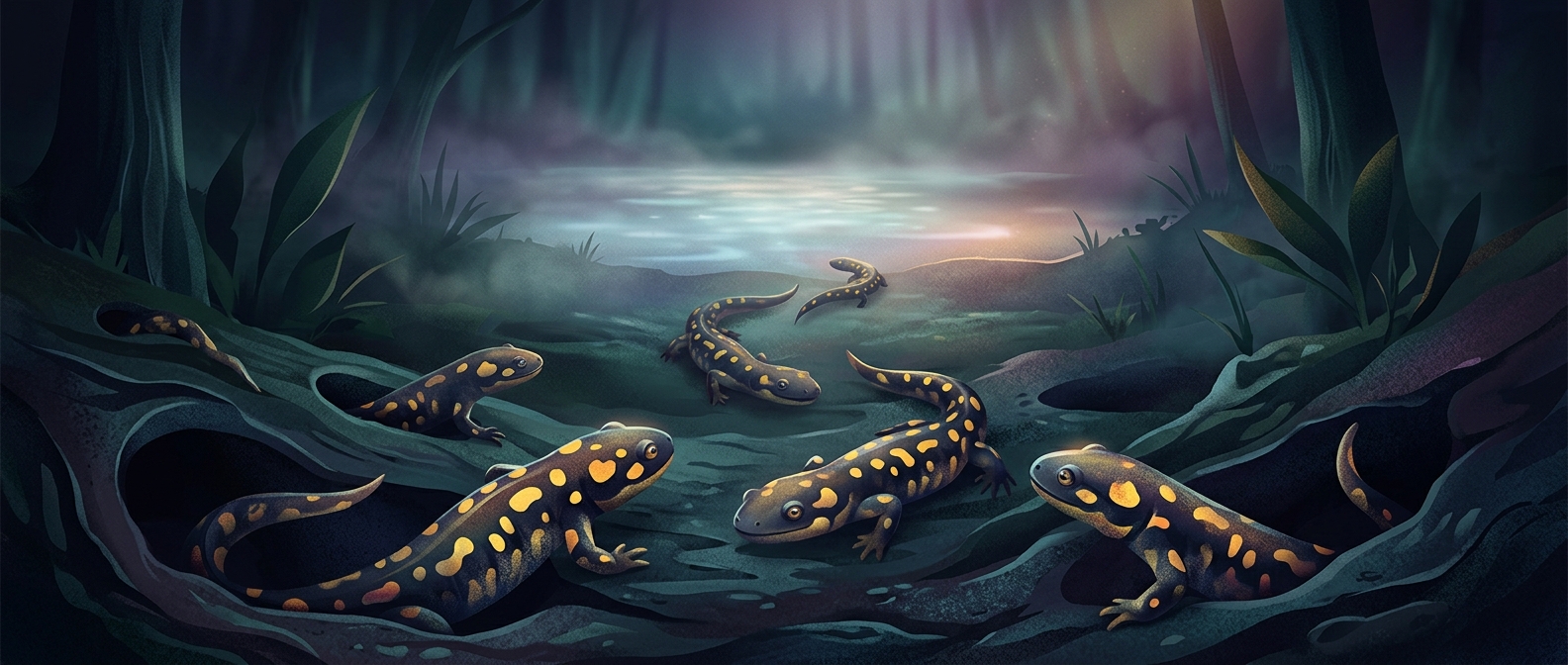
A temporary breeding pool offers tiger salamanders a useful tradeoff. Because it holds water only part of the year, it is less likely than a permanent pond to support fish that eat eggs and young amphibians. But the same pool can vanish before its larvae are ready to leave.
After hatching, tiger salamander young live underwater and breathe through feathery external gills. They must grow and transform into air-breathing juveniles before the pool dries. The pool is therefore not just a place to lay eggs; it is a nursery on a seasonal clock.
From underground shelter to open water
Adults spend much of their lives in burrows, where damp soil helps protect them from drying out. When conditions allow, they travel to breeding water and mate there. Their largely hidden, land-based existence makes the pool a brief but essential meeting place: the next generation begins life in a very different habitat from the one its parents usually occupy.
That arrangement also ties reproduction to the landscape. A pool that fills reliably and lasts long enough can support young salamanders; one that dries too soon can leave larvae stranded. The temporary pond’s disappearance is both its advantage and its danger—it can limit aquatic predators, but the salamanders must finish growing before the water is gone.