Why a Flytrap Needs More Than Wet Soil
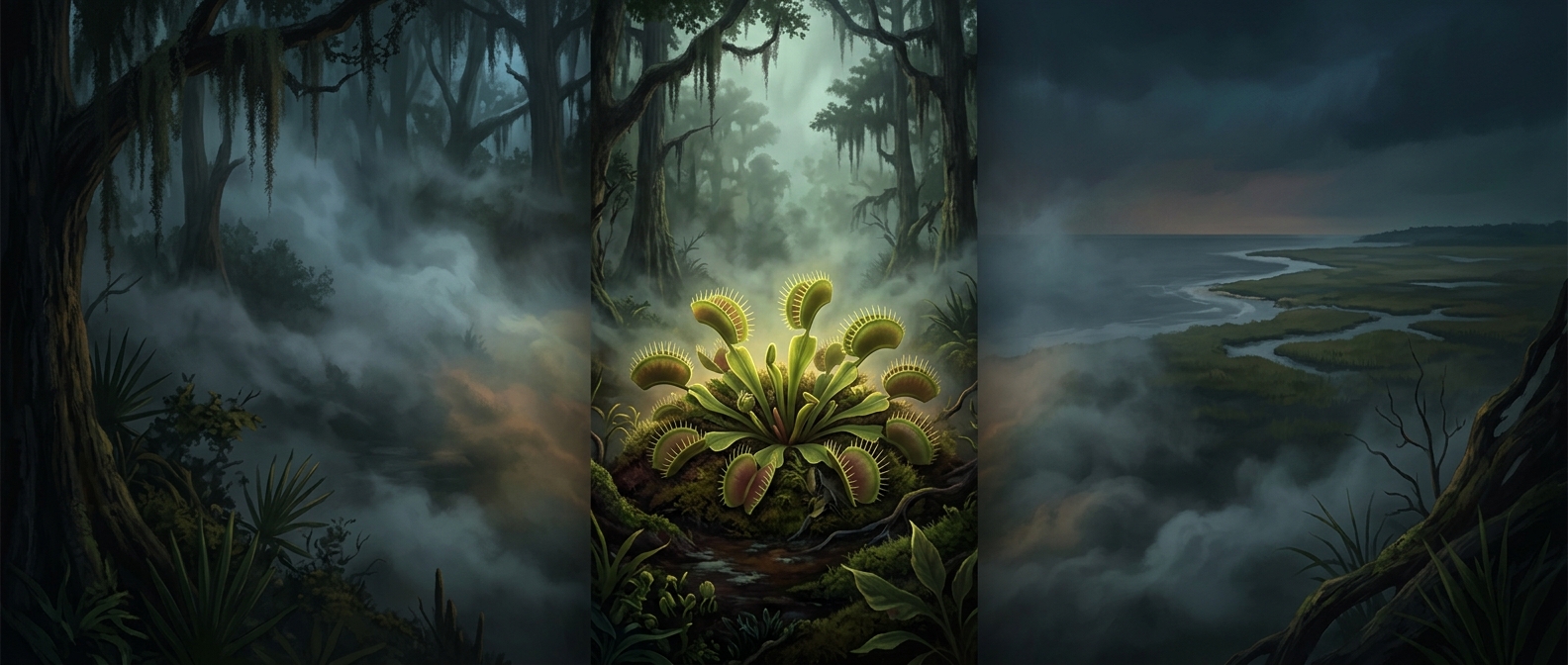
A Venus flytrap gets its energy from sunlight, like other green plants. Its traps solve a different problem: the sandy, acidic soils of its native coastal habitats contain little usable nitrogen and phosphorus, nutrients plants need to build tissues and grow. When an insect touches sensitive hairs inside a trap, the leaves snap shut; the plant then digests the prey and absorbs some of those scarce nutrients.
That strategy works only because the flytrap’s habitat supplies the things its traps cannot: abundant light, damp ground, and a steady supply of small prey. In shade or rich garden soil, neighboring plants can outcompete it, and the conditions that favor its unusual feeding strategy disappear.
A Small Range With a Narrow Ecological Window
The species is native to a limited part of the Carolina coastal plain, where wet savannas and boggy openings create that combination of conditions. These are not simply marshes: many are open landscapes where sunlight reaches the ground and other vegetation does not crowd out low-growing plants.
Because the flytrap depends on this particular mix, moving one elsewhere does not move its habitat with it. A cultivated plant may survive in a pot when its water, light, and soil are carefully managed, but wild populations depend on whole landscapes that maintain those conditions. A suitable patch can be small—and if it becomes shaded, drained, or overgrown, the flytrap loses the place its traps were built for.