A flower built to impersonate a carcass
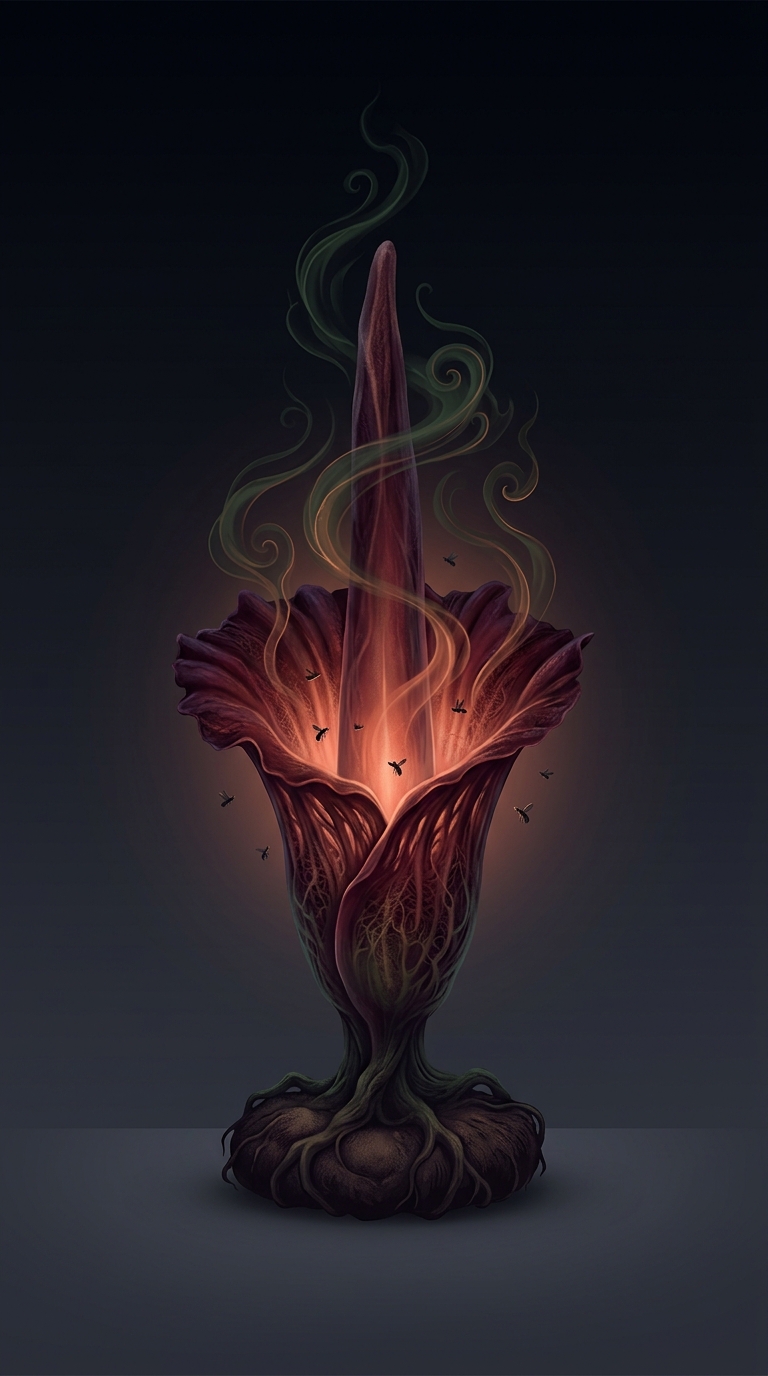
The titan arum’s famous “flower” is actually a towering cluster of tiny flowers wrapped in a large, skirt-like leaf. Its odor imitates decaying flesh: a chemical signal that tells carrion-seeking insects, including flesh flies and beetles, that food or a place to lay eggs may be nearby.
The plant adds heat to the deception. As the central spike warms, it helps release and spread scent compounds into the surrounding air. The smell comes in pulses, which can make the false signal carry farther—much like a plume rising from a fresh carcass. Searching insects follow that trail and land among the real flowers at the base of the spike.
The timing makes the visit count
The tiny flowers do not all become ready at once. Female flowers are receptive first; male flowers release pollen later. This staggered schedule, called protogyny, reduces the chance that a plant will pollinate itself. An insect that arrives carrying pollen from another titan arum can deposit it on receptive female flowers, then pick up fresh pollen when the male flowers open.
The visitors are not trapped or eaten. The plant borrows the insects’ food-seeking behavior, then sends them on to another bloom. A flowering event is brief, while the plant may spend years storing energy before flowering again; the interval is variable, not a dependable once-a-decade timetable.
That makes the spectacle more than a botanical oddity: for a short window, a plant that cannot move turns warmth, scent, and carefully sequenced flowers into a convincing invitation—and relies on insects to carry its pollen away.