A vault built on a rumor
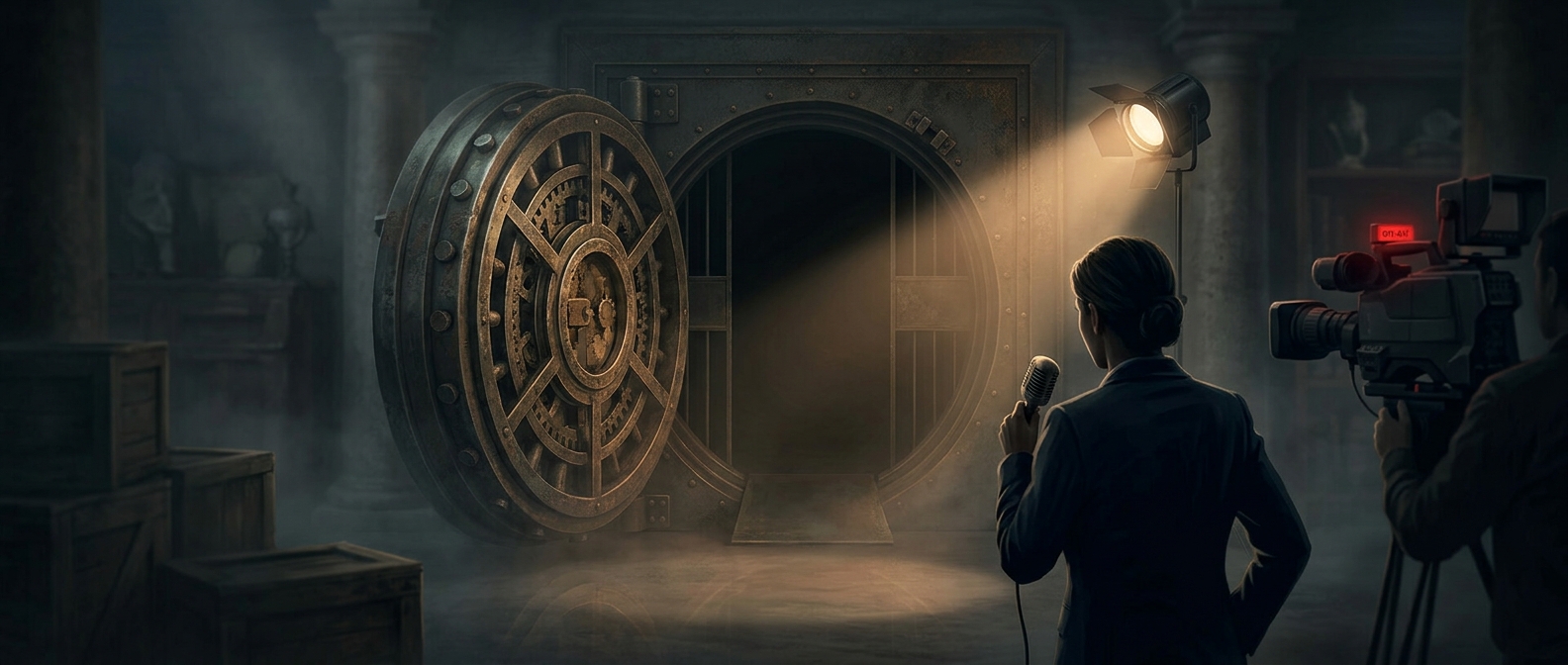
The vault was beneath the site of Chicago’s Lexington Hotel, where Al Capone had maintained a headquarters during Prohibition. By the time Geraldo Rivera’s 1986 television special opened it, the hotel itself had been demolished. Stories that Capone had hidden money or other valuables there gave the sealed room an irresistible promise: a surviving piece of the gangster’s fortune might still be waiting underground.
But a vault is only a secure room. Its presence does not prove that anything valuable was ever stored inside—or left there. The rumor supplied the treasure; the locked door supplied a dramatic reason to look.
The reveal—and the empty space
The broadcast turned the opening into a live event. Viewers watched workers break through the vault’s entrance, building suspense around each stage of the search. When the room was finally exposed, it contained dirt and empty bottles, not Capone’s hidden fortune.
That result was anticlimactic as a treasure hunt, but it was the broadcast’s real surprise. Television had made the possibility feel tangible by letting a huge audience wait for the same door to open at once. The room could not deliver the story people hoped for; the live reveal delivered a different one, in which the much-anticipated discovery was that there was nothing to find.