A labyrinth is a path, not a puzzle
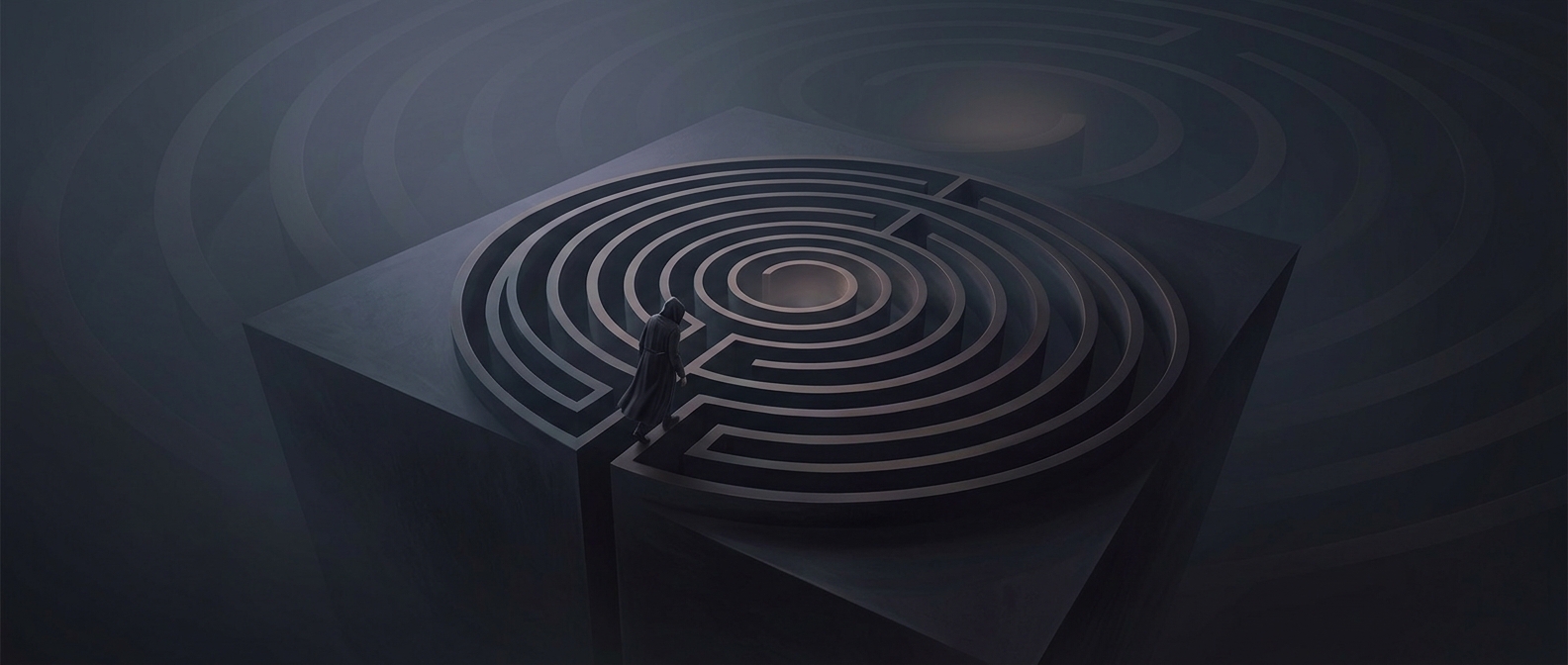
Unlike a maze, which asks walkers to choose among branches and avoid dead ends, a traditional labyrinth usually has one continuous route. It bends repeatedly toward a center and then back outward, with no shortcut to discover. The walker’s task is not to solve it but to follow it.
That design changes what the walk demands. There are few decisions to make, yet progress can feel slow: a turn may carry you close to the center, then lead you away again. The route makes haste useless and attention unavoidable.
Why the slow walk can feel meaningful
In many spiritual settings, walking a labyrinth is treated as a form of prayer or meditation. The repeated turns give the body a simple task—keep walking, follow the path—while the walker can reflect, pray, or simply notice thoughts and surroundings. The meaning is personal or religious, not a guaranteed effect of the design.
Some churches and retreat centers use labyrinths as symbolic journeys. Reaching the center may represent arrival or stillness; walking back out may suggest returning to ordinary life with renewed attention. Those interpretations vary, and the path itself does not prescribe one belief.
The lesson is built into the route
A labyrinth does not reward speed or cleverness. Its winding course makes the center something to approach gradually, and then to leave by the same patient method. The journey’s duration is not an obstacle to the exercise; it is what gives the exercise its shape.