Why five points could stand for a person
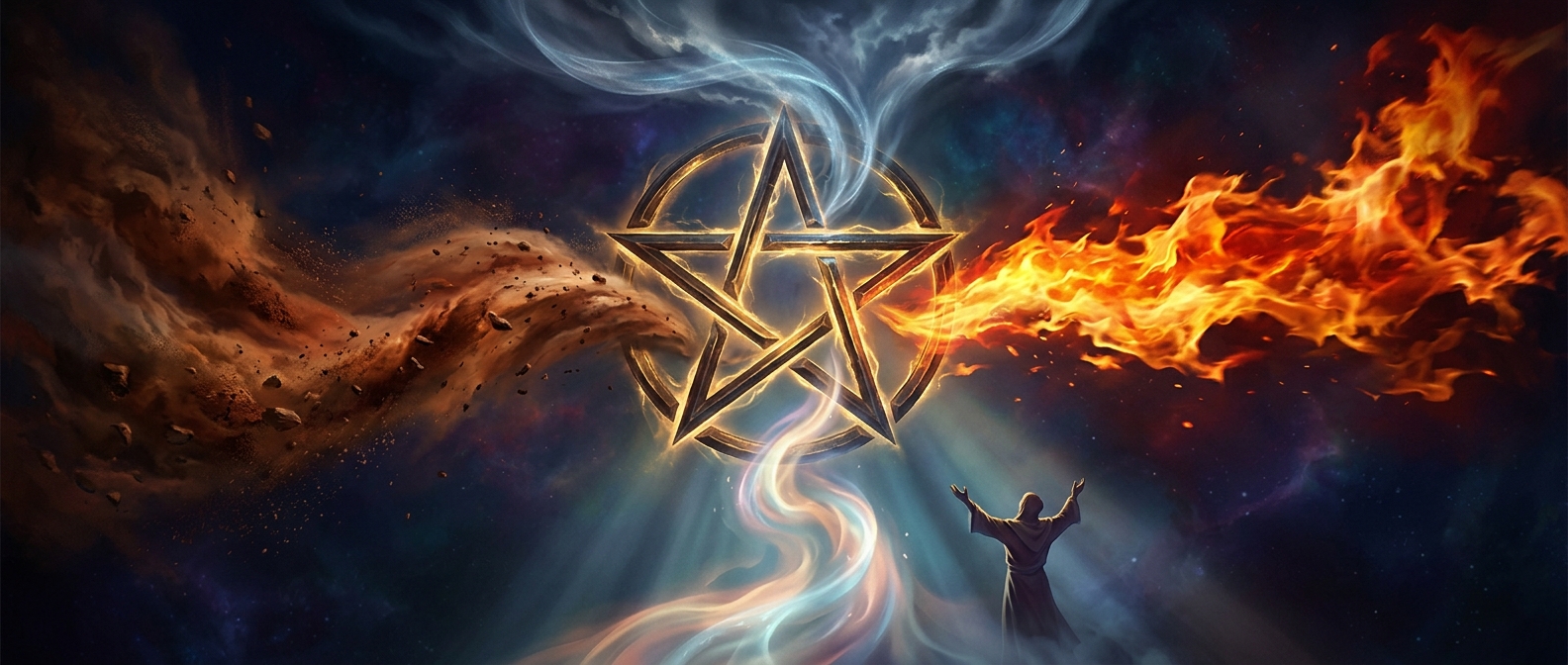
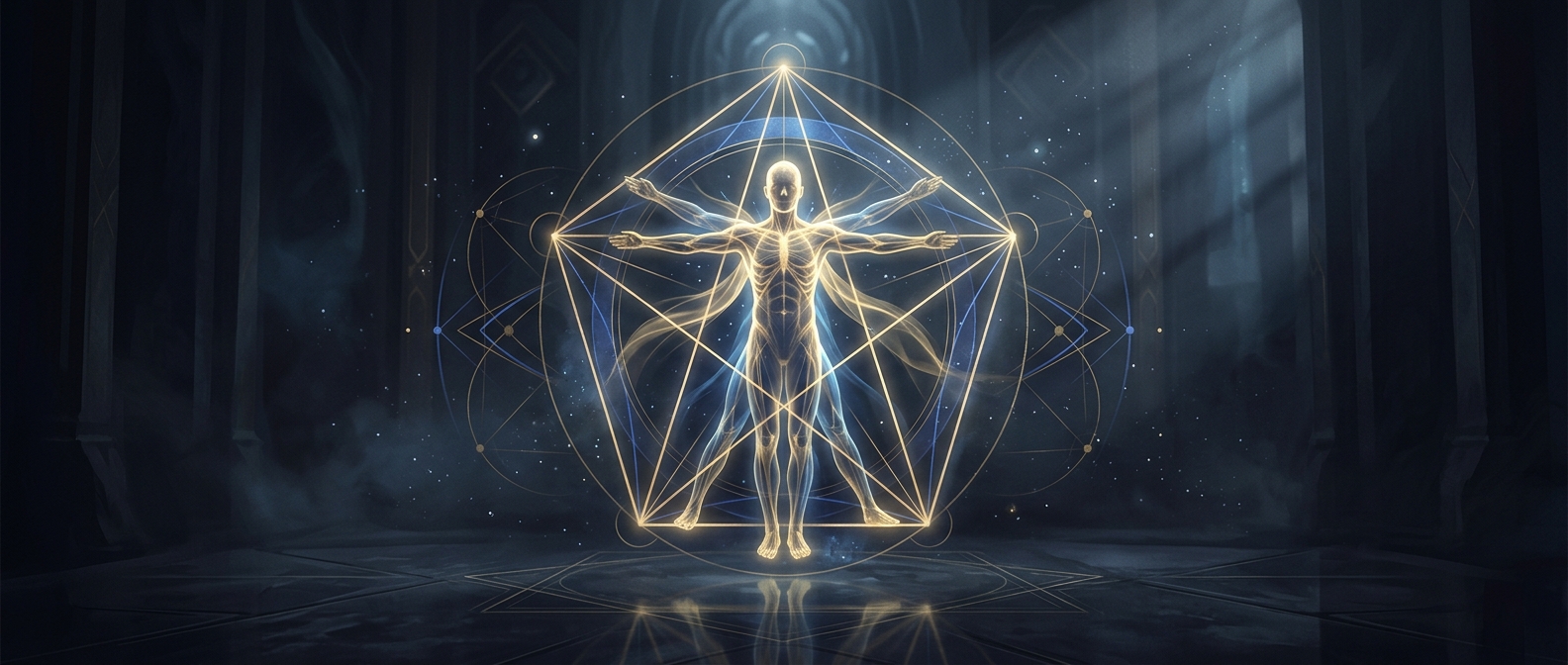
A pentagram is a five-pointed star drawn with five connected lines; it can be traced inside a regular pentagon. Its outline offered mystics a compact way to picture a human being: one point for the head, two for the arms, and two for the legs. Turn the star upright, and its shape can suggest a figure standing with limbs spread.
The image works by symbolic mapping, not by claiming that every body fits a star. It turns a complex, moving body into a simple arrangement of five extensions from a central trunk. That made the human form legible as a pattern—and the pattern, in turn, a way to think about how people relate to the larger order of things.
Geometry gives the symbol its appeal
A regular pentagon has repeating proportions, and its diagonals—the lines joining nonadjacent corners—create smaller pentagons and star shapes. Those nested forms make the design feel unusually self-contained: the same five-part pattern appears again at a smaller scale. The geometry is real, but the leap from that geometry to a claim about human anatomy is interpretive.
So when a mystical image links a pentagram to bodily proportions, it is best read as a diagram of correspondence rather than a ruler for measuring people. The striking idea is not that the body literally conforms to five straight lines, but that a familiar human silhouette can be made to mirror a shape whose parts repeat in an orderly way.