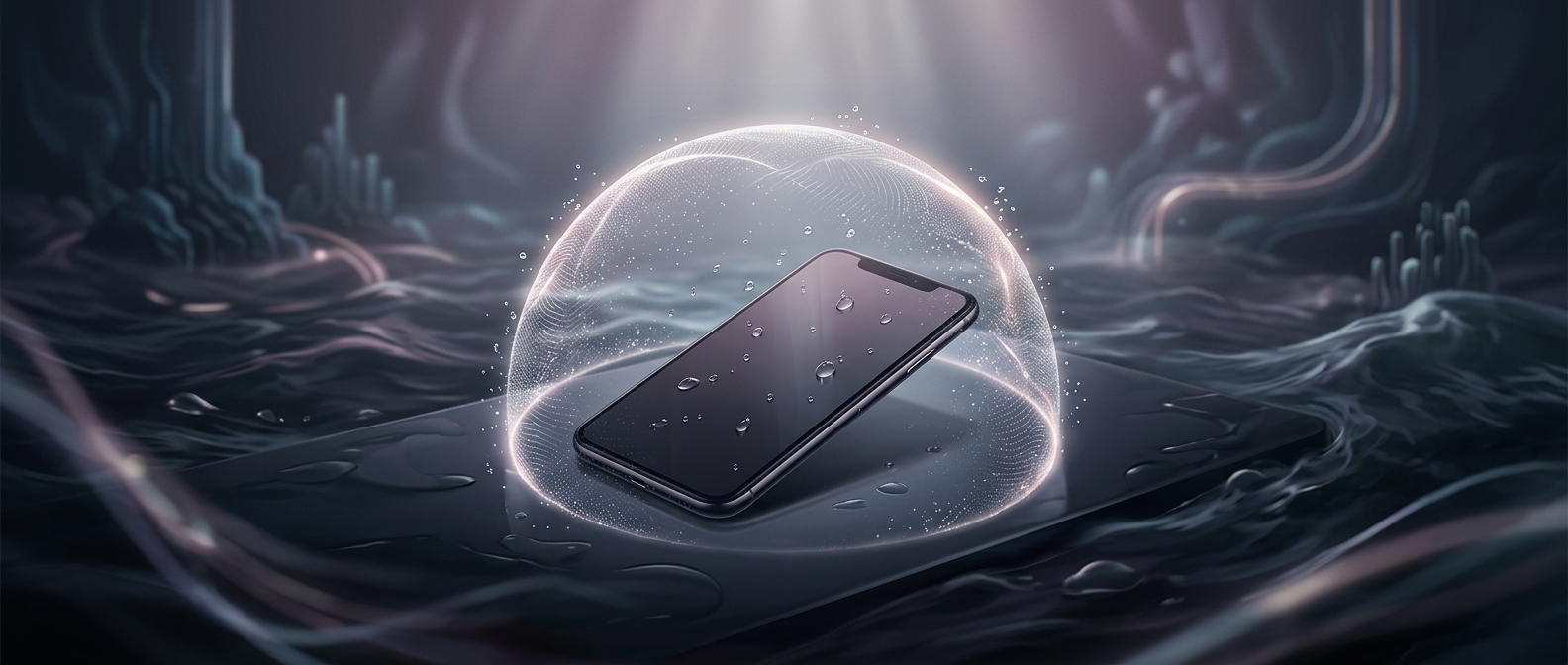
A phone designed for the bathroom
A phone used beside a bath faces a different risk from one caught in a brief rain shower: it may sit near splashes for a long time, and a dropped device can be submerged. To make that use less risky, manufacturers had to keep water from reaching the phone’s vulnerable parts—especially its charging connector, buttons, speaker openings, and seams.
That usually means using gaskets, tiny flexible seals, around openings and joints, plus water-resistant membranes over places where sound must pass. The challenge is to block liquid without making the phone difficult to charge, hear, or operate. As those protections became familiar in Japanese-market handsets, water resistance became an expected feature rather than a specialty add-on.
“Waterproof” has limits
Phones are more accurately called water-resistant: their protection is tested under particular conditions, not against every kind of wetness. Bathwater can be hot, soapy, or steamy, and soaps may affect seals; a rating for immersion in clean water does not necessarily promise safety in a tub. Wear, repairs, and damage can also weaken a device’s barriers.
The practical change was not that phones became invulnerable. It was that manufacturers treated everyday water exposure as a design problem worth solving. A feature prompted by the prospect of a message answered from the bath helped make sealed ports and protected seams a routine part of the phone, even for people who never take a handset near the tub.