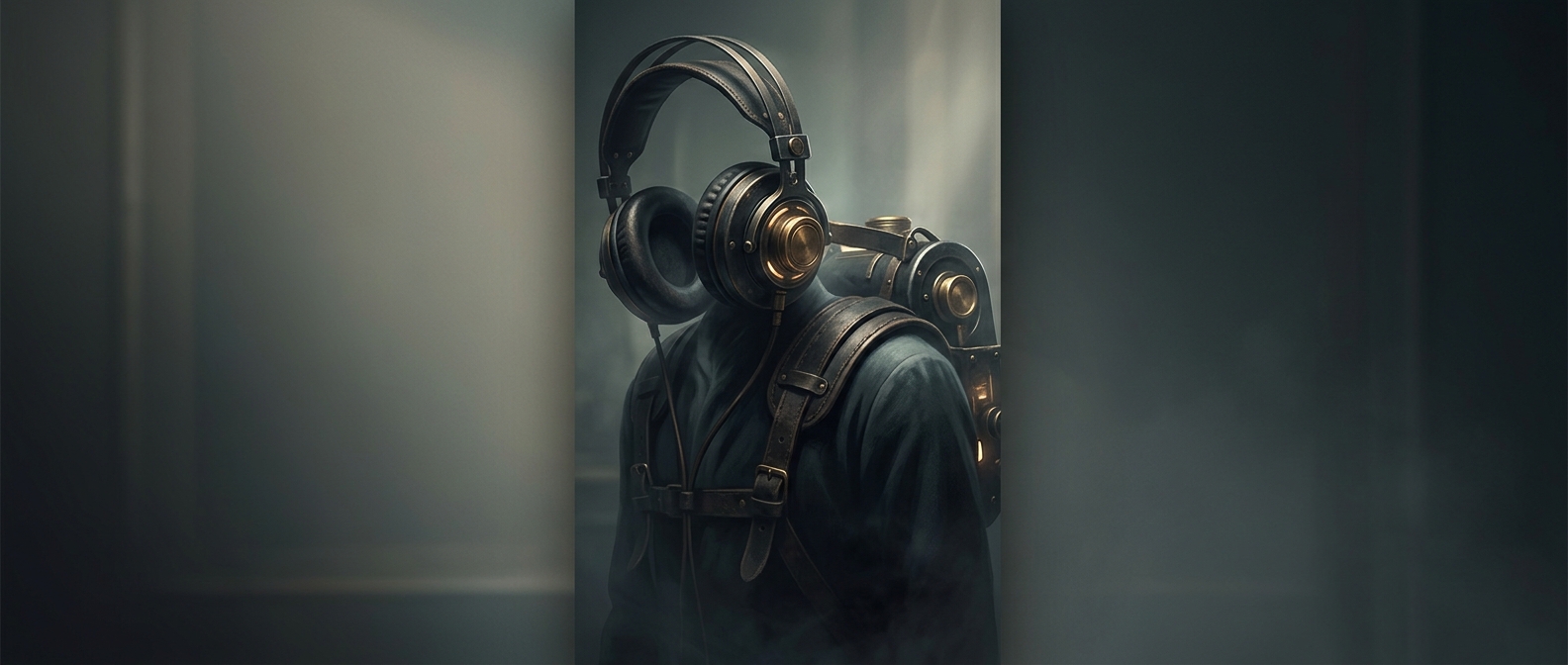
Before Headphones Became Personal
Early listening devices were not designed around the light, self-contained headset people expect today. They grew out of telephone and telegraph equipment, where the priority was making a faint electrical signal audible—not making a device comfortable to wear for hours.
A receiver turns changing electrical current into sound. In a common early design, current passed through a coil and altered the pull of a magnet, making a thin metal diaphragm vibrate. Those parts needed a sturdy housing, and the receiver also needed a frame or support to keep it in place. The result could be cumbersome, especially when equipment intended for a desk or operator’s station was adapted for listening.
The Weight Was an Engineering Tradeoff
Compact magnets, lighter materials, and small components were not yet standard in audio equipment. A designer could make a receiver robust enough to work reliably, but carrying that sturdiness on the head—or across the collarbones—was another matter. The heavy construction was not a feature meant to improve the music; it reflected the limits and priorities of the equipment available.
That distinction helps explain why early headphones could feel more like apparatus than accessories. Personal listening had not yet become the central design problem. Until it did, the listener often had to bear the hardware that made private sound possible.