How spinning glass made music
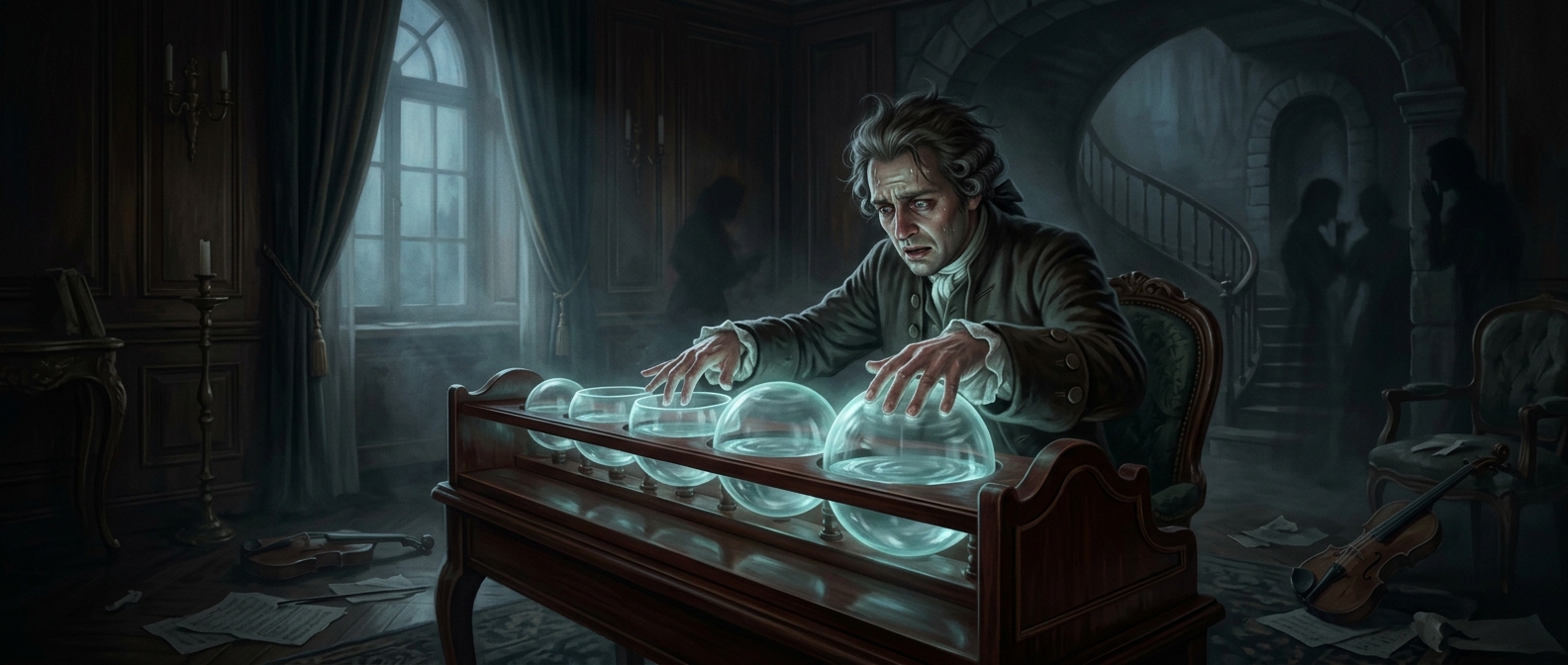
The glass harmonica turned a set of bowls into a playable instrument. Its glass bowls were nested by size on a spindle and rotated; a performer touched their rims with damp fingers. Friction set the glass vibrating, and each bowl produced a steady pitch. The player could sound several bowls at once, creating the instrument’s unusually sustained, eerie tones.
Benjamin Franklin devised the instrument in the 18th century after seeing musicians play water-filled glasses. His version put the bowls on a single rotating spindle, so performers could play a sequence of notes without stopping to strike or reposition separate glasses.
The troubling reports—and the unanswered cause
Some performers were said to suffer dizziness or psychological distress. Those accounts helped give the beautiful instrument an unsettling reputation, but they do not establish that the glass harmonica itself caused illness. The reports came without a clear explanation tying the symptoms to a particular feature of the instrument, and the cause remained disputed.
That uncertainty matters: the instrument’s sound can be explained by vibrating glass, but the reported effects cannot be pinned on that mechanism alone. Its history therefore holds two distinct stories—a striking musical invention and a troubling set of symptoms whose cause was never settled.