Why purple is scarce on national flags
For centuries, making vivid purple dye meant extracting it from sea snails. The process was labor-intensive, and the dye was costly, so purple was an impractical choice for a large piece of cloth meant to be made and replaced. Flag makers favored colors that were easier to obtain and reproduce.
That constraint began to ease in the 19th century, when synthetic dyes made purple more accessible. But many national flags and their designs were already established. A new color technology did not automatically prompt countries to redesign them.
Two flags, two different routes to purple
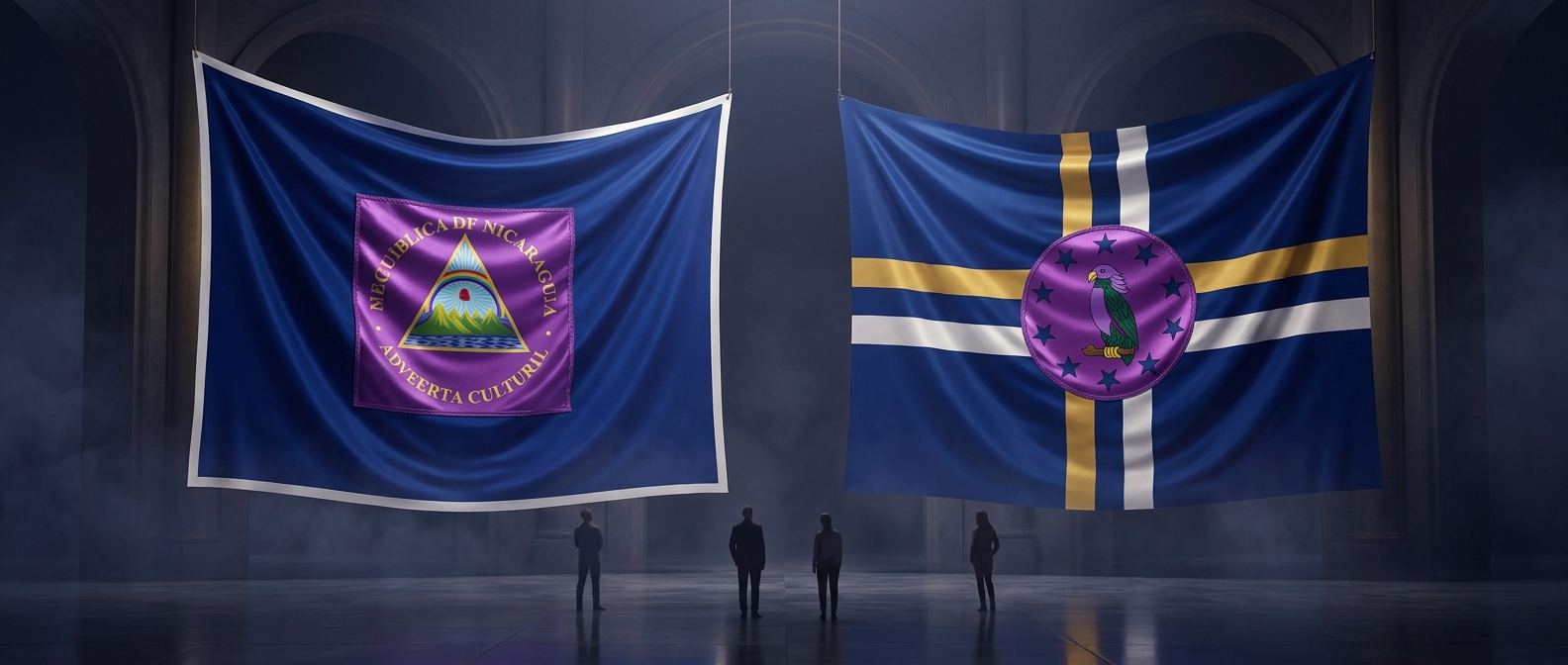
Dominica’s flag puts purple on a bird: the Sisserou parrot at its center has purple plumage. The bird is native to the island, so the unusual color appears as part of a recognizable national emblem rather than as a broad field of dyed fabric.
Nicaragua’s purple is much smaller. It appears in the rainbow in the coat of arms at the center of the flag. From a distance, the flag’s blue-and-white bands are much more noticeable; the purple is tucked into a detailed symbol.
A color shaped by design choices
These examples show why the rarity is not simply a matter of flags being unable to use purple. Once affordable dyes existed, designers could include it—but they still had to have a reason to put it in the design. In Dominica, that reason is a distinctive local bird; in Nicaragua, it is one color within a rainbow. On both flags, purple survives in a specific emblem, not as the dominant color.