A new kind of power in the White House
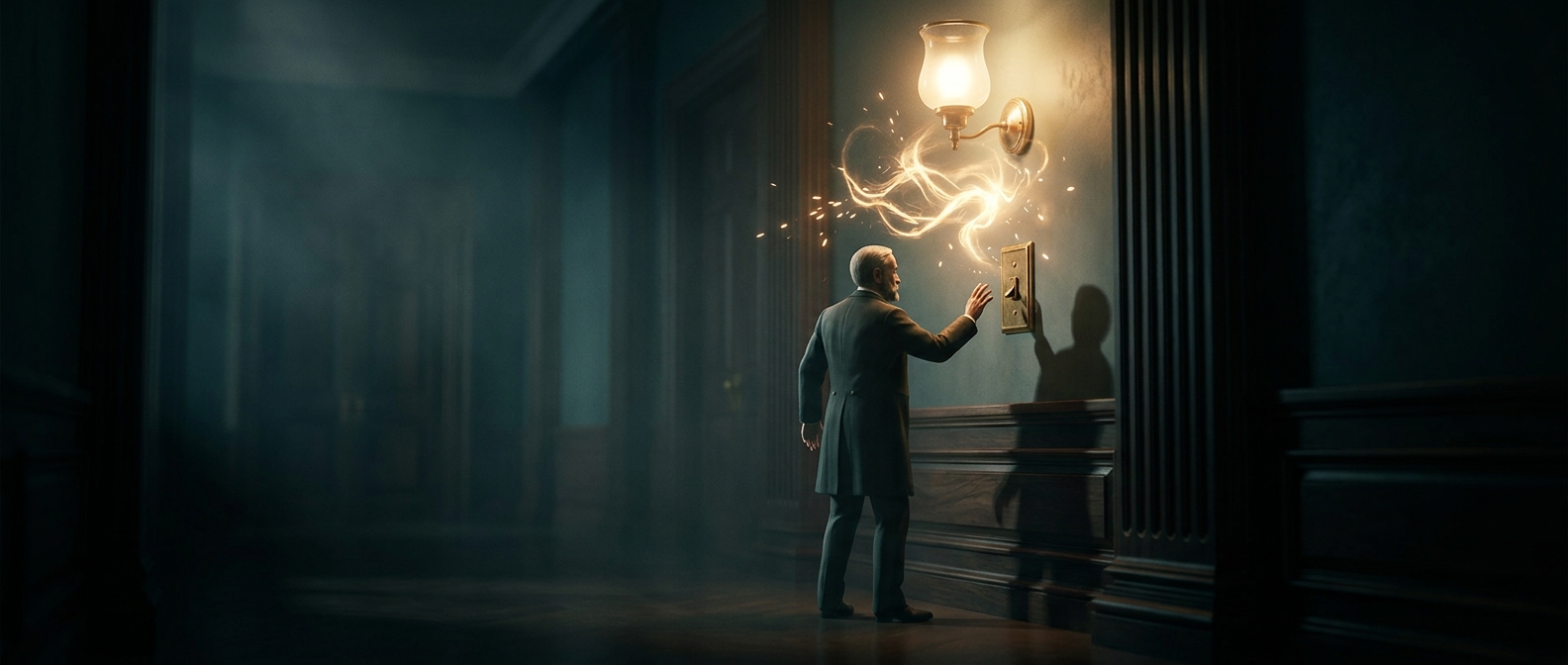
Electric lighting reached the White House during Benjamin Harrison’s presidency, when household electricity was still unfamiliar to many Americans. Gas lamps had been lit by hand; electric lights worked through wires hidden in walls and switches that sent current to a lamp. The convenience was striking, but the system’s invisible workings could also make it feel mysterious—and potentially dangerous.
Why a switch could feel risky
For the Harrisons, the concern was not simply that a switch might break. Touching it meant interacting with a powerful new technology whose risks were poorly understood by ordinary users. Electricity could cause shocks, and early wiring and equipment did not inspire the same confidence as modern, standardized household systems. The reported reluctance to operate the switches reflects the gap between adopting a technology and feeling safe with it.
Servants bridged the adjustment
The practical solution was to let household staff manage the lights. That small routine shows how new infrastructure entered daily life: the wires could be installed quickly, while trust and habits took longer to develop. A light left burning was an inconvenience, but it also marked a moment when even the country’s most prominent home was still learning how to live with electricity.