Why an Open Umbrella Can Block an Entire Row
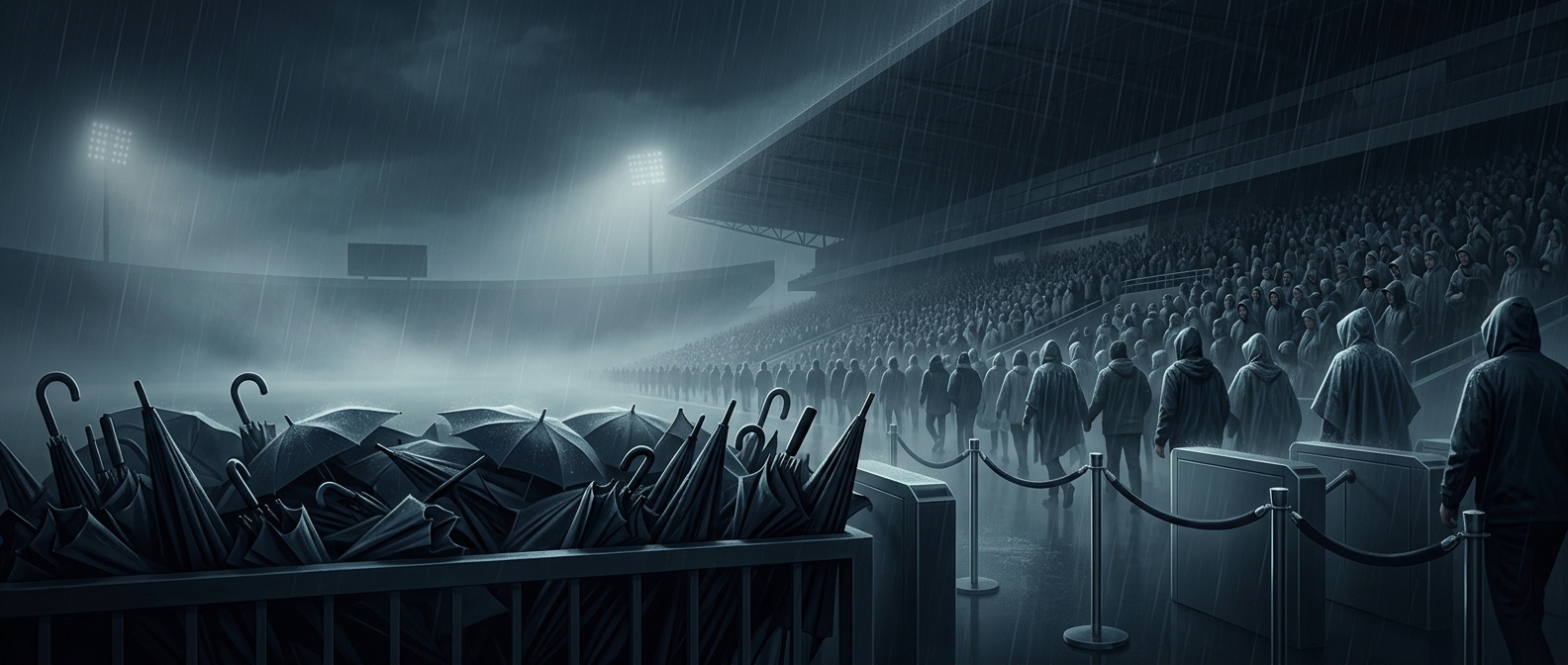
A grandstand is arranged so spectators can see the field over the people seated in front of them. An umbrella changes that geometry: its broad canopy rises above head level and spreads sideways, covering much more of the view than the person holding it. From behind, even a small umbrella can hide a player, a stage, or a large patch of the action. Because spectators open umbrellas at different times and shift them to follow the rain or wind, the obstruction moves rather than staying in one predictable place.
That makes an umbrella different from ordinary rain gear. A hood or poncho stays close to the wearer; an umbrella creates a raised surface that can cut across several sightlines at once. In tightly packed seating, one person’s attempt to stay dry can leave neighbors watching the canopy instead of the event.
The Crowd-Safety Tradeoff
The same shape that blocks views also creates a hazard in a dense crowd. Umbrella frames contain rigid spokes and tips, and an open canopy takes up space around its owner. When people stand, turn, or move through a row, those parts can strike someone nearby. Gusts can also catch the canopy, making it harder to control in close quarters.
A broad ban is easier for staff to apply than judging whether each umbrella will obstruct a particular seat or pose a risk in a particular moment. The cost is that attendees must use another way to stay dry. The rule reflects a basic grandstand constraint: weather protection cannot occupy the shared airspace that everyone else needs to see and move safely.