How an Ice Crystal Gets Stopped
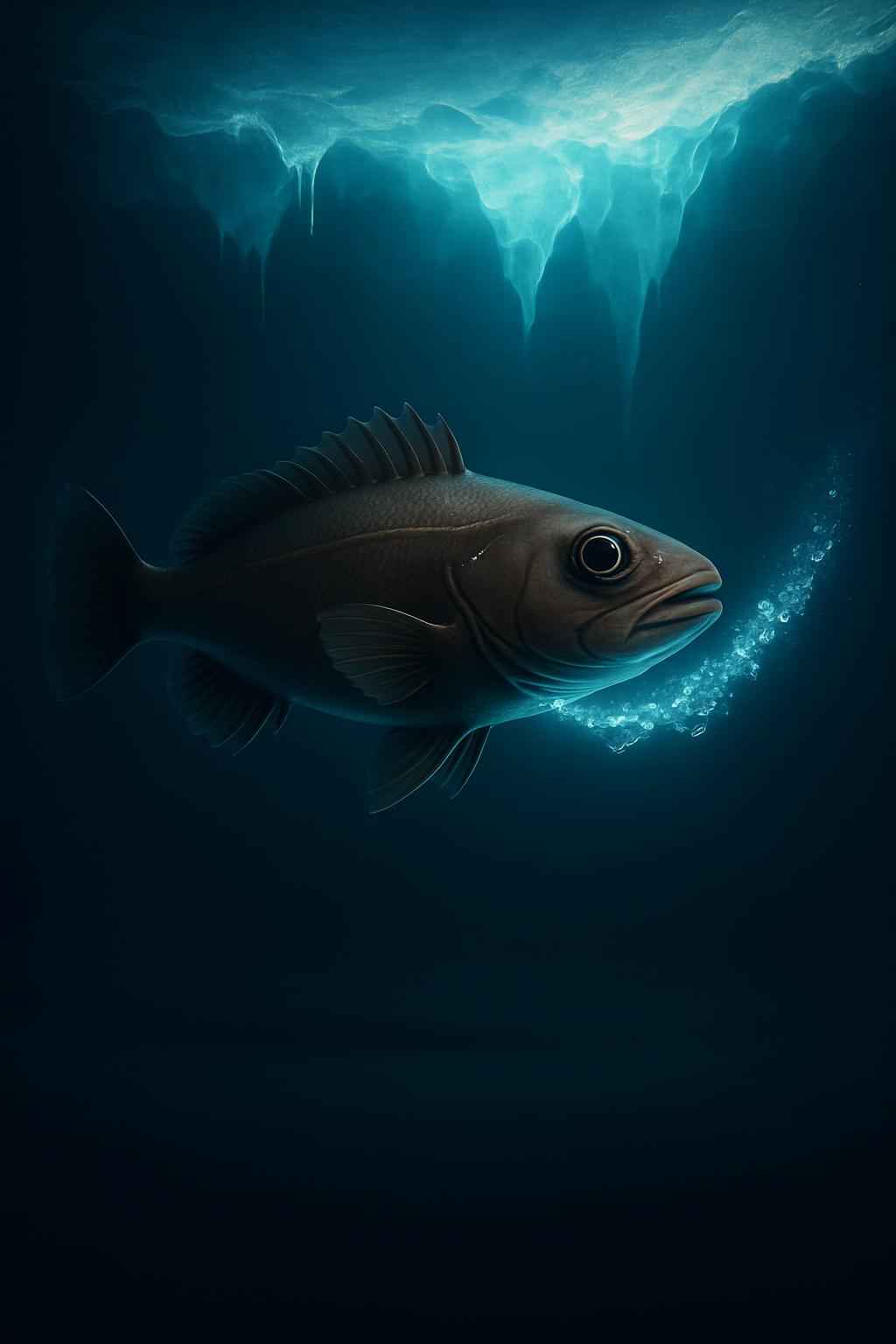
An ice crystal grows when nearby water molecules line up in the crystal’s orderly pattern and join its surface. Antarctic fish make antifreeze proteins that attach to those surfaces. The proteins act like tiny barriers: water molecules cannot easily settle into the growing crystal, so it stays small rather than expanding through the fish’s fluids.
The proteins do not melt ice or warm the fish. They interfere with crystal growth, helping the fish keep its body fluids liquid even when its temperature falls below the point at which pure water would freeze. This effect is often called thermal hysteresis: freezing is held off to a lower temperature than the temperature at which ice would melt.
Why the Protection Matters
The surrounding seawater can be colder than the freezing point of the fish’s own fluids because dissolved salts lower seawater’s freezing temperature. Tiny ice crystals can also reach a fish through contact with the water, including at its gills. Without protection, those crystals could grow inside the body and damage cells and tissues.
Antifreeze proteins are therefore not a general-purpose cold shield; they solve a specific problem by keeping stray ice from gaining a foothold. Their effect is especially striking because the fish need not prevent every first crystal from appearing. Stopping a crystal from growing can be enough to keep the animal’s fluids from freezing solid.