Why urine entered Roman tooth-cleaning lore
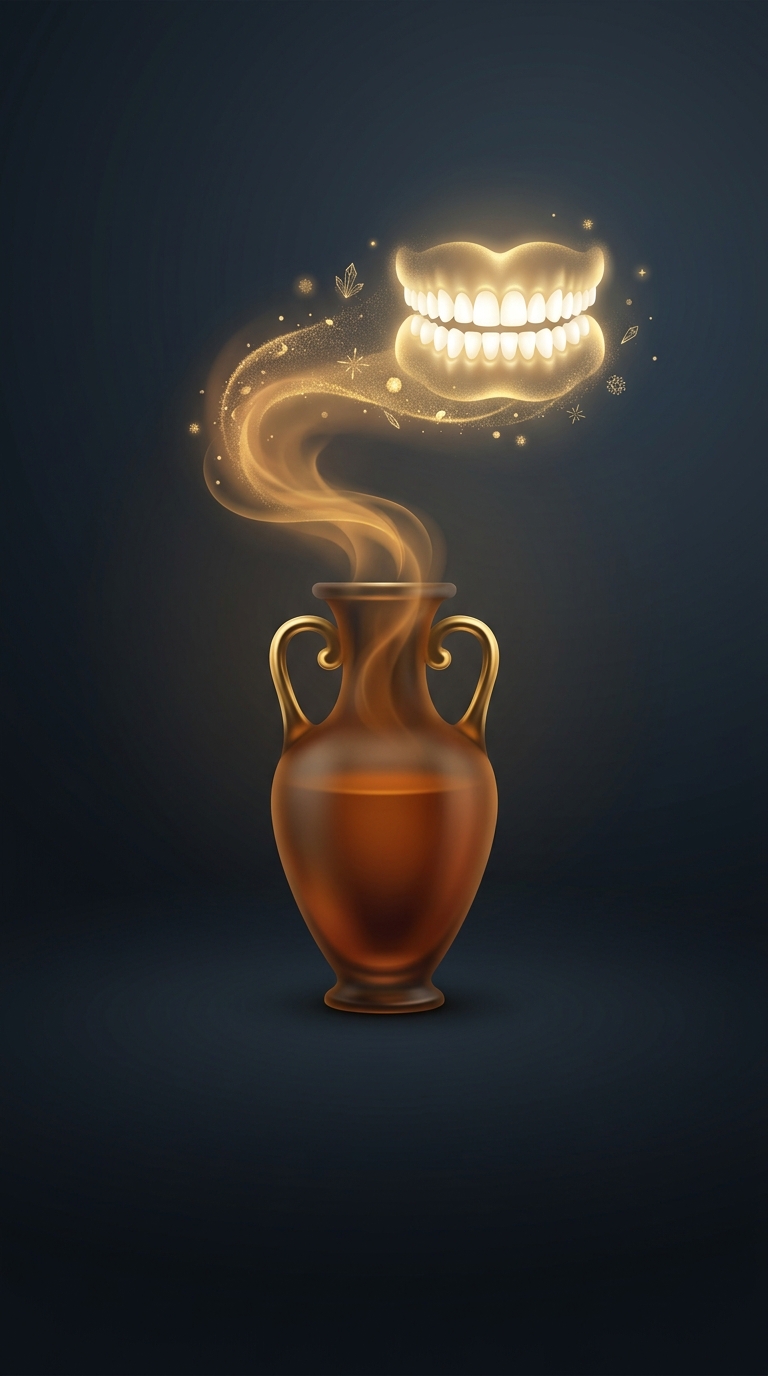
The startling ingredient was urine—sometimes described in Roman writing as a tooth-cleaning or whitening rinse. The references do not mean every Roman used it. Some writers mention the practice while mocking people associated with it, so the evidence points to a known and memorable custom, not a universal daily routine.
What it could—and could not—do
Urine contains urea. As it sits, bacteria can convert some of that urea into ammonia, making the liquid alkaline. Alkaline cleaners can help loosen certain grime, which offers a practical reason someone might have tried the rinse. But that is not the same as safely bleaching enamel: urine is not a dependable modern whitening treatment, and Roman accounts do not establish how well it worked.
Roman tooth care also included powders and rubbing, which could scrub away surface deposits. That distinction matters: a cleaner might make teeth look brighter by removing grime without changing the natural color of the enamel.
A vivid detail, not a Roman rule
The practice shows how ancient dental care could draw on substances available at home, long before people understood oral bacteria or had modern toothpaste. It also reveals how a bodily waste product could acquire a practical use—and become an easy target for jokes. The memorable Roman “whitener” was less a miracle formula than an improvised rinse whose reputation outlasted any proof of its results.