A homemade studio for a different kind of children’s music
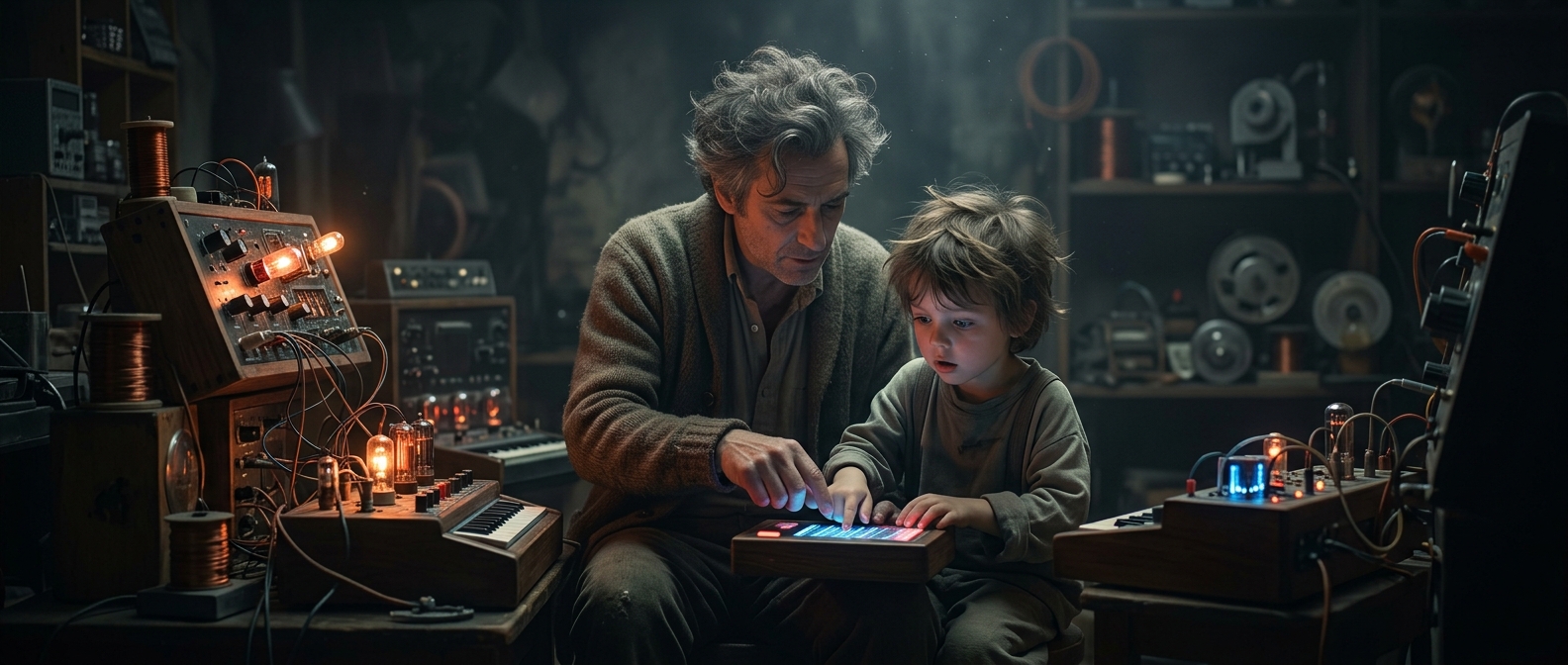
Bruce Haack’s children’s records began with an unusual production choice: instead of relying on familiar instruments and polished orchestration, he built electronic equipment from parts that included surplus military components. His homemade synthesizers could generate tones that ordinary instruments could not, while a vocoder—a device that shapes a voice with electronic sound—made singing seem robotic or otherworldly.
That gear was not just a novelty layered over standard children’s songs. It let Haack make the sound itself part of the experience: abrupt shifts, strange timbres and voices that seemed to come from somewhere beyond the room.
Why make music that sounded strange?
Haack believed unfamiliar, dissonant sounds could expand children’s consciousness. Dissonance means tones that clash rather than settling into the smooth, predictable harmonies common in much children’s music. His approach treated young listeners as capable of engaging with sounds that might initially feel surprising or unsettling, rather than assuming they needed everything made gentle and conventional.
The electronic effects also changed what a children’s song could feel like. A vocoder could blur the boundary between a human performer and a machine; a homemade synthesizer could make a melody sound less like something played on a piano and more like a signal from an imagined future. The point was not simply to decorate songs with futuristic noises, but to use those noises to open up a different musical world.
An unlikely route to electronic music history
Haack’s work joined an experimental technology—electronic sound-making—to a format usually associated with simple melodies and familiar voices. That contrast is what makes the records memorable: music designed for children could also challenge their expectations about what a song, a voice or an instrument was supposed to sound like. In Haack’s hands, the homemade machine was not merely studio equipment; it was a way to invite young listeners into the unfamiliar.