A pause turns a question into a task
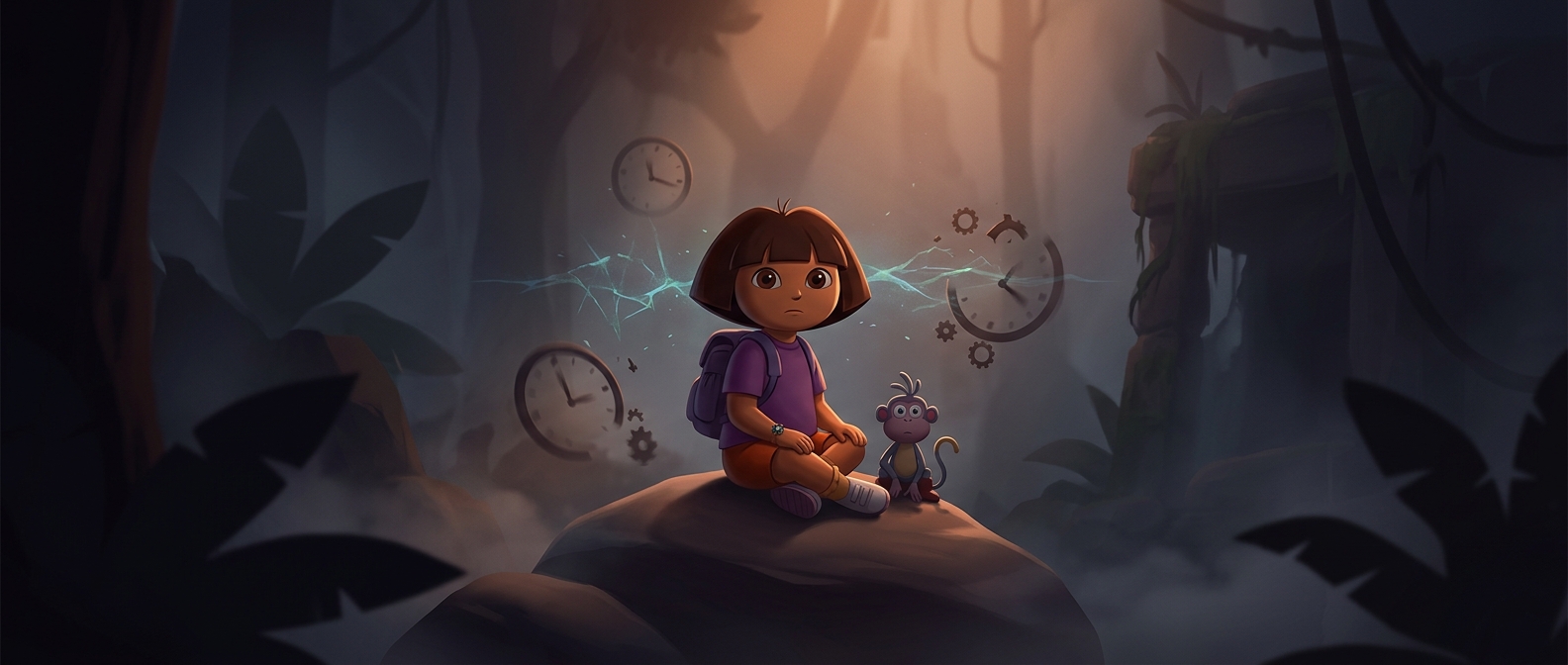
When Dora asks viewers to find something or help solve a problem, the scene does not immediately supply the answer. That gap gives a child a chance to search the picture, recall a clue, and respond aloud before the story moves on. The pause is not empty time so much as a small turn in a conversation—one the television cannot hear but the child can still take.
Built for viewers who are still learning
Young children often need more time than adults to understand a question, decide what it is asking, and put an answer into words. A fast-moving scene could crowd out that process. By holding the moment, the show makes participation possible without requiring a child to read instructions or keep up with rapid dialogue. Repeated prompts also make the pattern legible: Dora asks, the viewer can answer, and the adventure continues.
Why the silence feels different by age
Adults tend to watch a cartoon as a continuous stream of dialogue and action, so a character looking out from the screen without speaking can feel like an awkward delay. For a child, that same stretch is an opening to do something. The pacing lets a one-way broadcast imitate a simple back-and-forth, giving a young viewer time to feel involved before the characters respond and the story resumes.